
July Newsletter Ideas for 5th Grade Teachers: What to Send This Month

Fifth grade is the final chapter of elementary school, and the families coming into your classroom know it. This year carries a different weight: academic expectations are at their highest before middle school, leadership opportunities open up, and the middle school transition is already on the horizon. A July newsletter that speaks honestly to all of that gives families the preparation and perspective they need before the year even begins.
Introduce yourself with the year in context
The July newsletter is often the first time incoming fifth grade families hear from you. A specific, warm introduction matters: share how long you have been teaching fifth grade, what you love about this particular year, and what you are genuinely looking forward to with this class. Fifth grade parents are often a mix of excitement and nostalgia. Your introduction sets the tone for what kind of year this will be for their child.
Parents who feel connected to the teacher before school starts are more likely to communicate openly throughout the year. That communication loop starts now.
Check in on summer reading with purpose
Fifth grade reading requires real depth. Students read long texts, track themes across chapters, analyze author intent, compare multiple sources, and write substantively about what they have read. A summer without much reading makes that ramp-up harder than it needs to be.
Suggest thirty minutes of reading each day for the remaining weeks of summer. Any chapter book or longer nonfiction text the student is genuinely interested in is the right choice. If they have a favorite series, encourage them to keep going. If they have not read much this summer, a library trip to find something new before school starts is a low-pressure way back in. The goal is reading stamina and engagement heading into a demanding reading year.
Share the supply list before the August rush
Families with incoming fifth graders want the supply list early. Be specific: backpack size and style, whether a labeled water bottle is expected, which supplies the school provides versus what families bring, and any classroom-specific items like subject dividers, a homework planner, or a particular binder style. Fifth graders are fully capable of managing their own supplies and most are motivated to do so. Encourage families to let their student take ownership of gathering their own list.
Preview the fifth grade academic year
Fifth grade math covers multi-digit multiplication and division, operations with fractions and decimals, volume, and early algebraic thinking. These are the concepts that connect directly to middle school math, so families benefit from knowing that this year's math is building toward something larger. Writing in fifth grade gets substantially longer and more demanding: students produce multi-paragraph arguments, research reports with citations, and literary analysis essays with textual evidence. Reading moves into complex texts that require sustained attention and critical thinking.
None of this needs to feel alarming. The classroom is still responsive to what ten-year-olds need. But honest framing helps families support their child appropriately rather than being caught off guard in October.
Address middle school transition early and calmly
Middle school is on the radar for most fifth grade families, often more than they let on. A brief, calm acknowledgment in the July newsletter that middle school is coming and that fifth grade is a great year to build the habits that make that transition smooth is genuinely useful. Name a few things specifically: strong reading habits, organizational systems, the ability to advocate for oneself with a teacher, and independent work skills.
Let families know you will address the transition in more depth throughout the year. The goal in July is to raise awareness and name it as something you are thinking about, not to turn it into a source of summer anxiety.
Mention leadership opportunities in fifth grade
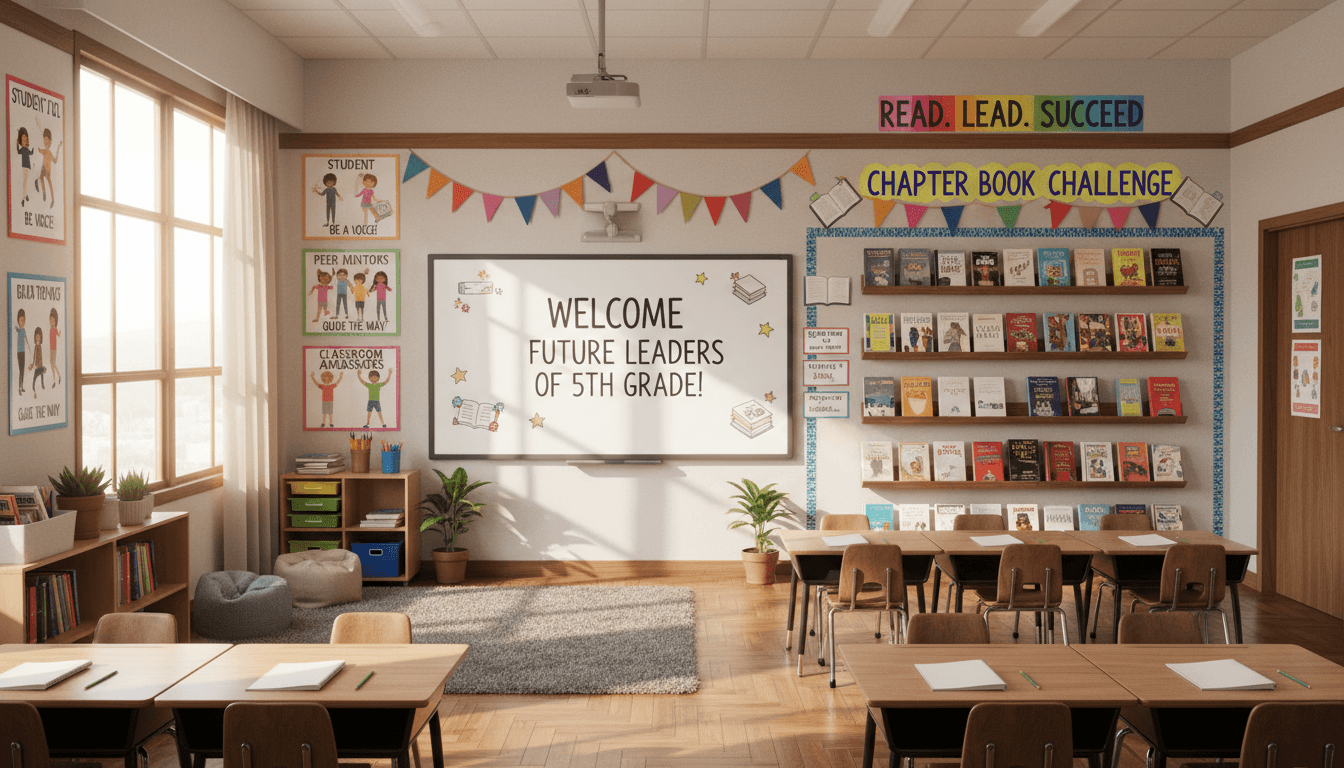
Fifth grade often comes with the most visible leadership roles in the building: student council, safety patrol, mentoring younger students, leading school assemblies, and serving as classroom ambassadors for visitors. These roles matter to students, and many remember them as the highlights of their elementary years. Mention any leadership opportunities specific to your school and let families know when signups happen if the timing is relevant before or early in the school year.
Students who arrive at fifth grade already thinking about how they want to contribute to the school community tend to step into the year with more purpose.
Cover meet-the-teacher details and how to reach you
Include the date, time, format, and location of any meet-the-teacher event before the first day. Let families know what to expect from the event and whether to bring their child. If you offer a way for families to reach you before school starts, by email or a welcome form, include that information here.
Daystage makes it easy to put together a complete July fifth grade newsletter that reaches families with everything they need: supply list, reading guidance, year preview, middle school framing, and leadership opportunities, all in one clean send that families genuinely read.
Get one newsletter idea every week.
Free. For teachers. No spam.
Frequently asked questions
Why should a fifth grade teacher send a July newsletter?
Fifth grade is the last year of elementary school, and that carries weight for students and families alike. A July newsletter that acknowledges the significance of the year, previews what is academically ahead, and addresses middle school transition early gives families something they genuinely appreciate: a teacher who is thinking ahead on their behalf. It also builds trust and communication before a single school day has passed.
How should a July fifth grade newsletter address middle school transition?
Keep it honest, calm, and forward-looking. Acknowledge that middle school is on the horizon and that fifth grade is a great year to build the skills and habits that make that transition smooth. Name a few specific things: organization, self-advocacy, reading stamina, and independent work habits. Let families know you will provide more context throughout the year. The goal in July is to raise awareness without creating anxiety.
What leadership opportunities should I mention in a July fifth grade newsletter?
Fifth grade often comes with visible school leadership roles: student council, safety patrol, mentoring younger students, leading school events, and serving as classroom ambassadors. Mention any opportunities specific to your school and let families know that fifth graders often look back on these roles as highlights of their elementary years. If signups happen early in the year, note the timing so families and students can prepare.
What does a fifth grade academic preview in a July newsletter cover?
Focus on the real shifts families and students need to understand. Fifth grade reading involves long texts with complex themes and analytical writing in response. Math introduces multi-digit multiplication and division, fractions operations, and early concepts that lead directly into middle school math. Writing gets substantially longer with research reports, argumentative essays, and literary analysis. Naming these honestly helps families calibrate their support.
What newsletter tool works best for fifth grade teachers?
Daystage is built for teachers who want to reach families with something organized and genuinely readable before the school year starts. A July fifth grade newsletter with supply lists, summer reading guidance, a year preview, middle school transition framing, and leadership opportunities all fits cleanly in one Daystage send. It arrives as a polished email that feels prepared and personal, not like an automated school blast. Most teachers put it together in under fifteen minutes.

Adi Ackerman
Author
Adi Ackerman is a former classroom teacher and curriculum writer with 8 years in K-8 schools. She writes about school communication, parent engagement, and what actually works in real classrooms.
More for Classroom Teachers
ELA Curriculum Update in Your Classroom Newsletter: What Parents Need to Know
Classroom Teachers · 6 min read
Communicating a Community Service Project in Your Classroom Newsletter
Classroom Teachers · 5 min read
Cultural Heritage Month in Your Classroom Newsletter: What to Communicate
Classroom Teachers · 6 min read
Ready to send your first newsletter?
3 newsletters free. No credit card. First one ready in under 5 minutes.
Get started free