

January Kindergarten Parent Newsletter Template: What to Include This Month
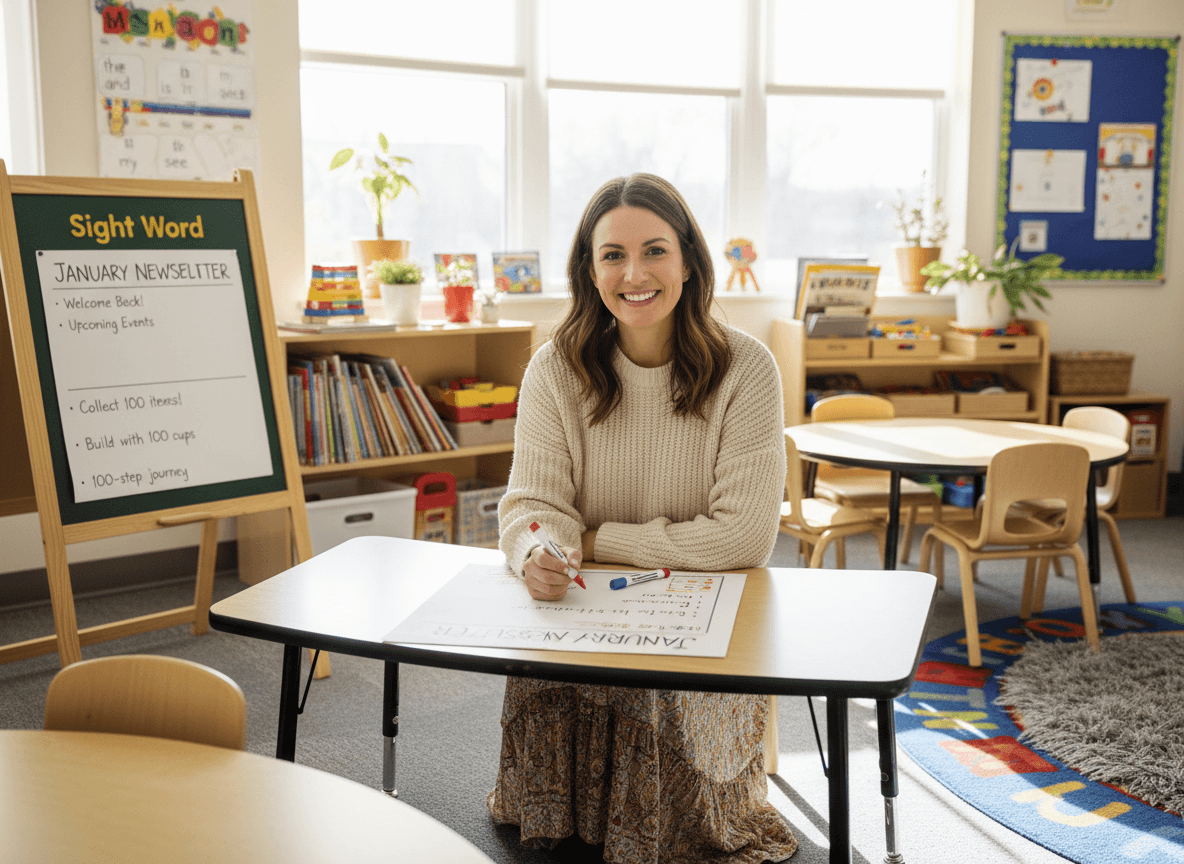
January is one of the most varied months in kindergarten. You are coming off a long break, re-establishing routines with five-year-olds who have been home for two weeks, and heading toward the 100th Day of School at the same time. A January newsletter to kindergarten parents does two things well: it supports the back-from-break transition and it builds excitement for what is ahead. Here is what to include.
Sample January kindergarten newsletter structure
A January newsletter for kindergarten parents works best when it follows a predictable structure. Families who receive newsletters monthly start to know what to look for, and a consistent structure makes your newsletter faster to write and easier to read.
Open with a warm welcome back. Acknowledge the break, name something you are glad the class gets to do together now that they are back, and set the tone for January. Then move through the sections below.
Coming back from winter break: what to tell families
The return from a long break is a genuine transition for five-year-olds. Sleep schedules shift, routines loosen, and the emotional adjustment back to school takes time for many children. Your January newsletter can help by naming this directly and giving families practical support.
Suggest getting back to consistent bedtimes a few nights before school restarts if possible. Encourage families to talk with their child about what they are looking forward to when they go back, keeping the tone positive. Normalize any clinginess or emotional sensitivity in the first week by letting parents know it is common, temporary, and not a sign that something is wrong. Most kindergartners are fully re-settled within five to seven school days.
100th Day of School preview and preparation
The 100th Day of School is one of the most anticipated milestones in kindergarten. Share the expected date or date range in the January newsletter, even if it falls in early February, so families have enough lead time for any preparation needed. If families need to help their child bring in a collection of 100 objects, give at least two to three weeks notice and a few specific examples: 100 buttons, 100 pennies, 100 small pieces of pasta. The earlier the heads-up, the less scrambling on the actual day.
Let families know what the celebration will involve in the classroom. Whether it is counting activities, a dress-up theme, or a special project, the anticipation is part of what makes the day exciting for kindergartners. Parents who know what is coming help build that excitement at home in the days before.
Sight word progress update
January is a good moment to give families a broad update on where the class is with sight words and what support at home looks like right now. Note what list or level the class is working on, offer one or two specific practice ideas for the house, and reassure families that sight word acquisition varies across kindergartners and that the timeline is different for every child.
Practical home practice ideas that work at this stage: flashcard review during morning routine, finding sight words in the books your child is reading, or a quick write-and-erase game on a whiteboard. Keep it to five to ten minutes of focused practice rather than a long session.
Social-emotional check-in for January
January is a good time to acknowledge the social-emotional reality of mid-year kindergarten. Students have been in school for a full semester. Friendships have formed, conflicts have happened, and the social landscape of the classroom is fully in motion. A brief note in the January newsletter about what the class is working on socially, whether it is conflict resolution, taking turns in conversation, or inclusive play at recess, helps families reinforce those same ideas at home.
If there are any whole-class social patterns you have noticed since break, the newsletter is a good place to name them in a broad, non-identifying way. Families who know what the class is working on socially are better positioned to support the same skills at home.
Winter classroom routines: what to reinforce at home
January is when classroom routines that were solid before break need to be rebuilt. Let families know what the morning arrival routine looks like and what they can do at home to support a smooth drop-off. If your class has a reading habit that families can continue at home, mention it. If there are specific practice routines around letter sounds or number recognition that families can do in a few minutes each day, include those here.
What is coming up in the second half of kindergarten
A brief preview of what the second half of kindergarten will bring gives families a helpful roadmap. Note the key academic milestones on the horizon: moving into more independent reading and writing, number operations through 20 and beyond, and the learning projects that are coming up in the spring semester. Families who can see the arc of the year are better partners throughout it.
Daystage makes it easy to send a January kindergarten newsletter that covers all of this in one organized, readable send that parents actually look forward to opening each month.
Get one newsletter idea every week.
Free. For teachers. No spam.
Frequently asked questions
What should a January kindergarten newsletter focus on?
January kindergarten newsletters have two main jobs. First, help families support the transition back from winter break: re-establishing routines, managing the emotional adjustment back to school, and getting sleep schedules back on track. Second, build momentum toward the 100th Day of School, which often falls in late January or early February depending on your start date and is one of the most anticipated kindergarten milestones. Sight word progress and a brief social-emotional check-in round out the newsletter.
How should I talk about returning from winter break in a kindergarten newsletter?
Be warm and practical. Acknowledge that coming back from a long break is a transition for five-year-olds and that it is normal for it to take a week or two for routines to feel solid again. Give families two or three specific things they can do at home: consistent bedtime, practicing the morning routine before school restarts, and talking with their child about what they are looking forward to when they go back. Normalize any clinginess or emotional sensitivity in the first week.
How do I introduce the 100th Day of School in a January newsletter?
Share the expected date or date range if you know it, explain what the 100th Day celebration will involve, and give families any preparation instructions in advance. If families need to send in a collection of 100 objects, let them know early so they are not scrambling. Frame the milestone as what it genuinely is for kindergartners: a big, exciting number that shows how much the class has already done together. The anticipation is part of what makes the day special.
How much detail about sight word progress should a January kindergarten newsletter include?
Keep it general in the newsletter and offer individual progress updates through conferences or direct communication. You can note what sight word list or level the class is currently working on, offer one or two specific ways families can practice at home, and reassure families that sight word acquisition varies across kindergartners and that the timeline is different for every child. The newsletter is for broad updates; detailed individual feedback belongs in a more direct channel.
What newsletter tool works best for kindergarten teachers writing monthly parent newsletters?
Daystage is built for teachers who want to reach kindergarten families with something warm, readable, and organized every month. A January newsletter covering the return from break, 100th Day logistics, sight word tips, and a social-emotional check-in all fits in one clean Daystage send. It arrives in parents' inboxes as a polished email that feels personal rather than automated, and most teachers put the whole thing together in under fifteen minutes.

Adi Ackerman
Author
Adi Ackerman is a former classroom teacher and curriculum writer with 8 years in K-8 schools. She writes about school communication, parent engagement, and what actually works in real classrooms.
More for Classroom Teachers
ELA Curriculum Update in Your Classroom Newsletter: What Parents Need to Know
Classroom Teachers · 6 min read
Communicating a Community Service Project in Your Classroom Newsletter
Classroom Teachers · 5 min read
Cultural Heritage Month in Your Classroom Newsletter: What to Communicate
Classroom Teachers · 6 min read
Ready to send your first newsletter?
3 newsletters free. No credit card. First one ready in under 5 minutes.
Get started free