

Fourth Grade Math Progress Newsletter: How to Communicate Math Growth to Families
Math is one of the subjects where parent anxiety runs highest. Fourth grade marks a significant jump in complexity, and families who feel out of the loop often respond with worry. A focused math progress newsletter does not just inform families. It gives them the context they need to be genuine partners in their child's math learning, rather than sources of conflicting advice.
Why a Dedicated Math Newsletter Is Worth It
Fourth grade math covers a lot of ground. Multi-digit multiplication, long division, fractions, decimals, and geometry all show up within a single school year. The strategies students learn for solving these problems may look unfamiliar to families who learned math differently a generation ago.
When families do not understand the approach their child is using, they sometimes undermine it unintentionally by teaching a different method at home. A newsletter that explains current strategies clearly helps families reinforce the approach rather than creating confusion.
Describing the Current Unit in Plain Terms
Start each math newsletter with a plain-language description of what students are working on. Avoid curriculum acronyms and abstract learning objectives. If you are in a multi-digit multiplication unit, say: "This month we are working on multiplying three-digit numbers by two-digit numbers, and students are learning to break problems into smaller parts to make them more manageable."
That sentence tells a parent what their child is practicing, signals the reasoning behind the instructional approach, and gives them enough vocabulary to ask their child about it. That is the bar to hit.
Explaining the Strategies Students Are Using
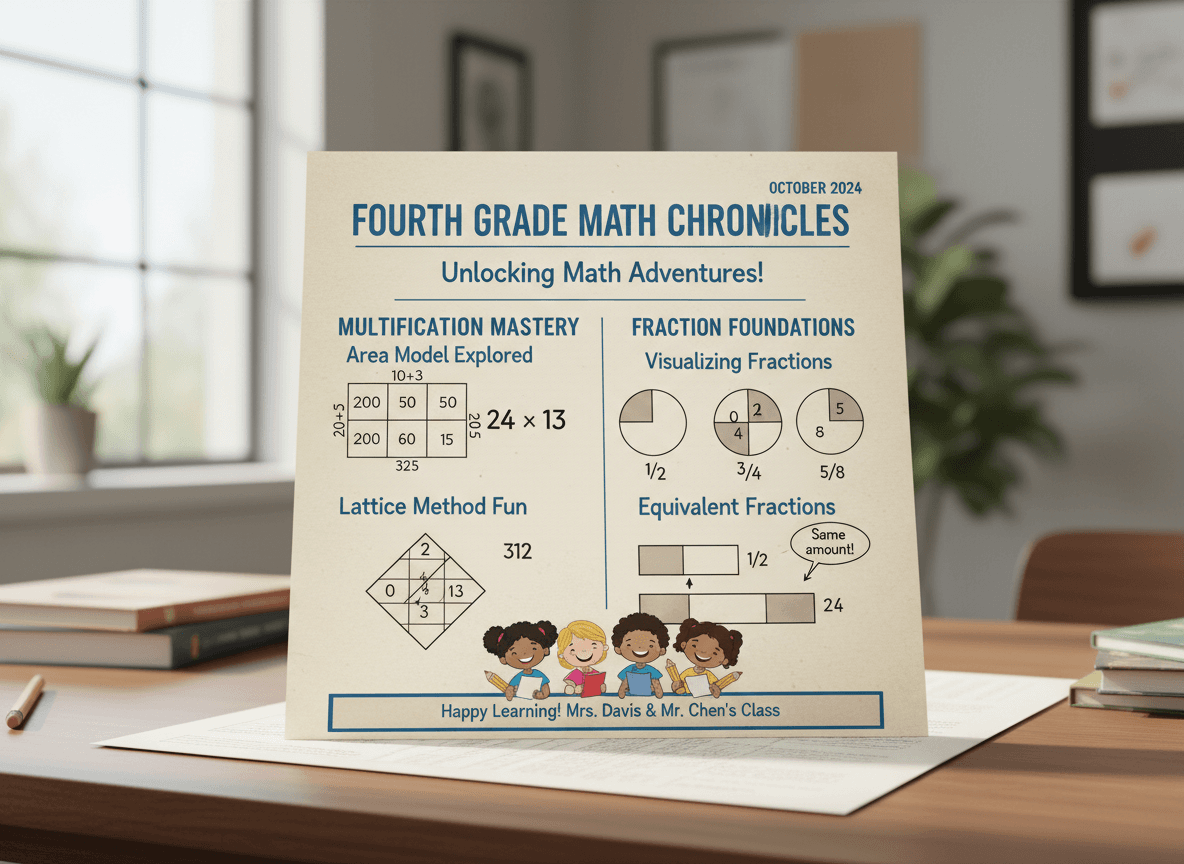
This is the section that matters most for fourth grade families. If students are using the area model for multiplication, show a simple example. If they are using partial quotients for division, walk through the basic idea in two or three sentences. You do not need to teach the whole strategy. You just need to give families enough of a mental model that they recognize what their child is doing and do not contradict it.
Frame the strategy positively. "Students are using a visual model that helps them see the structure of multiplication before moving to the standard algorithm" is both accurate and reassuring for families who wonder why the method looks different from what they remember.
Sharing Signs of Progress
Math progress is not always visible on graded tests. Many of the most important shifts happen in classroom discussions, during problem-solving tasks, or in the quality of a student's written explanation. Use your newsletter to describe what progress looks like in your classroom.
"We are seeing students start to check their work by estimating first, rather than just accepting whatever answer they get" describes a meaningful shift in mathematical thinking. Families who know what to look for can celebrate these moments at home when they come up naturally.
Home Practice That Actually Helps
Fourth grade is a good year for building fluency with multiplication and division facts. If your class is actively practicing fact fluency, let families know and give them a low-key way to help. Flashcard apps, quick oral quizzes during a car ride, or simple games at the dinner table all work well.
For families who want to go further, suggest one or two specific problems or activities connected to the current unit. A measurement scavenger hunt around the house, a fraction challenge using a recipe, or a mental math game tied to real-life contexts keeps learning relevant without turning home time into a second homework session.
Addressing Common Concerns
Use a short FAQ section or a conversational paragraph to address the questions you hear most often from fourth grade math families. Common ones include: why does my child need to show their work if they can get the right answer in their head, what does it mean when a student says they do not understand fractions, and how much math practice at home is appropriate.
Answering these proactively builds trust and reduces the volume of one-off emails and conference requests. Families who feel informed do not need to ask as many questions.
Looking Ahead in the Curriculum
Give families a brief preview of what is coming in the next month or two. This is especially useful when you are about to begin a unit that tends to be challenging, like fractions or long division, because families can start preparing their child mentally rather than being blindsided by a sudden increase in difficulty.
A sentence or two is enough: "After we finish our multiplication unit, we will move into fractions, which is often a challenging but exciting topic for fourth graders." That single sentence sets expectations without creating anxiety, and it keeps families oriented in the larger arc of the year.
Get one newsletter idea every week.
Free. For teachers. No spam.
Frequently asked questions
What should a fourth grade math newsletter include?
Cover the current math unit or topic, the strategies students are using to solve problems, how families can recognize progress at home, what is coming next in the curriculum, and one or two specific ways families can support math practice without creating pressure. Include examples of problem types when you can.
How do I explain new math strategies to parents who learned differently?
Acknowledge the difference directly and briefly. Note that the strategies may look different from what families remember, then explain the reasoning behind the approach. Showing a worked example with a short explanation goes a long way. Families who understand the strategy are far more likely to support it rather than counter it at home with a different method.
How do I communicate that a student is struggling in math without alarming families?
Lead with what the student is able to do, then describe the area of challenge as something you are actively working on together. Mention the specific support you are providing, whether that is small group work, visual models, or extra practice. Invite families to reach out if they have questions. This positions you as a problem-solving partner, not a messenger of bad news.
Should I include math games or activities in my newsletter?
Yes, when you can. A simple card game that practices multiplication facts, a household measurement challenge, or a mental math game for the car ride are practical and low-effort for families. Tie the activity directly to what students are currently working on in class so the connection is clear.
What newsletter platform makes it easy to share math content with fourth grade families?
Daystage lets you build clean, well-organized newsletters that families can access on any device. You can include images of student work or example problems, structure content with clear headings, and send the newsletter directly to families so it does not get lost in a backpack. It is a practical choice for teachers who want professional-looking communication without spending hours on design.

Adi Ackerman
Author
Adi Ackerman is a former classroom teacher and curriculum writer with 8 years in K-8 schools. She writes about school communication, parent engagement, and what actually works in real classrooms.
More for Classroom Teachers
Fourth Grade Classroom Newsletter Ideas: What to Include Every Month
Classroom Teachers · 7 min read
Fourth Grade Curriculum Overview Newsletter: What Families Need to Know About the Year Ahead
Classroom Teachers · 7 min read
Third Grade Classroom Newsletter Ideas Parents Actually Read
Classroom Teachers · 6 min read
Ready to send your first newsletter?
3 newsletters free. No credit card. First one ready in under 5 minutes.
Get started free