

First Grade Spelling Words Newsletter: A Weekly Practice Guide for Families
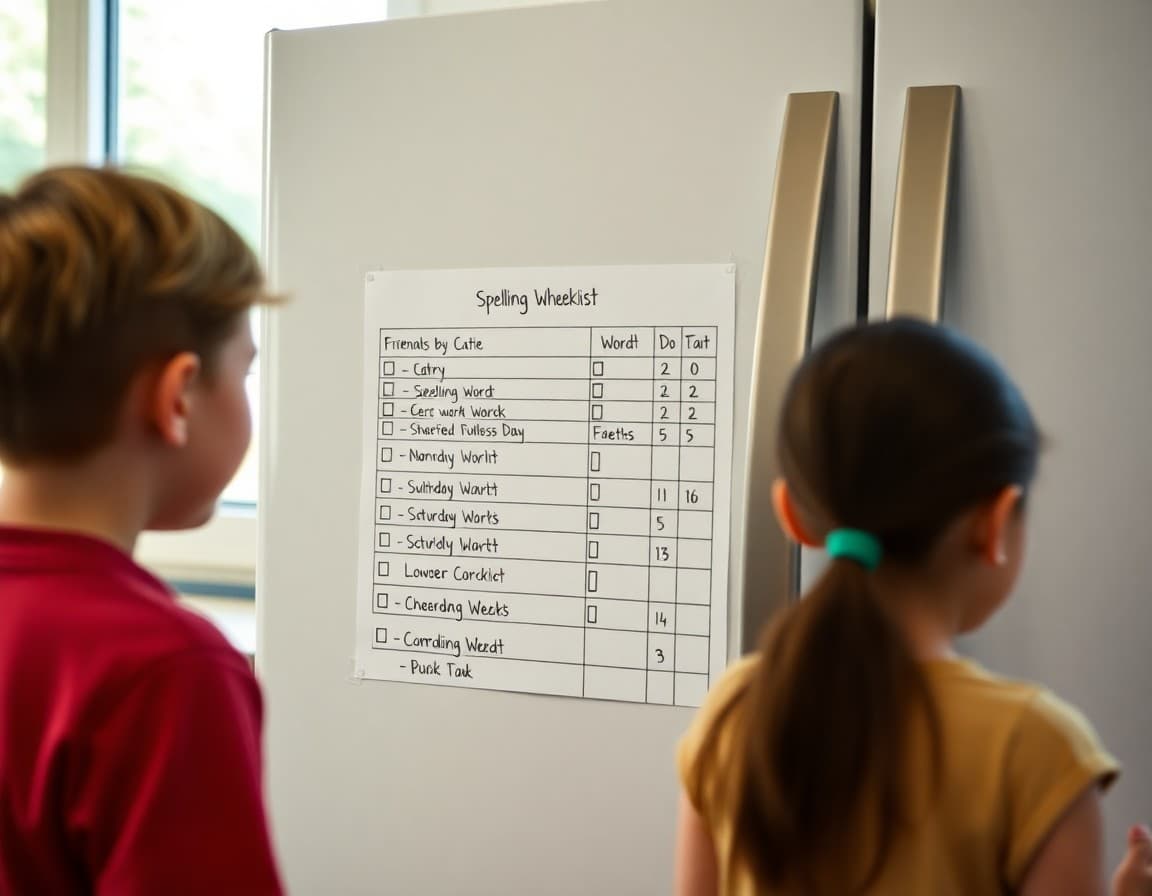
First grade spelling practice at home is most effective when families understand the phonics pattern behind the words rather than just memorizing a random list. A newsletter that connects this week's words to the broader phonics sequence gives families context and makes practice feel purposeful.
Explain the Phonics Pattern Behind This Week's Words
Every weekly spelling list should have a rationale. Tell families: "This week we are practicing words with the short-a sound in the middle: cap, bat, man, flag, snap. These words follow the CVC or CCVC pattern. When your child encounters a new word with a in the middle, they can use this pattern to decode it."
That one sentence transforms spelling practice from memorization to pattern recognition. Students who learn the pattern can apply it to words they have never seen before, which is the actual goal.
Include the Current Week's List
Put the actual list in the newsletter body. Families who read the newsletter on their phone Monday morning can start practicing that night without waiting for a paper to come home. For most teachers, the list changes every Monday and comes home in the homework folder anyway, but having it in the newsletter is a useful backup.
Three Practice Activities for the Week
Rotate through a bank of activities each week so practice stays engaging. Describe each activity briefly so parents can run it without preparation.
Rainbow writing: Write the word in pencil, trace in three colors. Say the word aloud with each pass.
Write and fold: Write the word on paper, fold it to hide it, write it again from memory. Check. Repeat for any missed words.
Spell and stomp: Say each letter aloud and stomp your foot. Physical movement helps kids who learn kinesthetically retain spelling sequences.
How Much Time to Spend
Ten to fifteen minutes per night, four nights a week is the right target. Five minutes testing the words at the start of the week to see which ones need the most attention, then focused practice on the harder words, is more efficient than cycling through all words every night equally. By Wednesday, students should be able to spell most words with minimal help.
Handling Mixed-Level Families
In most first grade classrooms, students receive differentiated spelling lists. Address this in the newsletter: "Your child's list this week reflects their current phonics level. Some students have 8 words, some have 12. The goal is mastery of the pattern, not competing with the longest list."
The Spelling-Reading Connection
Help families understand why spelling practice matters beyond the Friday test. Spelling and reading use the same phonics knowledge but in opposite directions: reading decodes from letters to meaning, spelling encodes from meaning to letters. Students who can spell a word can almost always read it. That connection motivates families who otherwise see spelling as separate from real literacy.
Get one newsletter idea every week.
Free. For teachers. No spam.
Frequently asked questions
How many spelling words should a first grader have each week?
Eight to twelve words per week is typical for first grade, though this varies by curriculum and time of year. Early in the year, starting with 6-8 words allows families to build the practice routine before adding volume. By second semester, 10-15 words is appropriate for most students. Advanced readers may have a differentiated list with more complex patterns.
What is the difference between sight words and spelling words in first grade?
Sight words are high-frequency irregular words that need to be recognized automatically: the, was, they, said, because. Spelling words typically follow the phonics patterns you are teaching that week: short vowel words, consonant blends, digraphs. In most first grade programs, the weekly spelling list includes both types, with the phonetically regular words reinforcing the current phonics lesson.
What are effective spelling practice strategies for first graders?
The most effective strategies involve multiple sensory channels: write the word, say it aloud, trace it, and use it in a sentence. Specific activities include: write and fold (write word, fold paper to hide it, rewrite from memory), Lego spelling (stamp letters with Lego pieces), magnetic letters on the fridge, and drawing the word in a shape that matches its meaning. Pure repetitive copying is the least effective approach.
How should the weekly spelling test work in first grade?
A typical first grade spelling test involves the teacher calling out each word, using it in a sentence, and giving students time to write it. At this level, inventive spelling is accepted on drafts but not on spelling tests. Ten words usually take about 10-15 minutes. Some teachers also include a dictated sentence using that week's words as a transfer check.
Does Daystage make it easy to include the weekly spelling list in my class newsletter?
Yes. You can add the weekly word list as a simple text block in your Daystage newsletter and update it each week without rebuilding the whole template. Many first grade teachers combine their weekly spelling list with a brief phonics note explaining the pattern, which takes about 3 extra minutes and significantly improves parent understanding of the curriculum.

Adi Ackerman
Author
Adi Ackerman is a former classroom teacher and curriculum writer with 8 years in K-8 schools. She writes about school communication, parent engagement, and what actually works in real classrooms.
More for Classroom Teachers
First Grade Reading Level Newsletter: Talking to Parents About Leveled Reading
Classroom Teachers · 7 min read
Reading Updates in Classroom Newsletters: What Parents Want to Know
Classroom Teachers · 5 min read
Second Grade Spelling Words Newsletter: Connect Spelling to Reading Patterns
Classroom Teachers · 6 min read
Ready to send your first newsletter?
3 newsletters free. No credit card. First one ready in under 5 minutes.
Get started free