
1st Grade Parent Volunteer Newsletter: How to Build a Classroom Community with Parent Help

Parent volunteers are one of the most underused resources in a first grade classroom. When recruited well, they extend your instructional capacity, build a stronger school community, and give children the message that the adults in their lives value education. The key is making the ask specific, offering options for different schedules and comfort levels, and making families feel genuinely welcome rather than tolerated.
Why first grade benefits especially from parent volunteers
First grade is a year of accelerating reading development, and the gap between children who get individual reading practice and those who do not grows quickly. A parent volunteer who listens to a child read for ten minutes three times a week is providing practice time you cannot provide alone with twenty-four students. That is the most concrete argument for a volunteer program, and it is worth sharing directly in the newsletter.
Beyond reading support, first grade classroom life involves a constant stream of prep work, materials management, and event planning that takes time away from instruction. Families who help with even a small portion of that work give you back meaningful teaching time.
Reading helper volunteers: the highest-impact option
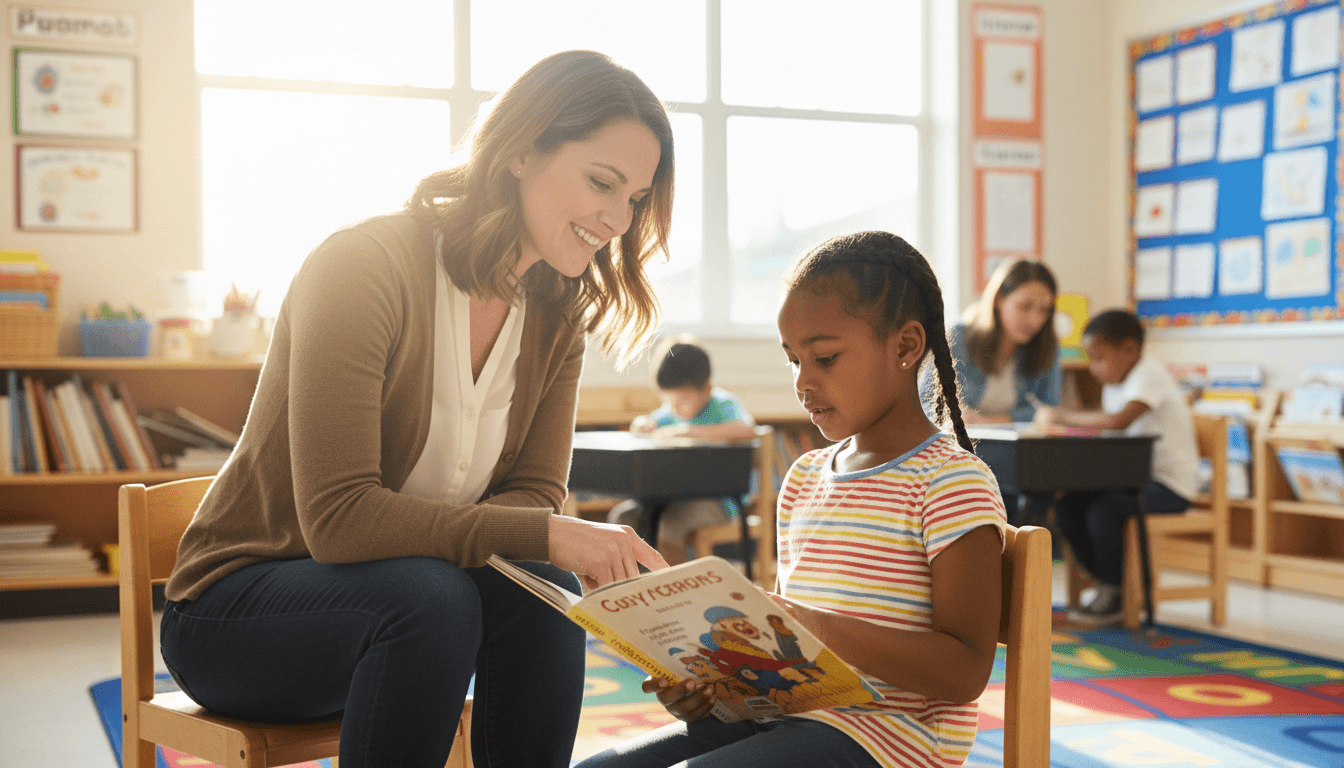
Describe the reading helper role specifically. A reading volunteer sits with one child or a pair of children, listens to them read aloud from a book at their level, asks a few simple comprehension questions, and offers encouragement. The session is typically ten to fifteen minutes. No teaching experience is required. You will provide a brief training, a simple guide for what to do when a child gets stuck, and a list of comprehension prompt starters.
Give families the schedule: which mornings work, how far in advance to sign up, and whether they need to come every week or if occasional help is also welcome. Both regular and drop-in volunteers are useful, and families who know both options exist are more likely to show up.
Classroom party planning and event support
Seasonal classroom parties, holiday celebrations, and end-of-year events all require planning and setup work that is time-consuming during the school day. A small group of parent volunteers who coordinate the class party, handle the food order or snack distribution, and set up and clean up the event space take a significant logistical load off the teacher.
Describe what event support looks like: whether it is coordinating a sign-up list, purchasing a specific item, arriving fifteen minutes early on the day of the event, or staying to help with cleanup. Families who know exactly what is needed are far more likely to volunteer than those who receive a general "help needed" request.
Field trip chaperones
Field trips are a highlight of the first grade year and almost always require adult chaperones. Let families know early which field trips are planned and how many chaperones each one needs. Give them a sense of what chaperoning involves: supervising a small group of children, staying with the group at all times, and helping manage transitions and bathroom breaks. Most families find chaperoning a genuinely fun experience, and naming that honestly in the newsletter reduces the hesitation.
At-home volunteer opportunities for families who cannot come in
Be explicit about this in every volunteer newsletter. Not all families have the schedule flexibility to come into the school building during the day, and a newsletter that only describes in-classroom roles sends the message that their help is not needed. At-home volunteer work includes cutting out laminated materials, preparing homework folders, making classroom labels, researching a field trip destination, creating a classroom supply donation list, or organizing a book drive.
Families who contribute from home feel as much a part of the classroom community as those who come in, and that sense of belonging shows up in their children's engagement at school.
Career sharing visits
First graders are naturally curious about what adults do for work, and a career sharing visit from a parent connects classroom learning to the real world in a memorable way. Invite families to share what they do in a brief ten to fifteen minute visit: what tools or skills their work requires, what they enjoy about it, and how they use reading, math, or science in their job. A nurse, a firefighter, a chef, an engineer, a musician, a farmer, or a store owner can all offer a first grader a vivid picture of how school skills connect to adult life.
How to make families feel genuinely welcome
The most effective volunteer programs make every volunteer feel that their contribution matters, regardless of how much time they gave. A specific, personal thank-you note after a volunteer session, a mention in the classroom newsletter, or a brief acknowledgment at a classroom event all accomplish this. Families who feel genuinely appreciated come back, and they tell other families. The easiest recruiting tool you have is a volunteer who had a good experience.
Get one newsletter idea every week.
Free. For teachers. No spam.
Frequently asked questions
What are the most useful ways first grade parents can volunteer?
The highest-impact volunteer opportunity in first grade is one-on-one or small group reading support. A trained parent volunteer who listens to a child read aloud, asks a few comprehension questions, and gives encouragement for five to ten minutes frees the teacher to work with another group and gives the child extra reading practice time. Other valuable opportunities include field trip chaperoning, classroom party planning and setup, at-home prep work like cutting materials or laminating, library book organizing, and career sharing visits where parents talk about their work.
How do I recruit parent volunteers in a first grade newsletter?
Be specific about what help looks like and make it easy to say yes. A generic 'we could always use volunteers' ask gets fewer responses than 'I am looking for two parents who can come in on Tuesday mornings from 9 to 9:30 to listen to children read.' Give families a clear picture of what they would actually do, how long it takes, what training or preparation is required, and how to sign up. The more specific the ask, the less intimidating it is and the more likely families are to follow through.
How do I make parents feel welcome as volunteers even if they are not teachers?
Most parent volunteers are nervous about doing the wrong thing in a classroom, especially with academic tasks like listening to reading. Give them a simple, specific role with clear instructions before they arrive. For reading volunteers, a half-page guide on what to do when a child gets stuck on a word, how to ask a comprehension question, and how to end the session is enough. Volunteers who feel prepared and who receive a brief thank-you note or acknowledgment afterward are far more likely to come back.
How do I include families who cannot come into the classroom as volunteers?
There are meaningful volunteer contributions that work entirely from home. Cutting out laminated materials, preparing packets or folders, creating classroom labels or signs, researching a field trip destination, or organizing a classroom library book donation drive are all things families can do without being physically present. Naming these options explicitly in the volunteer newsletter gives working parents, parents of younger siblings, and parents with transportation challenges a genuine way to contribute. They feel included rather than excluded, which strengthens the family-school connection.
What newsletter tool works best for recruiting first grade parent volunteers?
Daystage works well for volunteer recruitment newsletters because it delivers a clear, well-formatted email that families can read in a few minutes and respond to directly. You can list the specific volunteer opportunities, link to a sign-up form, and include a brief thank-you to families who have already helped this year all in one send. Most teachers put a volunteer newsletter together in fifteen minutes using Daystage, and the response rate from families is noticeably higher than a note in a folder that gets buried at the bottom of a backpack.

Adi Ackerman
Author
Adi Ackerman is a former classroom teacher and curriculum writer with 8 years in K-8 schools. She writes about school communication, parent engagement, and what actually works in real classrooms.
More for Classroom Teachers
ELA Curriculum Update in Your Classroom Newsletter: What Parents Need to Know
Classroom Teachers · 6 min read
Communicating a Community Service Project in Your Classroom Newsletter
Classroom Teachers · 5 min read
Cultural Heritage Month in Your Classroom Newsletter: What to Communicate
Classroom Teachers · 6 min read
Ready to send your first newsletter?
3 newsletters free. No credit card. First one ready in under 5 minutes.
Get started free