

1st Grade Curriculum Overview Newsletter: What Your Child Will Learn This Year
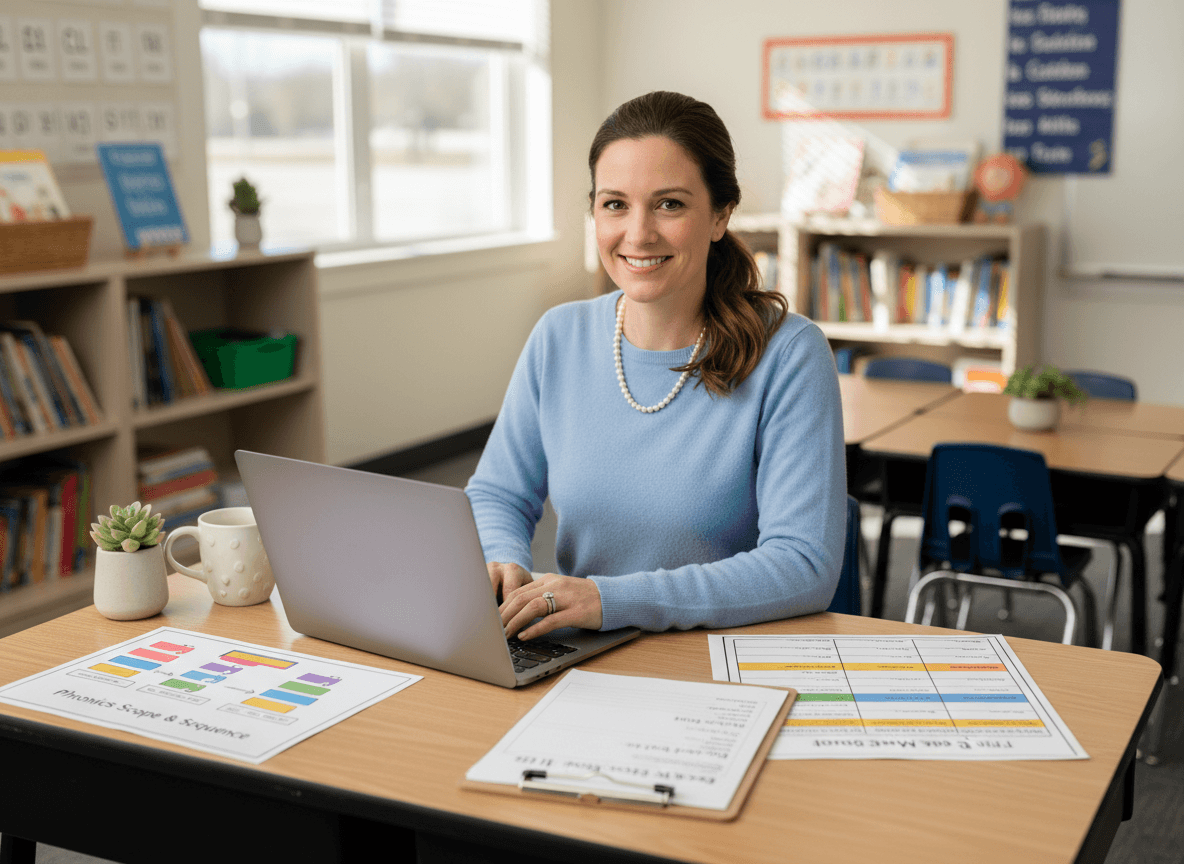
The start-of-year curriculum overview newsletter is one of the most useful things a first grade teacher can send home. It gives families a roadmap for the year, sets expectations for what their child will learn, and opens the door for them to support the curriculum at home. A well-written overview builds the partnership between home and school before a single homework assignment goes home.
English Language Arts: phonics, reading, and writing
ELA is the centerpiece of first grade instruction. In phonics, children move from the basic letter-sound knowledge they built in kindergarten to consonant blends, digraphs, and short and long vowel patterns. By the end of first grade, most children who are on track are reading simple chapter books or mid-level picture books independently.
Sight words continue to expand throughout first grade. The Dolch or Fry word lists are commonly used, and children who can recognize the most frequent words by sight read more fluently and with more comprehension. Share the sight word program you are using and how families can practice at home.
In writing, first grade is when children move from drawing with a label to writing full sentences and eventually short paragraphs. They learn about capitalization, punctuation, and how to organize their ideas. By June, most first graders can write several sentences about a topic with some detail and a beginning sense of structure.
Reading comprehension: more than just decoding
Reading in first grade is about both decoding, sounding words out, and comprehension, understanding and thinking about what has been read. As children's decoding becomes more automatic, the emphasis on comprehension grows. Families can support comprehension at home by asking simple questions after reading: What happened first? Why did the character do that? What do you think will happen next? These conversations build the thinking skills that drive reading growth.
Mathematics: addition, subtraction, and place value
First grade math builds number sense and introduces the foundations of place value. The major strands are operations and algebraic thinking, where children learn to add and subtract within 20 using multiple strategies; number and operations in base ten, which introduces the concept that two-digit numbers are made up of tens and ones; measurement and data; and geometry.
By the end of first grade, the expectation is that children can add and subtract fluently within 20, understand the place value structure of two-digit numbers, compare and order numbers, and work with basic measurement and shapes. Share the specific benchmarks your school or district uses so families have a concrete target to understand.
At-home math practice does not require workbooks. Counting coins, playing simple card games that involve addition, talking about more and less in everyday situations, and building or measuring objects around the house all reinforce what is happening in the classroom.
Science and social studies themes
Science units in first grade vary by district and curriculum, but common themes include living things and life cycles, weather and seasons, properties of materials, light and sound basics, and plants and animals in their habitats. Science in first grade is inquiry-based, which means children are observing, asking questions, and building explanations rather than memorizing facts.
Social studies in first grade typically covers community and citizenship, maps and where we live, family structures and cultural heritage, and how communities work together. Both subjects build the background knowledge that supports reading comprehension throughout the school years, which is why they matter even when they do not have their own standardized assessments.
How assessments work in first grade
Let families know what kinds of assessments you use and how they will hear about results. Benchmark reading assessments, typically done three times a year, track reading level growth. Phonics assessments check mastery of the patterns that have been taught. Math unit assessments come at the end of each unit. Observational notes inform your daily instructional decisions and come up at conferences.
Emphasize that most first grade assessments are used for instructional planning, not high-stakes grading. Families who understand this are less anxious about results and more focused on the learning process, which is exactly the mindset that supports first grade success.
What families can do at home to support every subject
Close the curriculum overview with practical, subject-specific home support suggestions. For ELA: twenty minutes of reading together each evening, listening to your child read aloud and helping them when they get stuck on a word, and having conversations about books after reading. For math: simple addition and subtraction games with cards or dice, counting and comparing objects in the home, and letting children help with any measuring or counting that comes up naturally. For science and social studies: going outside and observing, asking curious questions about the world, visiting the library for books on topics the class is studying.
Families who understand the curriculum roadmap and know how to support it at home are the most powerful partners a first grade teacher can have. A clear, well-organized curriculum overview newsletter sets that partnership up from day one.
Get one newsletter idea every week.
Free. For teachers. No spam.
Frequently asked questions
What subjects are covered in a first grade curriculum?
First grade typically covers English Language Arts, including phonics, sight words, reading comprehension, and beginning writing; mathematics, including addition and subtraction, place value, measurement, and geometry; science with units that vary by district but often include life cycles, weather, or physical science basics; and social studies covering community, citizenship, maps, and family and cultural heritage. Most first grade teachers also dedicate time to social-emotional learning, which is woven into the school day rather than taught as a separate subject.
How does phonics instruction work in first grade?
First grade phonics follows a structured, sequential scope and sequence. Children move from letter-sound correspondences they learned in kindergarten to consonant blends, short vowel words, digraphs like 'sh' and 'ch,' and eventually long vowel patterns. Most programs introduce one or two new phonics patterns each week and provide decodable books that use only the patterns already taught. Families can support phonics at home by reading decodable readers together and by playing word games that draw attention to the sounds in words.
How do assessments work in first grade?
First grade assessments typically include benchmark reading assessments done three times a year to track reading level growth, regular phonics and spelling assessments that check mastery of taught patterns, math unit assessments at the end of each unit, and observational notes the teacher keeps throughout the year. Most of these are used for instructional planning rather than as grades. Families typically receive formal results at parent-teacher conferences in the fall and spring, but you can and should share progress informally in the monthly newsletter.
What is the most important thing families can do at home to support first grade learning?
Reading aloud together and listening to your child read aloud to you is the single highest-impact thing a family can do for first grade success. Twenty minutes of reading each evening builds vocabulary, comprehension, fluency, and a love of books that no amount of worksheet practice can replicate. Beyond reading, practicing addition and subtraction with simple games or everyday objects, having conversations about what children observe and notice in the world around them, and maintaining consistent routines for sleep and homework are all meaningful contributions.
What newsletter tool works best for sending a first grade curriculum overview to parents?
Daystage is designed for teachers who want to send a clear, comprehensive start-of-year newsletter without the formatting work. A first grade curriculum overview covering ELA, math, science, social studies, assessments, and home support tips fits cleanly in one Daystage send. It arrives in every parent's inbox as a well-formatted, readable email they can save and reference throughout the year. Most teachers put the full overview newsletter together in under twenty-five minutes using Daystage.

Adi Ackerman
Author
Adi Ackerman is a former classroom teacher and curriculum writer with 8 years in K-8 schools. She writes about school communication, parent engagement, and what actually works in real classrooms.
More for Classroom Teachers
ELA Curriculum Update in Your Classroom Newsletter: What Parents Need to Know
Classroom Teachers · 6 min read
Communicating a Community Service Project in Your Classroom Newsletter
Classroom Teachers · 5 min read
Cultural Heritage Month in Your Classroom Newsletter: What to Communicate
Classroom Teachers · 6 min read
Ready to send your first newsletter?
3 newsletters free. No credit card. First one ready in under 5 minutes.
Get started free