

Fifth Grade Science Fair Newsletter: Independent Research, Real Methods
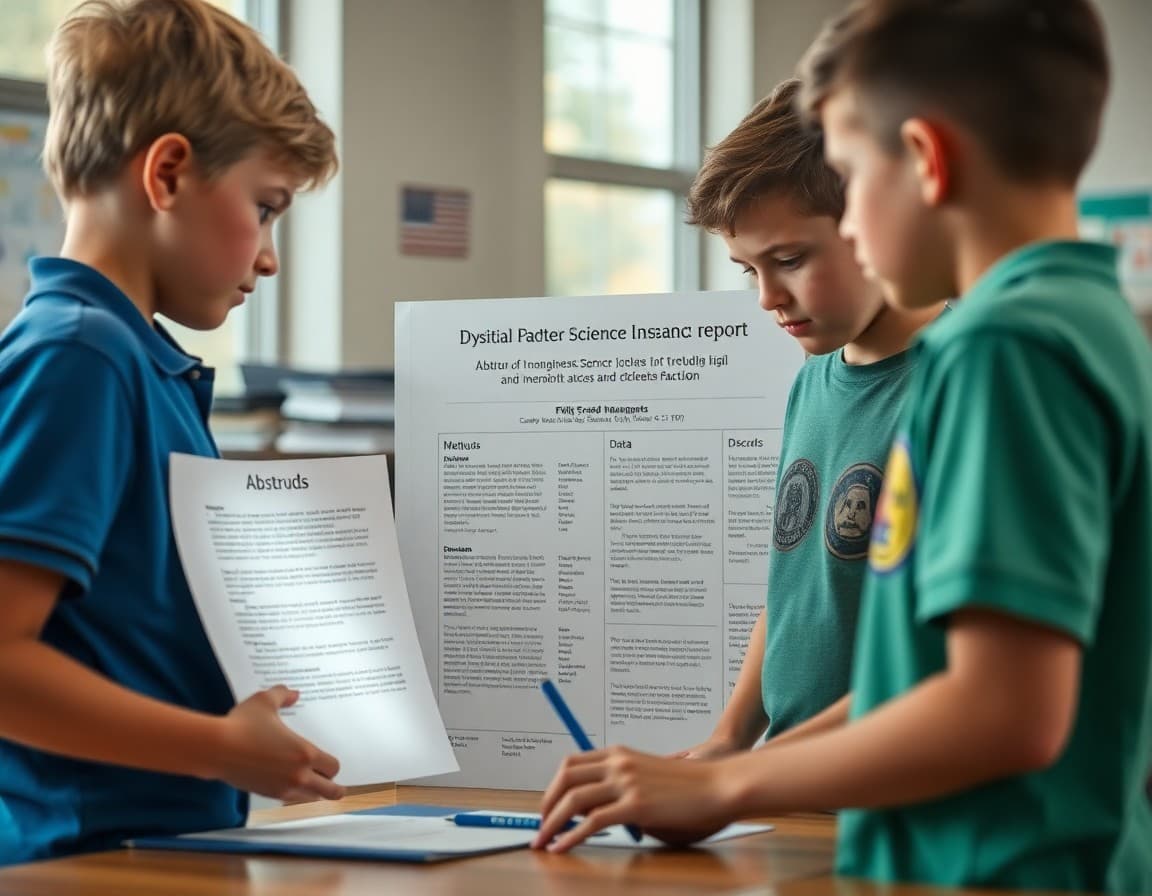
Fifth grade science fairs are as close to real research as elementary students get. The expectation is an independent experiment with formal documentation, a written research paper, and a presentation to judges. Your newsletter explains what this requires and how families can support without undermining the independence that makes this project valuable.
What Distinguishes Fifth Grade
Be explicit about the step up. Fifth grade adds: a formal abstract (a brief summary of the entire project), a detailed methodology section (specific enough that another person could replicate the experiment), a discussion section (what the results mean, why they might differ from the hypothesis, and what questions they raise), and a bibliography in a standard citation format. This is a research project in the full sense.
The Written Research Paper
The display board is a summary of the paper, not the paper itself. The paper should include: abstract (150-200 words), introduction with background research, hypothesis with rationale, materials and methods, results (data tables and graphs), discussion, conclusion, and bibliography. Total length for fifth grade: 3-5 pages.
Tell families: "The paper is the actual work. The display board is the presentation. Both need to exist and should be consistent with each other."
Designing an Experiment Worth Analyzing
Help families understand what makes a good fifth grade experimental design. The experiment should: have a single independent variable, a quantifiable dependent variable, at least 5 trials per condition, appropriate controls, and a sample size large enough to show trends. Projects that produce 3 data points cannot support meaningful analysis. Projects that measure something qualitative (taste, appearance) are harder to analyze quantitatively.
Error Analysis: The New Requirement
Fifth grade projects should include error analysis in the discussion section. Explain what this means: "Were there things in your experiment that you could not fully control that might have affected your results? Name them specifically." Room temperature variation, measurement precision, human error, and sample size limitations are all valid error sources. Students who include this show scientific sophistication.
The Presentation to Judges
Tell families that students will present to judges and answer questions. Practice at home: have your child give a 3-minute overview of their project and then ask 5-6 questions about their methodology and results. "Why did you choose 5 trials?" "How would you change the experiment if you did it again?" "What would your next research question be?" These are exactly the kinds of questions judges ask.
Timeline
Weeks 1-2: Research, question, hypothesis, and experimental design. Submit design for approval by [date].
Weeks 3-4: Run experiment, collect data, photograph process.
Week 5: Analyze data, write research paper, create display board.
Fair Day: Setup 7:30 AM. Judging presentations 9:00-11:30 AM. Family and school viewing 1:00-3:00 PM.
Get one newsletter idea every week.
Free. For teachers. No spam.
Frequently asked questions
What does a fifth grade science fair project require?
Fifth grade science fair projects typically require: a formal research paper with abstract, background research (3-5 cited sources), hypothesis, methodology, results with data tables and graphs, discussion of results and error sources, conclusion, and bibliography. The display board summarizes the paper. The student should present the project to judges and answer questions about methodology and results.
How do I explain error analysis to a fifth grader?
Error analysis is asking: what could have affected your results that was not part of your experiment design? For example: the temperature in the room changed between trials, the ruler I used was not precise enough, different people poured the liquid each time. Error analysis is not an admission of failure; it is a mark of scientific maturity. Teach students to name 2-3 specific potential sources of error in their conclusion.
How independent should a fifth grader be in the science fair process?
Almost entirely independent, with parent support for safety and logistics. A fifth grader should generate their own question, design their own experiment (with teacher feedback on the design), run the experiment independently, analyze the data, and write the paper. Parents provide transportation for materials, ensure safety during the experiment, and proofread the final paper. The project should be fully explainable and defensible by the student.
What are good fifth grade science fair project topics?
Projects that produce robust quantitative data work best. Examples: how does the concentration of salt affect the boiling point of water, which household material is the best sound insulator (measure decibels with a sound meter app), how does sleep deprivation affect reaction time, which type of exercise most effectively lowers resting heart rate over three weeks, how does soil type affect water retention and plant growth. Each has a measurable dependent variable and allows for meaningful data analysis.
Does Daystage help me manage the multi-week communication needed for a fifth grade science fair?
Yes. The fifth grade science fair spans 4-6 weeks of communication: initial guidelines, experimental design approval deadline, mid-project check-in, paper draft deadline, display requirements, and fair day logistics. Using Daystage for each of these sends keeps all communication organized and accessible, and lets you add RSVP collection for family attendance without a separate form.

Adi Ackerman
Author
Adi Ackerman is a former classroom teacher and curriculum writer with 8 years in K-8 schools. She writes about school communication, parent engagement, and what actually works in real classrooms.
More for Classroom Teachers
Ready to send your first newsletter?
3 newsletters free. No credit card. First one ready in under 5 minutes.
Get started free