
5th Grade Math Facts Newsletter: Practice Makes Perfect at Home
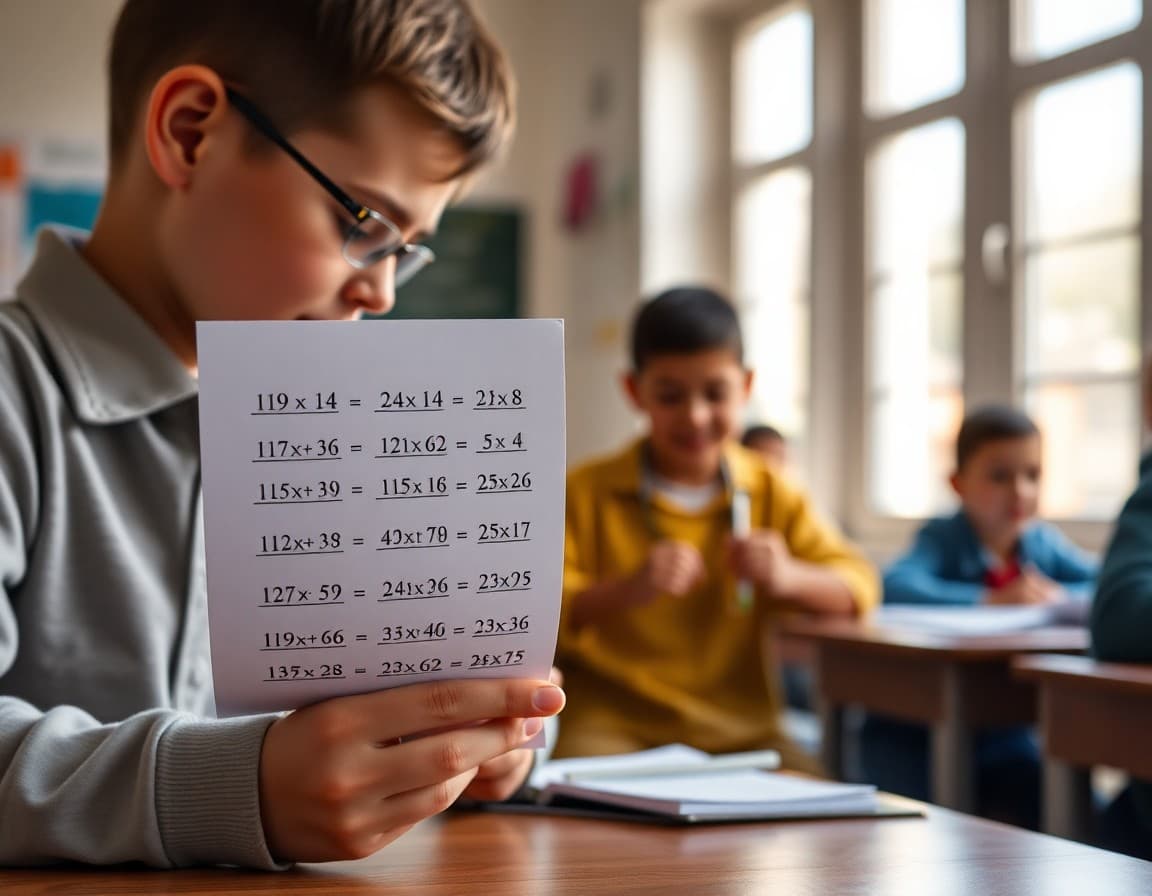
Fifth graders who are not fluent with basic math facts hit a wall in October. Fraction operations, decimal multiplication, and long division all require fast recall of underlying facts. If students are counting on their fingers or pausing to think through 8x7 while trying to divide fractions, the cognitive load becomes unmanageable. A math facts newsletter helps families become part of the solution before the wall appears.
Why Math Fact Fluency Still Matters in 5th Grade
Many parents assume math facts are a 3rd or 4th grade problem. By 5th grade, the content moves fast enough that any fluency gaps become visible quickly. When a student spends 15 seconds recalling 9x6 while working a multi-step problem, they lose track of the overall structure. Fluency is not a nice-to-have in 5th grade. It is a prerequisite for the grade-level work.
What to Ask Families to Practice
Be specific. Tell families which fact sets you are targeting and why. Most 5th graders who have gaps are missing the 6s, 7s, 8s, and 9s in both multiplication and division. Corresponding division facts are often weaker than multiplication, so include those explicitly. A simple statement like "focus on 7s and 8s this month in both multiplication and division" gives families a clear target.
How to Practice: Five Minutes That Actually Work
Share a concrete practice method in your newsletter. Here is one you can adapt directly:
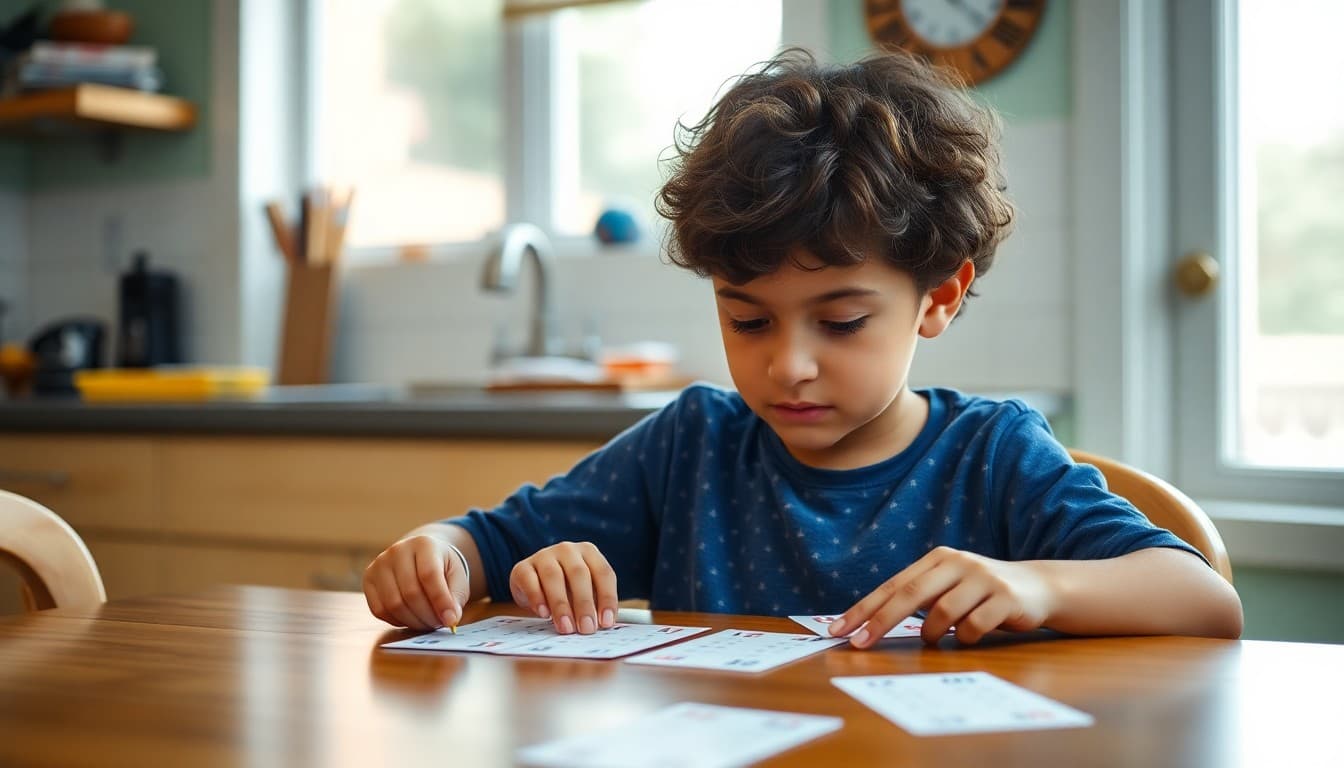
"Take a stack of 20 flashcards: 10 from the fact family you are targeting, 10 mixed from earlier practice. Time your child for two minutes. Count correct answers. Track it on a simple chart. Do this every school day. The goal is not perfection on day one. It is seeing the number go up over time."
That protocol takes under five minutes and works. Parents who have a specific method are more likely to actually do it.
Apps and Tools Families Can Use
Some students respond better to screen-based practice. Mention two or three tools families can use: Xtra Math is free and research-backed. Math Fact Fluency on various platforms uses spaced repetition. Games like Prodigy can help with motivation, though the math exposure is less targeted. Give families options rather than mandating one tool.
What to Do If a Student Is Stuck on a Specific Fact
Some facts just do not stick for certain students. Tell families about the "known fact" strategy: if your child cannot recall 8x7, they can use 8x6 (a fact they know) plus one more 8. Encourage this as a bridge rather than a failure. Over time, the derived fact becomes automatic. This is a normal part of how fluency develops.
Tying Practice to Upcoming Classwork
Let families know what specific content is coming up that relies on fact fluency. "We are starting fraction multiplication next month. Students who are fluent with their facts will be able to focus on the new concepts without getting tripped up by the underlying arithmetic." That sentence motivates practice in a concrete way.
Monthly Progress Notes
Send a brief update each month on what the class is working on and whether you have noticed improvement. This does not have to be detailed: two sentences about where the class stands and one reminder about the practice method. Short and consistent beats long and occasional.
Get one newsletter idea every week.
Free. For teachers. No spam.
Frequently asked questions
What math facts should 5th graders still be practicing?
By 5th grade, students should have multiplication facts through 12x12 and corresponding division facts fully automatic. Many students still have gaps in 7s, 8s, and 9s. Fluency with these frees up working memory for the harder 5th grade work: fractions, decimals, and multi-step word problems.
How many minutes per night of math fact practice is enough?
Five to ten minutes of focused, spaced practice beats 30 minutes of cramming. Research on math fact fluency is consistent: short daily sessions with mixed recall practice produce lasting automaticity. Your newsletter can share this so families stop trying to do marathon drill sessions.
My students use a calculator in class. Why do math facts still matter?
Calculator access does not eliminate the need for number sense. When students are not fluent with basic facts, they make errors entering problems and cannot catch unreasonable answers. Mental estimation, fraction simplification, and algebraic thinking all require underlying fact knowledge.
What practice methods actually work for 5th graders?
Mixed-set flashcards, quick games like Around the World or Multiplication War, and online tools like Xtra Math or Reflex are all effective. What does not work well at this age is rote copying of facts in order, which produces recognition but not automatic recall.
Is there a way to send math practice reminders home automatically each week?
Yes. Daystage lets you build a weekly newsletter template for math practice and schedule it to go out every Monday. You can vary the content slightly each week, noting which fact set the class is focusing on, without writing a completely new message each time.

Adi Ackerman
Author
Adi Ackerman is a former classroom teacher and curriculum writer with 8 years in K-8 schools. She writes about school communication, parent engagement, and what actually works in real classrooms.
More for Classroom Teachers
Ready to send your first newsletter?
3 newsletters free. No credit card. First one ready in under 5 minutes.
Get started free