
February Newsletter Ideas for Kindergarten Teachers: What to Send This Month
February in kindergarten brings two things families are very invested in: Valentine's Day and the mid-year reading checkpoint. It also brings dental health month, winter illness season, and the stretch of the year where attendance patterns start affecting academic progress. Your February newsletter addresses all of it before families have to ask.
Give families the full Valentine's Day rundown
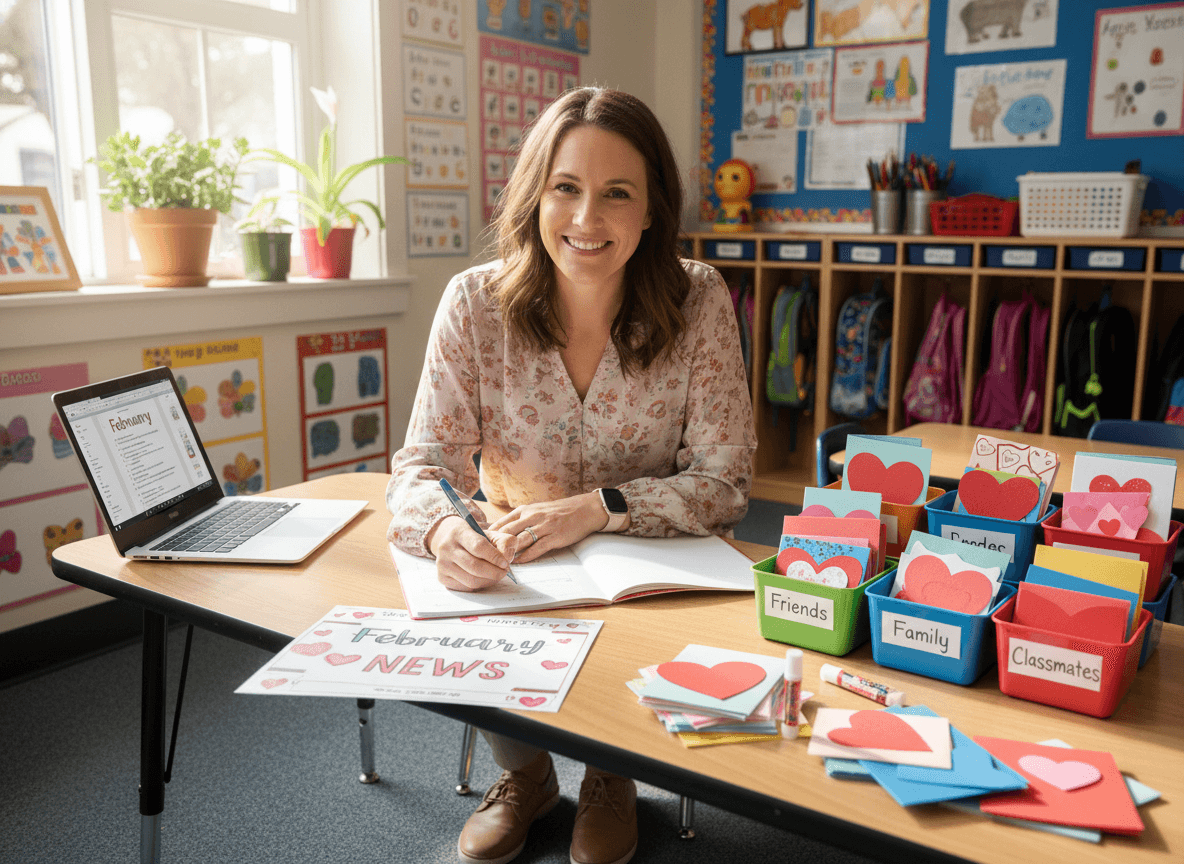
Valentine's Day in kindergarten generates more parent questions than almost any other school event. Answer them all in one newsletter section before anyone sends the first email. When is the party? Should students bring valentines? How many classmates are in the class? Should the cards be store-bought or handmade? Are there any food or allergy restrictions? What activities will the class do during the party?
The more complete your Valentine's Day section is, the fewer individual questions you field. Kindergarten families want to get it right for their child. Give them the information they need to do that.
Share the mid-year reading update
February is a natural mid-year checkpoint for kindergarten reading. By this point, most students should be blending simple CVC words, reading short sentences, and building a reliable sight word bank. Tell families where the class is overall and what on-track looks like in February.
Include one or two specific at-home activities based on where most students are. Practicing sight words on index cards, reading a simple book three times in a row to build fluency, or pointing to each word while reading aloud are all genuinely useful. Families who have a concrete thing to do are more helpful than families who just know reading is important.
Connect dental health month to classroom learning
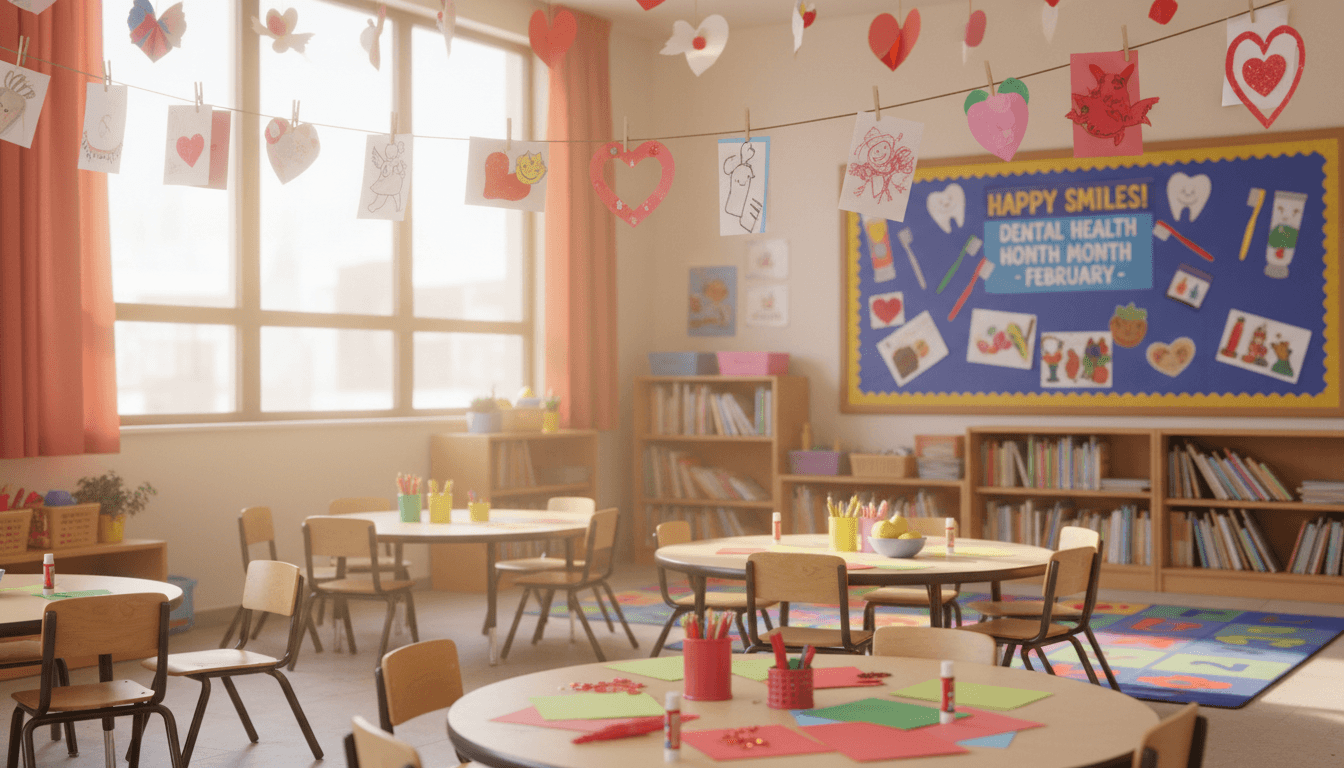
February is National Children's Dental Health Month, and kindergarten classrooms often weave it into literacy and science activities. If your class is reading books about teeth, sorting foods by how healthy they are for teeth, or learning a tooth-brushing song, describe it in the newsletter. Parents who know their child is learning about dental health at school can reinforce it at home naturally, especially during the bedtime toothbrushing routine.
Connecting school learning to home life is one of the most useful things a newsletter can do. Dental health month makes that easy.
Address winter attendance directly
February is peak cold and flu season. Kindergartners who miss several days in a row miss phonics instruction, new sight words, and math concepts that build on each other. Address attendance in your newsletter as a partnership rather than a warning: you understand illness happens, you have a process for catching students up, and you ask families to reach out when their child misses more than a day so you can send work home.
Also remind families that students who are running a fever or vomiting should stay home, and that returning too soon does not actually help. Kindergartners share everything. A clear attendance communication in February helps the whole class.
Update families on math progress
February kindergarten math typically includes counting to higher numbers, comparing quantities, introducing simple addition and subtraction, and working with 2D and 3D shapes. Connect any of this to the Valentine's Day activities: counting hearts, sorting by color, making AB and AAB patterns with candy hearts. When families see the math in the celebration activities, they understand that February is full of learning even when it looks like crafts and parties.
Note any February schedule changes
Presidents Day is in February and creates a long weekend in many districts. Note the day off and the return date. If there are any other early dismissals, assemblies, or spirit days this month, list them. Kindergarten families plan around school schedules more than any other grade level because childcare logistics are still complex for many of them.
Close with what you are noticing about this class
End the February newsletter with a specific observation about what the class is doing well right now. The sight word that clicked for the whole class in one week. The way students are helping each other read during partner time. The counting song everyone knows by heart. Small, true details make families feel connected to the classroom in a way that general updates cannot.
Daystage makes it easy to send a February newsletter that covers all of this without taking your whole planning period to write. Set up your sections and send. Families get everything they need in one place.
Get one newsletter idea every week.
Free. For teachers. No spam.
Frequently asked questions
What should the February Kindergarten newsletter include about Valentine's Day?
Cover the party date and time, whether students should bring valentines and for how many classmates, whether store-bought or handmade is preferred, any food restrictions for the party, and what activities the class will do. Kindergarten Valentine's Day generates enormous excitement and an equal number of parent questions. Answering them all in the newsletter before anyone asks saves you a week of individual responses and ensures every student shows up prepared.
How do I use the February Kindergarten newsletter to share mid-year reading progress?
February is a meaningful reading checkpoint. By mid-year, most kindergartners should be blending CVC words, reading simple sentences, and building a sight word bank of 20 to 40 words. Share where the class is overall and what on-track looks like right now. Give families one or two specific things they can do at home to support wherever their child is in the process. Mid-year reading updates help families gauge progress without waiting for formal report cards.
What is dental health month and how does it fit in the Kindergarten newsletter?
February is National Children's Dental Health Month, and many kindergarten classrooms build literacy and health activities around it. If your class is reading books about teeth, graphing which foods are good or bad for teeth, or doing a brushing activity, describe it in the newsletter. Parents who know their child is learning about dental health at school can reinforce it at home with the bedtime brushing routine. It is a small connection that makes the classroom work feel relevant.
How do I address winter attendance patterns in the February Kindergarten newsletter?
February is peak cold and flu season, and attendance gaps in kindergarten have real academic consequences. Address it directly but without making families feel accused. Explain that you understand illness happens and that you have a plan for helping students catch up, then ask families to call in absences early and reach out when their child misses more than a day so you can send work home. Framing the attendance conversation as a partnership works better than a warning.
What newsletter tool works best for Kindergarten teachers in February?
Daystage helps Kindergarten teachers send a complete February newsletter, including Valentine's Day party details, reading progress update, dental health activities, and attendance reminders, in a clean, easy-to-read format that parents can open on their phones. You build the layout once and update it each week. Kindergarten families are busy and need information quickly. A well-organized newsletter they can scan in two minutes is the one they actually read.

Adi Ackerman
Author
Adi Ackerman is a former classroom teacher and curriculum writer with 8 years in K-8 schools. She writes about school communication, parent engagement, and what actually works in real classrooms.
More for Classroom Teachers
Ready to send your first newsletter?
3 newsletters free. No credit card. First one ready in under 5 minutes.
Get started free