
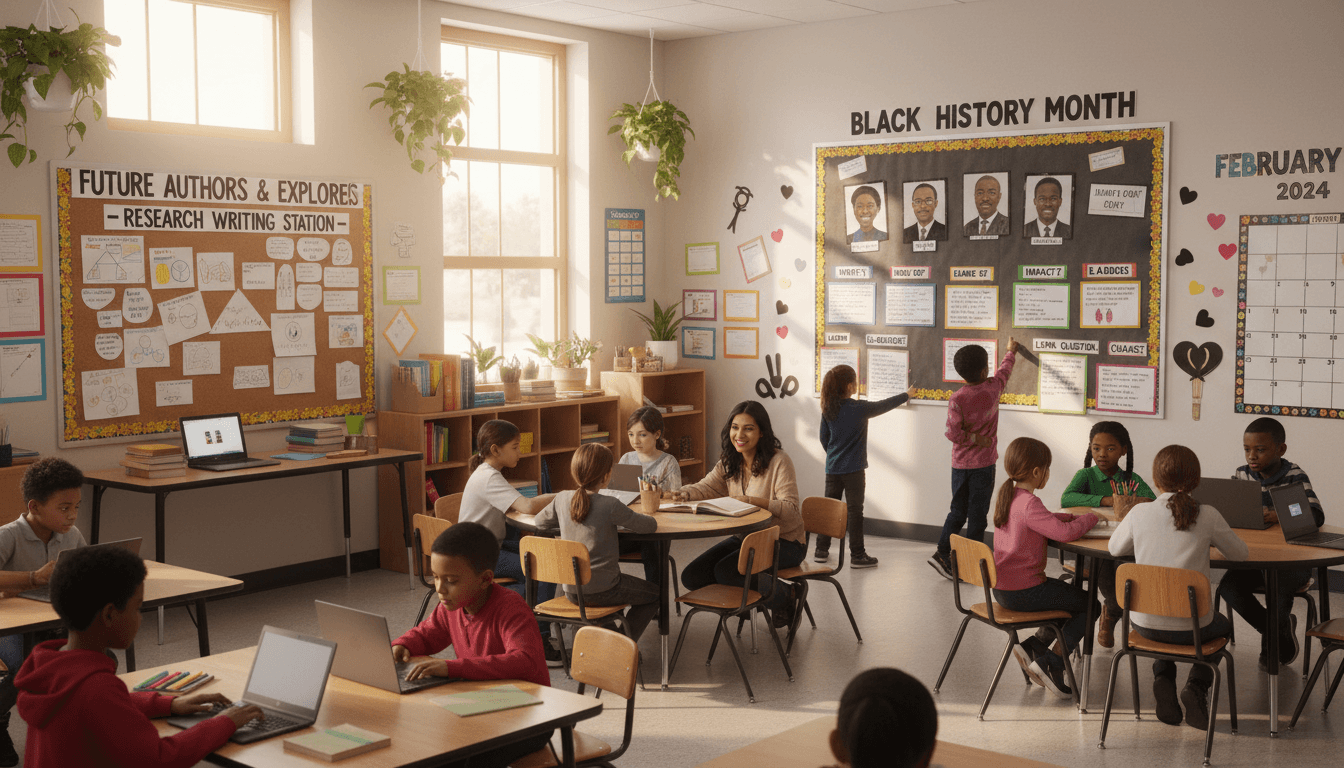
February Newsletter Ideas for 4th Grade Teachers: What to Send This Month

February in 4th grade is a productive, sometimes complicated month. Research writing is often in full swing, Black History Month creates an opportunity for real inquiry work, Valentine's Day needs logistics, and mid-year assessments are either wrapping up or just concluded. A well-organized February newsletter gives parents a clear picture of where the class is and what they can do to help from home.
Share where the research writing unit stands
Fourth grade research writing is a significant leap from narrative or opinion pieces. Students are learning to identify credible sources, take organized notes, avoid copying, and build an argument or explanation from multiple pieces of evidence. Your February newsletter should describe what stage the class is in: choosing topics, gathering sources, drafting, or revising.
Parents who understand that research writing has multiple phases are more patient with the slow progress and less likely to intervene by writing the paper for their child. Name the current phase and explain what students are expected to do independently.
Frame Black History Month as inquiry, not decoration
Fourth graders are ready for structured inquiry around Black History Month. If your class is researching specific figures, studying a historical period, or connecting the work to your social studies or ELA standards, say so in the newsletter. Name the people and topics students are investigating. If the research connects to your writing unit, that integration is worth highlighting: students are doing real research, not just filling in a worksheet.
Parents who see the academic rigor behind the project are more likely to support the work at home and extend conversations beyond school hours.
Handle Valentine's Day with a short, complete section
By 4th grade, Valentine's Day has a different energy than the early grades, but the logistics are the same. Your newsletter should cover: whether students are exchanging cards, how many students are in the class, the treat policy, the party time, and whether you need parent volunteers. One clear paragraph is enough. Avoid over-selling the event. Fourth graders appreciate a low-key party that does not disrupt the academic day too heavily.
Update parents on math progress
February 4th grade math typically involves multi-digit multiplication, division, and the beginning of fraction work. Give parents a one-paragraph update on what the class is working on and how home practice can reinforce it. If fraction vocabulary is new, define it briefly. If students are expected to know their multiplication facts fluently before division work intensifies, say so directly. Parents cannot help if they do not know what to practice.
Address the mid-year reading picture
By February, you likely have mid-year reading data in hand. Share the class picture without individual scores: where the class is with reading stamina, comprehension of complex text, and reading volume. If most students are reading above, at, or below grade-level expectations, you do not need to specify individuals, but a general sense of where the class lands helps parents calibrate expectations. Note what the second half of the year will focus on to close any gaps.
Preview the second semester scope
February is a good moment to give parents a brief overview of what the rest of 4th grade covers. What writing units come next? What social studies or science topics are ahead? When are the next formal assessments? A short roadmap signals that you are planning ahead and gives parents enough context to support the work that is coming.
Close with one useful home action
Finish the newsletter with one concrete suggestion tied to something specific this month. It might be visiting the library with their child to find a book about a Black American figure they are studying, reviewing multiplication facts for ten minutes before the division unit begins, or asking their child to explain their research topic at dinner. One specific, low-effort action gets more traction than a general appeal to "stay involved in learning."
Daystage makes it straightforward to build a February newsletter with a research update, Black History Month summary, and Valentine's party logistics all in one clean send. The format you establish now carries through the rest of the year.
Get one newsletter idea every week.
Free. For teachers. No spam.
Frequently asked questions
What academic update should a 4th grade February newsletter lead with?
Lead with the research writing unit if that is what is currently running in your classroom. Fourth grade is when students learn to gather information from multiple sources, take notes, and synthesize that into an organized piece. Parents who understand the process, not just the final product, are more patient with the messy drafting phase and more supportive of the research work that comes home.
How should a 4th grade teacher frame Black History Month in the February newsletter?
Frame it as an inquiry project, not a craft. Fourth graders are capable of doing real research: identifying a figure, finding sources, taking notes, and presenting findings. If your Black History Month work connects to your research writing unit, name that integration. Parents who see it as rigorous academic work engage differently than parents who think it is a poster project.
How detailed should the Valentine's Day section be in a 4th grade newsletter?
Fourth grade Valentine's parties can sometimes feel lower-energy than younger grades, but logistics still matter. Specify whether students are exchanging cards, note the treat policy, give the party time, and say whether volunteers are welcome. A short paragraph with all the specifics saves you a round of individual emails. Keep the tone matter-of-fact, not overly festive, which matches where most 4th graders are socially.
What math concepts should be in a February 4th grade newsletter update?
February 4th grade math often involves multi-digit multiplication, long division introductions, and fractions. If your class is working on a specific unit, name it and give parents one way to support it at home. For fractions, that might be recognizing halves and fourths in everyday cooking. For multi-digit multiplication, it might be five minutes of fact review to keep the foundational facts sharp.
What newsletter tool works best for 4th grade teachers?
Daystage is built for teachers who want a clean, structured newsletter without spending half their prep period on formatting. For a 4th grade February newsletter with a research writing update, Black History Month project summary, and party logistics, the editor handles all of it in one place. Parents get it in their inbox with consistent formatting every week.

Adi Ackerman
Author
Adi Ackerman is a former classroom teacher and curriculum writer with 8 years in K-8 schools. She writes about school communication, parent engagement, and what actually works in real classrooms.
More for Classroom Teachers
Ready to send your first newsletter?
3 newsletters free. No credit card. First one ready in under 5 minutes.
Get started free