
February Newsletter Ideas for 1st Grade Teachers: What to Send This Month
February in first grade is a month with a lot happening at once. Mid-year reading benchmarks, Valentine's Day party logistics, Black History Month curriculum, and the second semester push toward June reading goals all land in the same four weeks. Your February newsletter holds all of it together and keeps families oriented when the month could easily feel scattered.
Communicate mid-year benchmark results in context
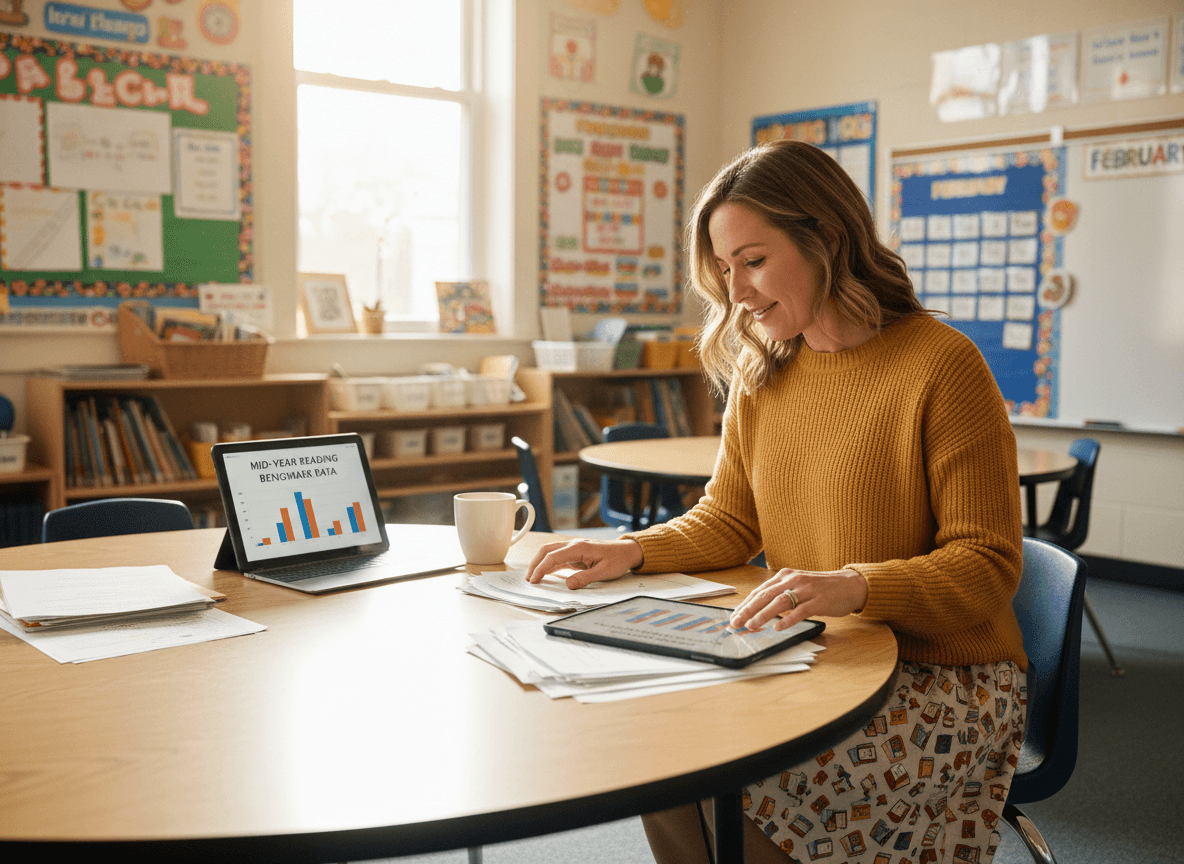
February mid-year benchmarks are a significant moment in first grade. They measure reading fluency, phonics mastery, and sight word knowledge at the halfway point of the year. Families who receive data without context either over-react or under-react. Your newsletter is the place to provide that context before individual report cards or conference conversations.
Describe what the benchmark assesses. Explain what on-track looks like in February for a first grader: the fluency rate, the phonics patterns that should be solid, the approximate number of sight words. Tell families what you are doing in instruction based on the results. This framing makes individual score conversations more productive and prevents the panic that comes from seeing a number without knowing what it means.
Describe your Black History Month curriculum
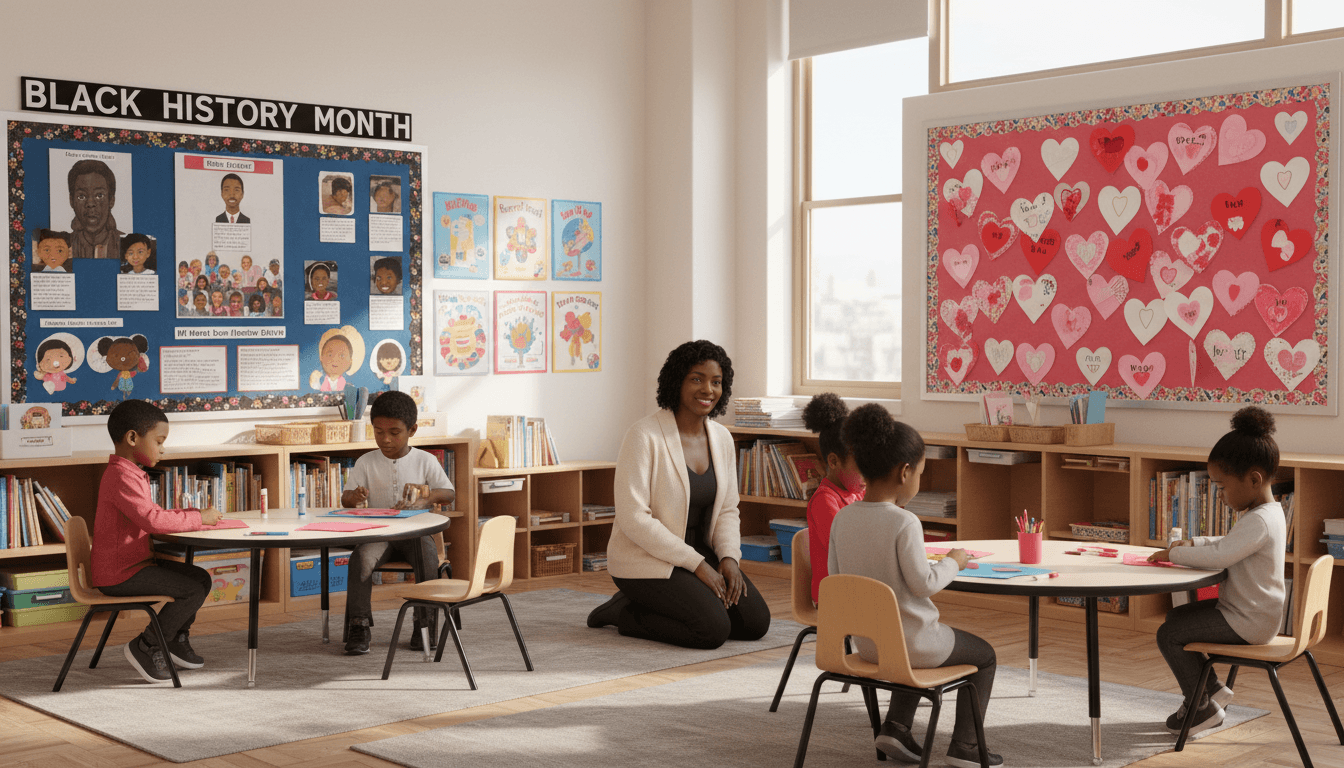
Black History Month in first grade is most powerful when it is specific. Tell families exactly what your class is doing: which books you are reading aloud, which historical figures students are learning about, what writing or art projects are connected to the curriculum. Name names. Ruby Bridges, Harriet Tubman, Martin Luther King Jr., Mae Jemison, John Lewis, and others that first graders can connect to and remember.
Families who know which figures their child is studying can continue the conversation at home, find related books at the library, or share family stories connected to the history. Specific curriculum descriptions in the newsletter turn Black History Month from a school activity into a month- long family conversation.
Cover Valentine's Day party logistics completely
Valentine's Day parties in first grade require more parent coordination than any other class celebration. In your newsletter, cover every detail: the date and time, whether students should bring valentines and how many, whether store-bought or handmade is preferred, any food allergy restrictions, what activities the class will do, and whether parents are invited or not.
First graders report on the party to their families every day from the moment it is announced. The details they convey are often incomplete or inaccurate. The newsletter is the source of truth, and the more complete it is, the fewer individual emails you send during the week of the party.
Set second semester reading goals clearly
By February, the end-of-year reading expectations are close enough to make concrete. Tell families what a first grader should be able to do by June: read at a specific level range, decode words with blends and digraphs fluently, read simple chapter books independently. Then tell them where most students are in February and what the path from here to June looks like.
Give families a specific at-home reading recommendation. Twenty minutes of reading daily, partner reading with a sibling, or listening to audiobooks while following along are all meaningful. Families who understand the goal and have a specific thing to do are more effective reading partners than families who just know their child needs to practice more.
Update families on the writing curriculum
February first grade writing typically includes informational writing, where students write to teach someone something they know, and narrative writing with a beginning, middle, and end. If your class is working on a specific project, describe it. A student who is writing a how-to book about soccer or a story about a pet is engaged in real writing work. Parents who know what their child is working on can ask meaningful questions that extend the learning.
Note February schedule changes
Presidents Day creates a day off in February in most districts. Note the date and the return day. If there are any early dismissals, assemblies, spirit days, or other schedule changes, list them. First grade families are coordinating morning drop-off and afternoon pickup and need accurate schedule information far enough in advance to arrange coverage.
Close with what February looks like from inside the classroom
End the February newsletter with a real observation about the class. The way students are listening to the Black History Month read-alouds. The phonics pattern that suddenly clicked for six students in one week. The way the class handled the valentine-making activity. Specific, genuine observations give families a window into the classroom that no benchmark data can provide.
Daystage makes it easy to send a February newsletter that families actually read. Include your benchmark context, your Black History Month curriculum description, the Valentine's Day party details, and your class moment in one clean email. Families get everything they need and you get fewer questions in your inbox.
Get one newsletter idea every week.
Free. For teachers. No spam.
Frequently asked questions
How should the February 1st grade newsletter communicate mid-year benchmark results?
February mid-year benchmarks in first grade typically measure reading fluency, phonics knowledge, and sight word mastery. Use the newsletter to describe what the benchmark assesses, what the results mean in practical terms, and what the trajectory looks like from here to June. Give families a concrete sense of what on-track looks like in February so they know whether their child is where they should be. Save individual score conversations for conferences or direct communication, not the group newsletter.
What should the February 1st grade newsletter include about Black History Month?
Describe what your class is actually doing to honor Black History Month: the picture books and biographies you are reading, the historical figures students are learning about, the writing projects or art activities connected to the curriculum. Be specific. Families who know their child is reading about Ruby Bridges, learning about Thurgood Marshall, or writing a tribute to a Black inventor they chose themselves have real conversations at home that extend the classroom learning.
How do I cover Valentine's Day party logistics in the February 1st grade newsletter?
First grade Valentine's Day parties require clear parent communication on several fronts: the date and time, whether students should bring valentines and for how many classmates, whether there are food restrictions, what the party activities look like, and whether parents are invited. First graders come home talking about the party for two weeks before it happens. Families who get the details from the newsletter rather than from a seven-year-old arrive prepared.
How do I communicate second semester reading goals in the February newsletter?
By February, the second semester is underway and the June reading goals are visible from here. Tell families what those end-of-year goals look like for first grade: the reading level range, the sight word count, the fluency expectations. Then tell them where most students are in February and what the path from here to June involves. Families who understand the full arc support the work differently than families who only know their child needs to read more.
What newsletter tool works best for 1st grade teachers in February?
Daystage helps first grade teachers send a complete February newsletter, covering mid-year benchmark context, Black History Month projects, Valentine's Day party logistics, and second semester reading goals, in a clean layout that families can read quickly. You can include a reading progress visual, the party date and logistics in a dedicated section, and a note about what the class is exploring for Black History Month all in one organized email. Families stop asking questions you already answered.

Adi Ackerman
Author
Adi Ackerman is a former classroom teacher and curriculum writer with 8 years in K-8 schools. She writes about school communication, parent engagement, and what actually works in real classrooms.
More for Classroom Teachers
Ready to send your first newsletter?
3 newsletters free. No credit card. First one ready in under 5 minutes.
Get started free