
December Newsletter Ideas for 3rd Grade Teachers: What to Send This Month

December in third grade marks the end of the first real standardized testing year for most students. It is also deep multiplication season, performance month, and the doorway to a second semester that picks up the pace. Your December newsletter does real work: it communicates assessment results context, covers the performance logistics, launches a winter reading challenge, and prepares families for what the second half of the year looks like.
Frame fall assessment or state testing results
Third grade is often the first year students take formal state assessments, and December is when fall benchmark data is available in many schools. Families who receive a score without context either panic or ignore it. Your newsletter is the place to provide that context before report cards or conferences.
Explain what the assessment measures in terms parents can understand. Describe what the score bands mean in practice, not just as labels. Tell families what you are doing with the data in your instruction going forward. Individual scores belong in individual conversations, not a group newsletter, but setting the framework here makes those conversations more productive.
Be specific about multiplication progress
Multiplication fluency is the dominant math skill of third grade, and where students are in December predicts how smoothly division lands in January. Your newsletter should name the current state directly: which fact families the class has covered, what fluency looks like right now, and what consistent practice can do over a two-week break.
Give families a specific recommendation. Five minutes of flashcard or app practice targeting the 6s, 7s, and 8s every day over break is more useful than a vague suggestion to keep practicing math. When families know exactly what to work on, they follow through.
Cover the holiday performance completely
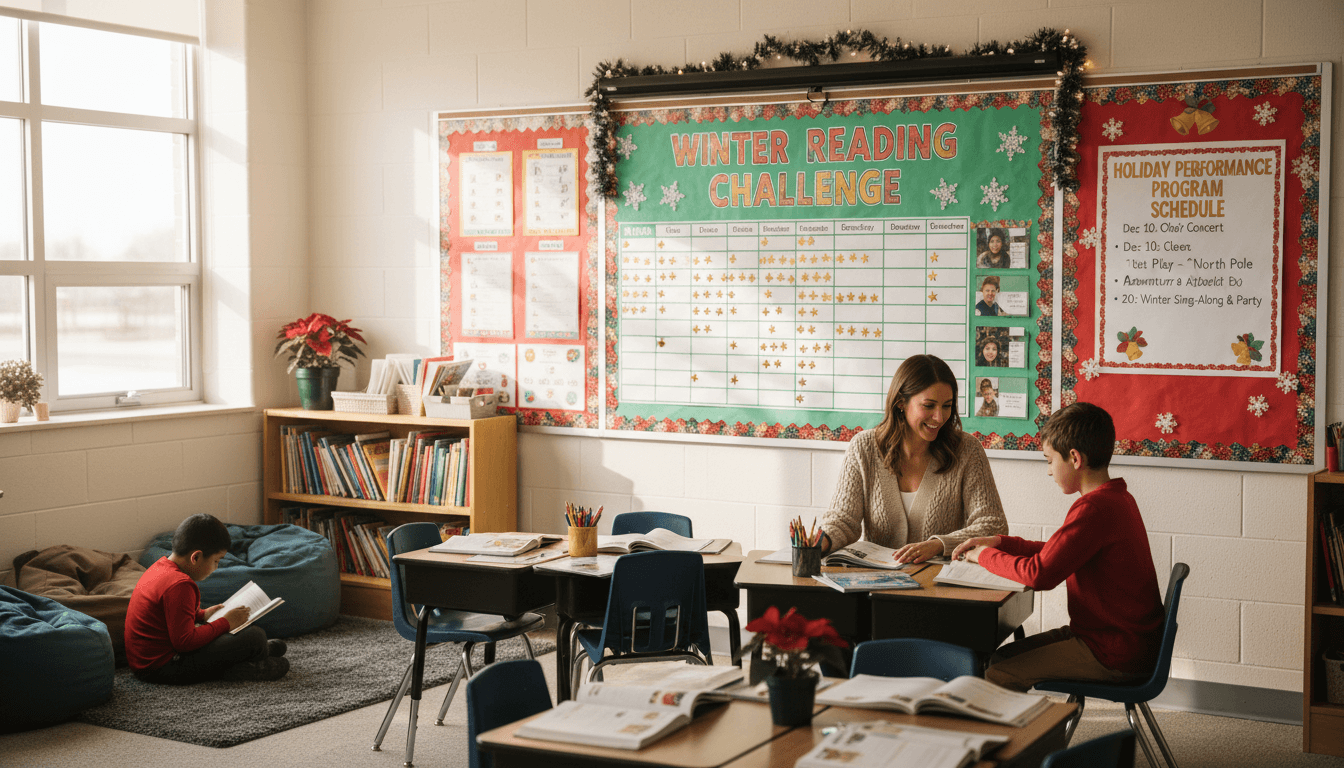
Third grade students invest real emotional energy in class performances. They practice, they memorize, and they want their families there. Make sure the logistics are complete in your newsletter: the date, time, and location. What students should wear. Whether there is a dress rehearsal and when. Whether families should arrive early to find seats. Whether the program runs in one block or by grade, and whether families can leave after their child's portion.
Third grade families who get the full picture in advance show up on time and stay for the right amount of time. Families who miss key details are the ones arriving late, confused, and apologetic.
Launch a winter reading challenge
A winter reading challenge gives third graders a goal to work toward over the break that feels like a game rather than homework. Keep it simple: read for 20 minutes a day, or finish two books before the return date, or read one book about a topic you have never explored before. Put a simple log in the newsletter that families can print or track on paper. Students who return from break having met a reading goal feel ready. Students who return having read nothing at all take a few days to find their footing.
Preview the second semester curriculum
December is the right time to tell families what the second semester holds. Division, fractions, more complex writing assignments, a science unit you are excited about. Families who know what is coming are better prepared to support it at home and less surprised by the jump in academic demand that often comes in January.
Address December special events and schedule changes
List every December interruption: assemblies, spirit days, early dismissals, the performance rehearsal schedule, the class party date, and the last day before break. Third graders are independent enough to carry some information home but not reliably enough to be your only communication channel for schedule changes. The newsletter is where families get the accurate version.
Close with what the first semester built
End the December newsletter with a real observation about this class in the first semester. The way they approached a hard text. The moment multiplication started clicking in October. The writing piece that surprised you. Something specific and true that parents can recognize as their child's classroom. That is how you close a semester well.
Daystage makes it straightforward to put all of this in one newsletter that families can read in three minutes. Build your December template with the sections you need and send it without the formatting work eating an evening.
Get one newsletter idea every week.
Free. For teachers. No spam.
Frequently asked questions
How do I communicate state testing results in the December 3rd grade newsletter?
Third grade is often the first year students take state standardized tests, so the fall benchmark data may be the first formal score families have seen. Use the newsletter to explain what the assessment measures, what the score bands mean in practical terms, and how you are using the results to plan second semester instruction. Avoid releasing individual scores in a group newsletter. Set the context here so that individual conference or report card conversations can be more substantive.
What should the December 3rd grade newsletter say about multiplication?
Multiplication fluency is a cornerstone of third grade, and December is a critical point in that development. Tell families where the class is overall: which fact families most students have mastered and which ones still need work. Recommend a specific daily practice amount, five to ten minutes, and suggest a format that works at home, flashcards, a free app, or oral quizzing in the car. Parents who know exactly which facts to target are more helpful than parents doing random practice.
How do I use the December newsletter to build anticipation for the second semester?
Third grade second semester typically introduces division, fractions, more complex informational writing, and a science or social studies unit families may not expect. A brief preview in December gives families context. They know what their child is moving toward and can have relevant conversations over winter break. It also signals that second semester has real academic substance, which helps families hold the study habits steady in January.
What should the holiday performance section of the December newsletter include?
Cover the date, time, and location, whether students have assigned seating or whether the audience sits freely, what students should wear, whether there is a rehearsal during the school day, and whether families should stay for the full program or can leave after their grade performs. Third grade students care deeply about their families being there. Give families every logistical detail they need to show up prepared.
What newsletter tool works best for 3rd grade teachers in December?
Daystage helps third grade teachers send a complete December newsletter, including assessment context, multiplication practice guidance, performance details, winter break reading challenge, and a second semester preview, in one clean layout. Families get everything they need in a single email they can open on their phone. You save the hour you would have spent formatting and send something better.

Adi Ackerman
Author
Adi Ackerman is a former classroom teacher and curriculum writer with 8 years in K-8 schools. She writes about school communication, parent engagement, and what actually works in real classrooms.
More for Classroom Teachers
Ready to send your first newsletter?
3 newsletters free. No credit card. First one ready in under 5 minutes.
Get started free