

December Kindergarten Parent Newsletter Template: What to Include This Month
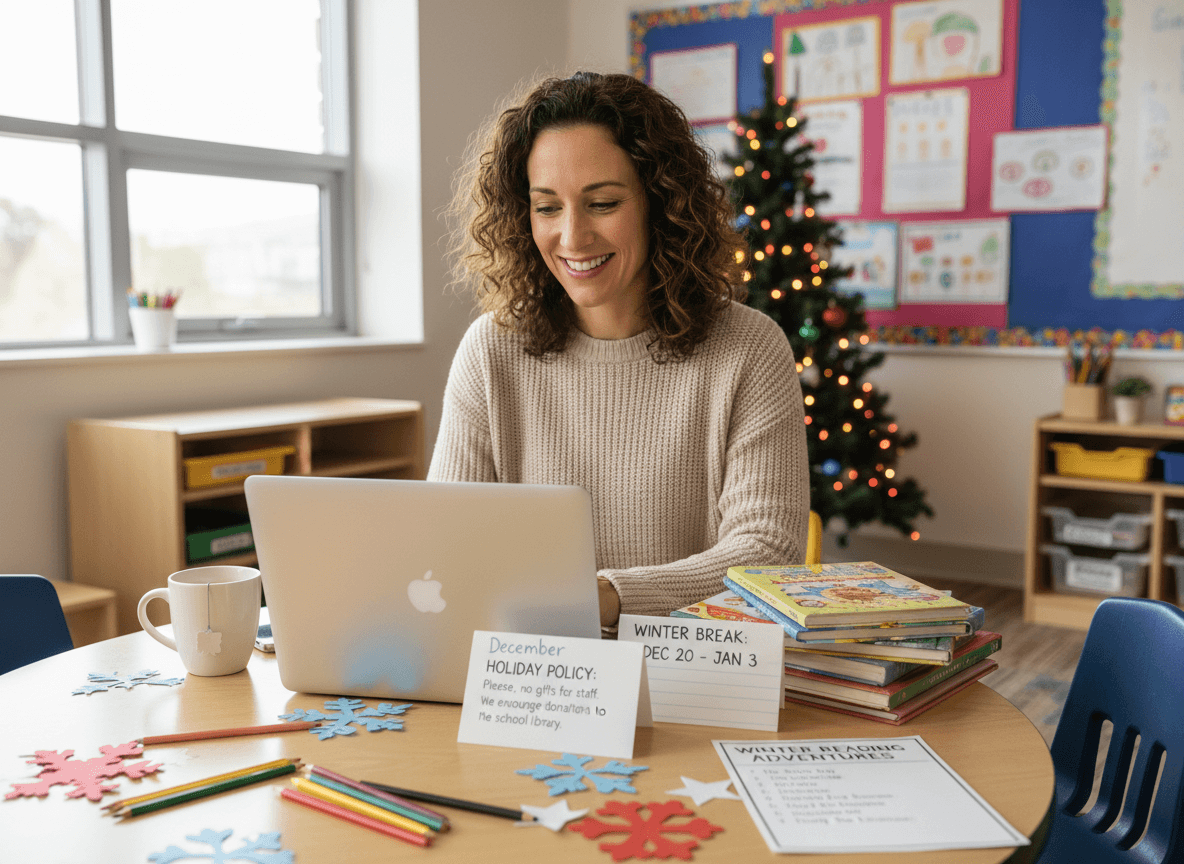
December in kindergarten has a particular energy: children are excited, families are busy, and the first half of the school year is almost complete. A well-written December newsletter manages the holiday logistics, updates families on where their child stands academically, and closes the semester with a warm sense of what the class has built together. It is the last newsletter before a two-week break, so it carries a bit of extra weight.
Classroom holiday celebration policy
Be clear and direct about what your classroom is and is not doing around the holidays. Families with different religious and cultural backgrounds are both represented in most kindergarten classrooms, and everyone benefits from knowing in advance what to expect. If your class is having a winter party with seasonal snacks and music, say that. If you are doing a gift exchange, name the guidelines: price limit, whether it is optional, and how it will work. If families need to bring something, give them a deadline.
Frame the celebration around winter community rather than a single holiday tradition. Acknowledging that families celebrate different things in December, and that the classroom event is designed to include everyone, is a small note that goes a long way with families who may otherwise wonder whether their tradition is recognized.
The winter learning unit
Share what the class is exploring in the December curriculum. Most kindergarten winter units cover observable seasonal changes: snow and ice, animals in winter, the shorter days, and the shift in temperature. If you are reading specific books or doing a science observation, name them. If the unit connects to the fall work on seasons and weather patterns, draw that line so families can see the curriculum building over time.
Give families one simple way to extend the winter unit at home. Going outside to observe frost, checking the temperature each morning and comparing it to October readings, or looking for birds and squirrels preparing for winter are all easy, no-cost ways to connect the classroom to daily life.
Letter recognition milestone: where the class is now
December is a natural point to share a literacy update, since families will be home with their children for two weeks and often ask what they can work on. Let families know where the class is with letter recognition, letter sounds, and sight words. Share the full sight word list from the fall semester so families can review over the break if they want to.
A brief note about what on-track looks like in December helps families calibrate without comparing their child to classmates. The range in kindergarten is wide at this point in the year, and framing milestones as a zone rather than a single benchmark reduces anxiety on both sides of that range.
Gratitude and kindness themes
Many kindergarten classrooms close the fall semester with an intentional focus on gratitude and kindness. If your class has been doing kindness challenges, gratitude journals, or a classroom giving project, share what the children have been doing and what they have said about it. Five-year-olds take to this kind of learning naturally and families love hearing specific examples of what their child expressed or wrote.
A brief connection to families: asking families to notice one act of kindness their child does over the break and to tell their child they noticed, is a simple way to extend the classroom theme into December at home.
Winter break schedule and important dates
Be explicit about the last day of school before winter break, the first day back, and any special events happening in the last week of school. If there is an early dismissal on the last day, name the time. If there is a winter classroom celebration, give the date and any relevant details about what families need to bring or know.
Families who have to arrange childcare and travel during winter break need these dates as early as possible. A clear, scannable dates list in the December newsletter reduces the number of individual questions you receive in that final week.
Home reading over winter break
Close the newsletter with a gentle, encouraging reading recommendation for the break. Ask families to read together for ten minutes most days rather than assigning a formal reading log. Suggest two or three winter-themed picture books they might find at the library, or simply encourage rereading favorites the children already love. A child who stays connected to books over the two-week break returns in January with better reading stamina and vocabulary than one who does not read at all, and the stakes could not be lower: any reading counts.
Get one newsletter idea every week.
Free. For teachers. No spam.
Frequently asked questions
What should a December kindergarten newsletter include?
December newsletters for kindergarten parents typically cover the classroom holiday celebration policy, the winter learning unit, an update on letter recognition and literacy progress, the winter break schedule, reading suggestions for the break, and any kindness or gratitude themes the class is wrapping up the semester with. Families need logistical clarity about what the classroom is doing around the holidays, and they appreciate a warm, forward-looking close to the first half of the year.
How do I write about holiday celebrations inclusively in a December kindergarten newsletter?
State clearly what your classroom is doing and frame it around winter themes and community rather than a single holiday tradition. Something like 'our winter celebration will include music, art, and a shared snack' is more inclusive than centering the event on Christmas specifically. Acknowledge that families in your classroom observe a range of traditions and that the classroom celebration is designed to honor all of them. If families want to share a tradition from their own holiday, name how they can do that in a way that feels welcome, not performative.
What letter recognition milestone should kindergartners reach by December?
By December, kindergartners who are on track typically recognize all or most uppercase letters, most lowercase letters, and can produce the sounds for a growing number of them. They are usually reading a set of sight words by sight and beginning to blend sounds to decode very simple words. Some children will be reading simple decodable books, and others will still be solidifying their letter-sound knowledge. The wide range is normal, and your newsletter can say that without giving individual assessments.
How should I talk about winter break reading in a December kindergarten newsletter?
Keep it low-key and encouraging rather than prescriptive. Families are busy in December and a long list of requirements will be ignored. Instead, recommend reading together for ten minutes each day, suggest two or three winter-themed or holiday-adjacent picture books they might find at the library, and remind families that any reading their child does over the break, even rereading a favorite book, counts. A child who stays connected to books over a two-week break comes back to school with better reading momentum.
What newsletter tool works best for December kindergarten parent newsletters?
Daystage is designed for teachers who want to send a polished, readable December newsletter without the late-night formatting session. A December newsletter covering the holiday celebration policy, winter unit, literacy milestones, winter break schedule, and reading suggestions fits cleanly in one Daystage send. Most teachers put the whole newsletter together in fifteen to twenty minutes, which matters a lot in the final days before a two-week break.

Adi Ackerman
Author
Adi Ackerman is a former classroom teacher and curriculum writer with 8 years in K-8 schools. She writes about school communication, parent engagement, and what actually works in real classrooms.
More for Classroom Teachers
ELA Curriculum Update in Your Classroom Newsletter: What Parents Need to Know
Classroom Teachers · 6 min read
Communicating a Community Service Project in Your Classroom Newsletter
Classroom Teachers · 5 min read
Cultural Heritage Month in Your Classroom Newsletter: What to Communicate
Classroom Teachers · 6 min read
Ready to send your first newsletter?
3 newsletters free. No credit card. First one ready in under 5 minutes.
Get started free