
December Newsletter Ideas for Kindergarten Teachers: What to Send This Month
December in kindergarten is joyful and chaotic in equal measure. The excitement is real, the schedule is full, and families are juggling more than usual. Your December newsletter is how you give parents a clear picture of the month before it happens so they are ready for the party, the performance, the reading check-in, and the last day before break.
Give families the full December schedule up front
Kindergarten parents cannot rely on their five-year-old to remember that the class party is on Thursday, that pajama day is next week, or that there is an early dismissal before winter break. List every special event in the December newsletter with the date and any preparation required. Dress as your favorite book character, bring a wrapped white elephant gift under five dollars, arrive ten minutes early for the performance: put all of it in the newsletter so families can plan around it.
Report first semester reading progress
By December, kindergartners have been in school for four months. Most are building sight word banks, making letter-sound connections, and beginning to decode simple words. Share where the class is overall and what a child on track looks like right now. Families who know their child is exactly where they should be in December feel reassured. Families who know there is a gap have time to ask questions before report cards arrive.
Include two or three things families can do over winter break to keep reading moving without it feeling like school: read together every night, point to words on signs and menus, ask their child to tell the story back after you finish a book.
Describe the winter holiday activities
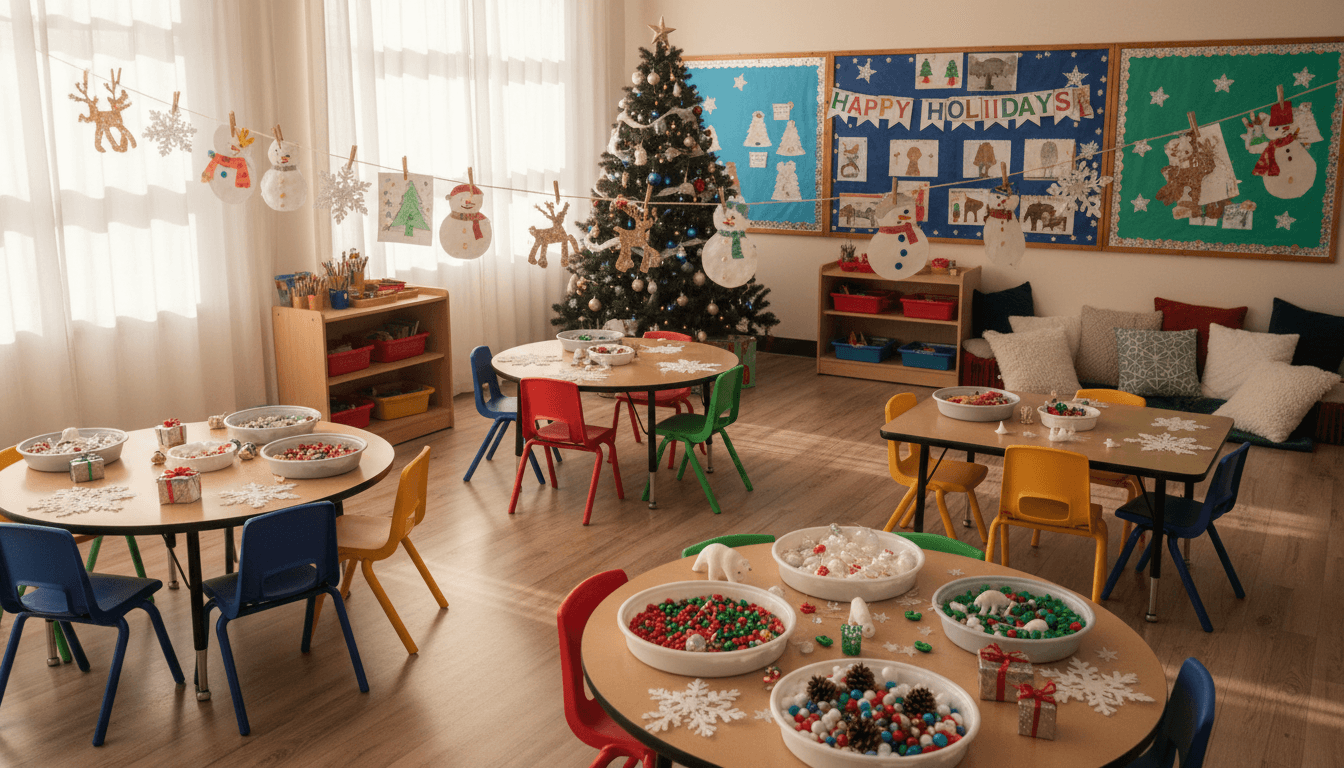
Tell families what the class is actually doing together in December. Winter-themed art projects, patterning and counting activities with holiday materials, sensory bins with seasonal objects, stories from different winter celebrations. Describe the activities concretely so families from any background can picture their child participating. When multiple traditions are represented in what the class explores, say so briefly. It costs nothing and matters to the families who do not celebrate Christmas.
Prepare families for the holiday party
Class parties are a highlight of kindergarten December, and they also generate the most parent questions. In your newsletter, cover what the party looks like, whether families are invited, whether children need to bring anything, and what the food situation is. If there are allergy considerations, address them directly. A clear description of the party in the newsletter prevents the fifteen individual emails asking the same questions.
Note what math looks like in December
Kindergarten math in December often includes counting to higher numbers, comparing quantities, simple addition and subtraction with objects, and shape recognition. Connect the December activities to the math: counting how many ornaments are on the classroom tree, sorting holiday items by color and shape, making patterns with seasonal manipulatives. Parents who see the math in the holiday activities understand that December is not a break from learning.
Set expectations for winter break
Be honest about what you are asking for over the break. If you are not sending a homework packet, say so. If you have a few reading suggestions, make them light and specific. Families of kindergartners do not need a lesson plan for winter break. They need to know their child can rest and still be ready for January.
Preview January so the return feels manageable
End the December newsletter with a brief note about what January holds. New letters, new sight words, a new math unit, an art project. Families who know what is coming back from break feel more settled at the end of December. It also helps kindergartners who benefit from knowing what is next.
Daystage makes it easy to get the December newsletter out quickly so you can spend your December evenings on something other than formatting. Build your layout once and update the content. Families get everything they need in one readable place.
Get one newsletter idea every week.
Free. For teachers. No spam.
Frequently asked questions
What should the December Kindergarten newsletter include about reading progress?
December is a natural checkpoint for first semester reading growth. Share where most students are in letter-sound knowledge, sight word recognition, and early decoding. Give families a simple benchmark: what a typical kindergartner should be able to do by December versus January. This helps families understand whether their child is on track without turning the newsletter into a report card. Include one or two things families can do over winter break to maintain momentum without making it feel like homework.
How do I handle the holiday season in the Kindergarten newsletter without excluding anyone?
Focus on what the class is actually doing together: winter-themed crafts, counting and patterning activities with seasonal materials, songs and stories from different traditions. Describe the activities in concrete terms so families from any background can see where their child fits. When you acknowledge multiple winter celebrations, even briefly, families who do not celebrate Christmas feel seen and families who do are not diminished.
What schedule changes should the December Kindergarten newsletter cover?
December is full of interruptions: assemblies, class performances, pajama day, holiday parties, early dismissals, and the last day before break. List them all in one place with dates and times. Families of kindergartners are managing young children who cannot self-report schedule information accurately. A single clear list of December dates prevents the morning of surprises and the calls asking what day the party is.
How do I communicate winter break learning suggestions without stressing parents?
Frame it as keeping the learning going, not as homework. Reading together every night, counting objects around the house, looking for letters on signs, and talking about what they see outdoors are all legitimate literacy and math activities. Give two or three specific suggestions and say explicitly that these are optional. Kindergarten families do not need a winter break packet. They need a few ideas they can fold into what they are already doing.
What newsletter tool works best for Kindergarten teachers in December?
Daystage helps Kindergarten teachers send a clear, organized newsletter that families can actually read during a busy December. You can include the holiday party date, a reading progress note, winter break suggestions, and a class photo from the month in one clean layout. Parents of kindergartners appreciate brevity and clarity, and Daystage makes both easy to deliver without spending your evening on formatting.

Adi Ackerman
Author
Adi Ackerman is a former classroom teacher and curriculum writer with 8 years in K-8 schools. She writes about school communication, parent engagement, and what actually works in real classrooms.
More for Classroom Teachers
Ready to send your first newsletter?
3 newsletters free. No credit card. First one ready in under 5 minutes.
Get started free