
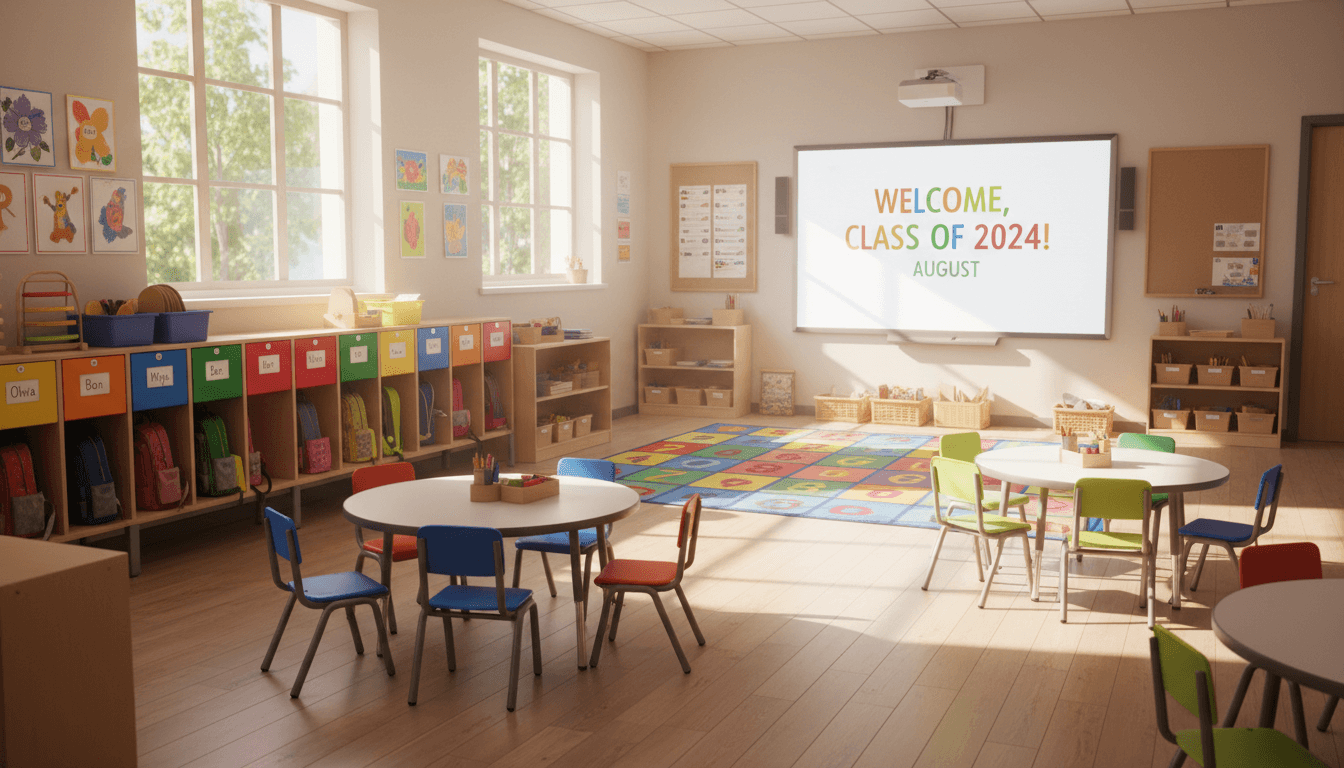
August Kindergarten Parent Newsletter Template: What to Include This Month

The August kindergarten newsletter is unlike any other newsletter you will send all year. Most of your families have never had a child in school before. They do not know what a school day looks like, where to park for drop-off, or what their child should put in their backpack. They are excited, anxious, and looking to you for reassurance. A well-written August newsletter gives them exactly that before they even walk through your classroom door.
Start with a personal teacher introduction
Families are trusting you with their child for six hours a day. A brief, warm introduction helps them feel that trust is well-placed before school begins. Share your name, how many years you have been teaching kindergarten, and one or two things that genuinely light you up about this age group. You do not need a full biography. Three or four sentences that sound like a real person, not a form letter, go a long way.
If you have a teaching assistant or paraprofessional in the room, introduce them too. Families feel more comfortable when they can picture who is with their child each day.
The daily schedule: what parents need to know
You do not need to list every transition, but families benefit from knowing the broad shape of the kindergarten day. Cover arrival, morning meeting or circle time, learning centers or small group work, lunch and recess, any rest period, and dismissal. Name the specific arrival routine: where children go when they walk in, whether they hang up their own backpack, and what they should do while waiting for morning meeting to begin.
If your school has multiple dismissal options, such as car line, bus, and after-care, clarify how you know which one applies to each child and what parents should do if the plan changes. Dismissal confusion in week one is the most common source of parent stress, and a clear paragraph in the August newsletter prevents most of it.
Drop-off and pick-up procedures
Be specific here. Name the entrance families should use, the time the doors open, and where to go if they arrive early or late. If your school has a car line, walk families through the exact procedure: where to pull up, whether children exit on their own or are helped by a staff member, and where to park if they want to walk their child in. New kindergarten families have often never done a school drop-off before, and the more concrete your instructions, the smoother the first morning will be for everyone.
What to pack: the supply list and daily essentials
If your school provides a supply list separately, you can keep this section brief. Focus on the daily essentials that families need to know about regardless of what the official list says: a labeled water bottle every day, a healthy snack, a complete change of clothes in the backpack for the first few weeks, and any nap-time items if your schedule includes rest time. Let families know whether backpacks should be large enough to hold a folder, what label format works best for cubbies, and whether you want items brought on day one or at orientation.
What the first two weeks look like
Families whose children come home saying they just played all day are not always sure that is a good thing. Explain what the first two weeks are actually for: building classroom routines, learning each other's names, practicing transitions, exploring the learning centers, and establishing the community before academic content ramps up. When families understand that the social-emotional foundation of those first weeks is intentional, they are more patient with the process and better able to support it at home.
Separation anxiety: what to expect and what to do
Address this directly. Let families know that tears at drop-off are completely normal in the first week or two of kindergarten, even for children who seemed excited about school. Give them a clear script: say a loving, confident goodbye, give one hug or wave, and leave. Children almost always settle within a few minutes once the parent is out of sight. Lingering or returning to check in can extend the distress rather than ease it.
Reassure families that you will reach out if a child is genuinely inconsolable or if something comes up that needs their attention. Families who know that feel much more confident walking away on that first morning.
How to stay connected throughout the year
Close the August newsletter by letting families know how you will communicate with them going forward. Name your newsletter schedule, whether that is weekly or monthly, and any other channels you use for quick updates or urgent notes. Let them know the best way to reach you if they have a question and your typical response time. Families who know what to expect from communication feel more settled, and that settled feeling shows up in how their child arrives at school each morning.
Get one newsletter idea every week.
Free. For teachers. No spam.
Frequently asked questions
What should I include in a first-ever kindergarten parent newsletter?
The first kindergarten newsletter is really a welcome packet in newsletter form. Include a personal introduction from the teacher, the daily schedule with drop-off and pick-up instructions, what to put in a backpack each day, what the first week will look like for the children, and one reassuring note about separation anxiety being normal. Families who are brand new to school need logistical clarity above anything else. Keep the tone warm and specific so parents feel like they already know you before day one.
How should I address separation anxiety in an August kindergarten newsletter?
Name it directly and normalize it. Let families know that it is completely typical for five-year-olds to cry at drop-off during the first week or two, and that it usually resolves within a few minutes of the parent leaving. Give them a concrete script: say a confident goodbye, wave once, and leave. Parents who linger or return to check often make transitions harder for their child. Reassure them that you will send a note or photo if anything serious comes up, so they can leave with confidence.
How much detail should an August kindergarten newsletter include about the daily schedule?
Enough that a parent can explain the day to their five-year-old at home. You do not need times for every transition, but families benefit from knowing the broad shape: arrival routine, morning meeting, learning centers, lunch, rest time if applicable, and dismissal. Naming what happens at arrival, specifically where to drop off and what children do when they walk in, reduces the morning chaos for both families and staff in the first week.
When should I send the August kindergarten newsletter?
Aim for at least five to seven days before the first day of school. Families with kindergartners are planning backpack contents, labeling supplies, and preparing their child emotionally. A newsletter that arrives the weekend before school starts gives families time to read it, ask questions, and talk with their child about what to expect. If your school does a kindergarten orientation or meet-the-teacher event, send the newsletter before or right after that event.
What newsletter tool works best for sending August kindergarten parent newsletters?
Daystage is built for kindergarten teachers who want to send a polished, readable welcome newsletter without spending their August evening formatting emails. You can include the daily schedule, supply list, teacher introduction, and drop-off instructions in one clean send that lands in every parent's inbox. Most teachers put the full August newsletter together in under twenty minutes, which matters a lot in the final days before school starts.

Adi Ackerman
Author
Adi Ackerman is a former classroom teacher and curriculum writer with 8 years in K-8 schools. She writes about school communication, parent engagement, and what actually works in real classrooms.
More for Classroom Teachers
ELA Curriculum Update in Your Classroom Newsletter: What Parents Need to Know
Classroom Teachers · 6 min read
Communicating a Community Service Project in Your Classroom Newsletter
Classroom Teachers · 5 min read
Cultural Heritage Month in Your Classroom Newsletter: What to Communicate
Classroom Teachers · 6 min read
Ready to send your first newsletter?
3 newsletters free. No credit card. First one ready in under 5 minutes.
Get started free