
April Newsletter Ideas for Second Grade Teachers: What to Send This Month
April in second grade is one of the most instructionally rich months of the year. Poetry Month pushes writing craft. Earth Day anchors science in hands-on projects. Spring assessments give teachers and families a clear picture of where each student stands with about eight weeks left in the year. Your April newsletter pulls all of this together into one message that keeps parents informed and engaged.
Set up the month with key dates and priorities
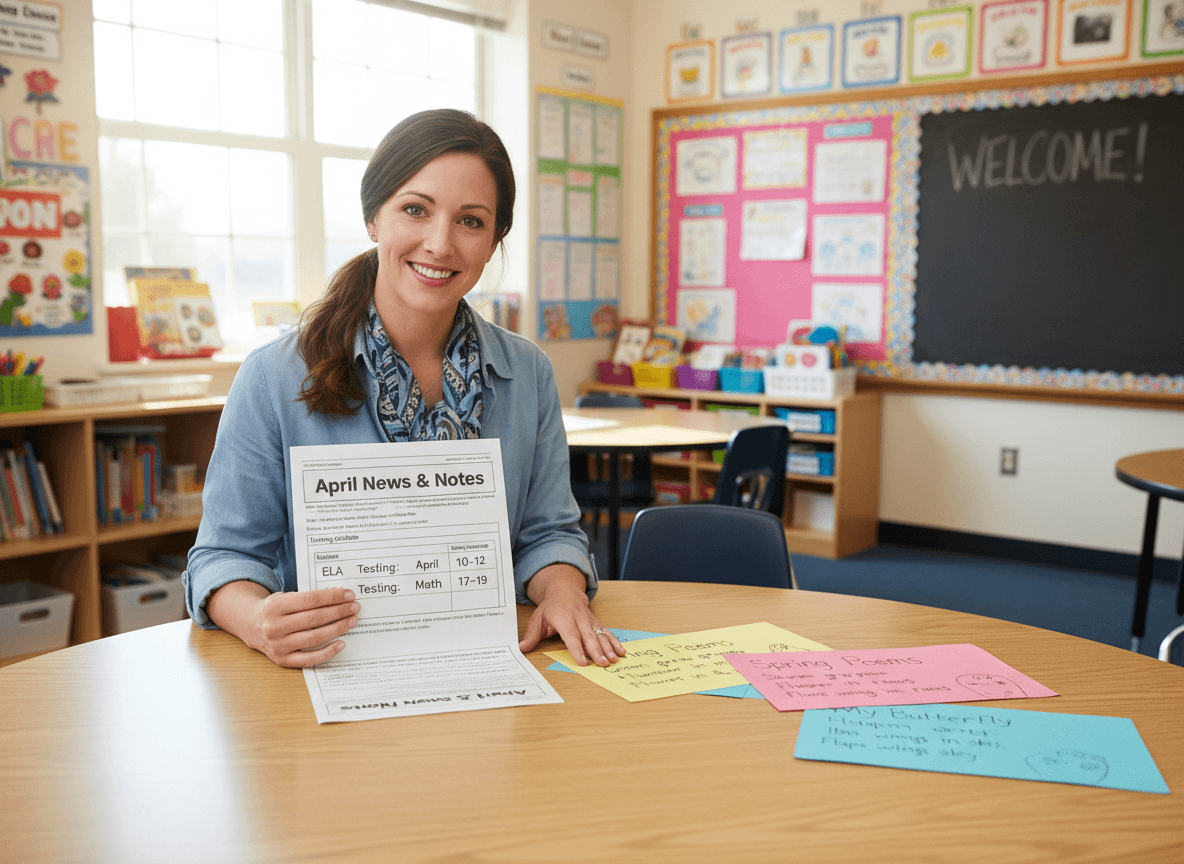
Open with a quick overview of April: the assessment window, Earth Day on April 22, any field trips or school events, and the general pace of instruction. Second grade parents appreciate newsletters that respect their time. A brief overview at the top, followed by deeper detail on the topics that need it, is the format that works.
If there are dates parents need to mark on the calendar, list them clearly. Buried dates in long paragraphs get missed.
Explain the spring assessment clearly
If your district runs a spring reading benchmark or literacy screener in April, tell parents exactly what it is. Describe the format: does the student read a passage and answer comprehension questions? Does the teacher listen to the student read aloud and note accuracy and rate? Is there a written component?
Give parents the end-of-year benchmark. In many districts, second graders are expected to read at a level N or O by June, which corresponds to early chapter books read independently. Let parents know that consistent reading at home is the best test prep available, not practice worksheets or apps. A child who reads for twenty minutes every night all year is measurably more prepared than one who spends a week on review packets before the test.
Share what Poetry Month looks like in your class
National Poetry Month is a genuine instructional opportunity in second grade. Students at this level can learn the difference between rhyme scheme patterns, practice reading with expression and pacing, and write original poems using descriptive language.
Tell parents what poetry forms the class is exploring: couplets, quatrains, free verse, acrostic poems, or poems modeled after a mentor text. Include a class poem or one student example with the student's permission. Families who see real writing samples have a much better understanding of the work than families who just read that "we are writing poetry this month."
Connect Earth Day to science instruction
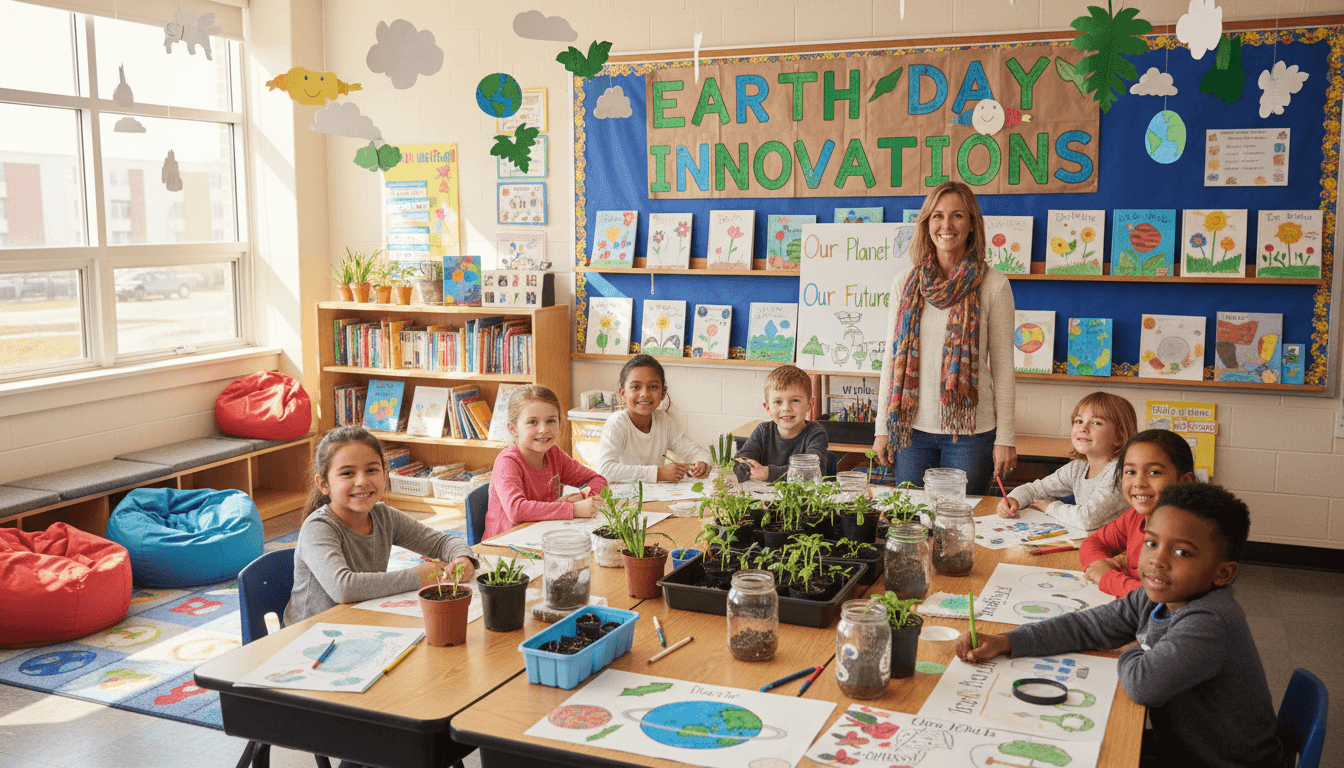
Earth Day on April 22 gives second grade science a natural focus. Share what your class is studying: ecosystems and food chains, plant life cycles, the water cycle, or the impact of recycling on landfills. Describe a specific project or activity students are completing so parents can ask about it at home.
A straightforward home connection works well here. Ask your child to name three things your family does that help the environment. Count how many plastic bags you use in a week and brainstorm one swap. These conversations reinforce classroom learning without adding work to anyone's plate.
Update reading fluency and comprehension progress
April is a reasonable time to name where the class is with fluency and comprehension and where students should be by June. If your class is averaging 70 to 90 words per minute and the end-of-year target is 90 words per minute with strong comprehension, say so. Parents who understand the specific target can support it with intentional reading time at home rather than general encouragement.
Describe the writing work this month
Second grade writing in April often covers opinion writing, informational writing with evidence, or narrative writing with a clear beginning, middle, and end. Name the specific genre your class is working on and what "good" looks like at this grade level. A two-paragraph opinion piece with a claim and two reasons is a very different product than a personal narrative, and parents benefit from knowing what their child is being asked to produce.
End with one actionable step for families
Close with a single, specific ask. Read together for twenty minutes tonight. Look up an Earth Day fact to share at dinner. Ask your child to read their favorite poem from class aloud. One clear action is more likely to happen than a paragraph of general suggestions. Parents who feel like they know exactly how to help are more likely to stay engaged through the end of the year.
Daystage keeps the April second grade newsletter clean and readable, covering testing, poetry, and Earth Day in a format that parents open and actually finish reading.
Get one newsletter idea every week.
Free. For teachers. No spam.
Frequently asked questions
What makes an April second grade newsletter different from earlier months?
By April, second graders are approaching the end of a year that sets the foundation for upper elementary reading and writing. The newsletter should be honest about where students are with fluency and comprehension, what the end-of-year benchmark looks like, and what the spring assessment will measure. Parents at this stage are asking real questions about whether their child is ready for third grade, and a clear newsletter helps them stay informed rather than anxious.
How should a second grade teacher handle state testing in the April newsletter?
Some second graders participate in state literacy screeners or district spring benchmarks in April. The newsletter should explain what the specific assessment covers, how long it takes, and what a good result looks like. Remind parents that test-taking stamina builds with daily practice, not last-minute cramming. The best preparation is twenty minutes of independent reading each night and a consistent sleep schedule.
What does Poetry Month look like in second grade?
Second graders are ready to write original poetry with real craft elements: rhyme schemes, repetition, descriptive language, and emotional tone. The newsletter is a great place to share what the class is writing and explain the specific poetry forms students are learning, such as couplets, quatrains, or acrostic poems. Include a sample student poem if you can. Parents who see the work understand why poetry month matters beyond the theme.
Should the April newsletter address the move to third grade?
A brief acknowledgment is appropriate and appreciated. Third grade is when reading demands increase sharply, and parents benefit from knowing what is expected. Mention that the class is building the skills that third grade will require: reading longer chapter books, writing structured paragraphs with evidence, and solving multi-step word problems. You do not need to alarm anyone, just orient them.
What newsletter tool works best for second grade teachers?
Daystage is built for teachers who want to send a clean, professional newsletter in about fifteen minutes. For an April second grade newsletter covering testing, poetry month, and Earth Day, the platform handles all of it in one place with a format parents actually read. No more attachments, long emails, or newsletters that never get opened.

Adi Ackerman
Author
Adi Ackerman is a former classroom teacher and curriculum writer with 8 years in K-8 schools. She writes about school communication, parent engagement, and what actually works in real classrooms.
More for Classroom Teachers
Ready to send your first newsletter?
3 newsletters free. No credit card. First one ready in under 5 minutes.
Get started free