
April Kindergarten Parent Newsletter Template: What to Include This Month

April is one of the richest months in kindergarten. Earth Day brings environmental learning to life, National Poetry Month fills the read-aloud time with rhyme and rhythm, spring assessments are wrapping up or results are on their way home, and the year is close enough to the end that families start to feel the momentum. An April newsletter to kindergarten parents holds all of that together and gives families specific ways to stay engaged through the final stretch.
Sample April kindergarten newsletter structure
Open the April newsletter with a warm acknowledgment of where the class is in the year. April is a high-energy month for five-year-olds and families can feel it. Name one thing the class accomplished this year that you are proud of before moving into the month ahead.
Move through the key sections below in the order that matches your classroom calendar. Keep each section short and specific. A newsletter that covers four topics in two clear paragraphs each gets read. One that covers the same topics in dense paragraphs does not.
Earth Day projects and environmental learning
Earth Day falls on April 22nd and most kindergarten teachers build activities around environmental themes throughout the month. Share what the class is doing: whether that is a school garden project, a recycling or sorting activity, a nature walk to observe signs of spring, an Earth Day art project, or books and discussions about caring for the earth.
Give families a specific way to extend the learning at home. Starting a simple recycling sort together, taking a walk to look for birds and plants coming back after winter, or reading an Earth Day picture book from the library are all easy bridges between classroom and home. Kindergartners who talk about environmental ideas at home come back to school more engaged with the classroom exploration.
Spring assessment results: what to expect
If spring assessments were completed in March, April is when results often come home or are shared at conferences. Let families know the timing and format: whether results are being sent home in a folder, shared at an individual conference, or communicated by email. Remind families that spring assessments show growth since the fall, not a final grade, and that the results give you useful information for planning the remaining months of kindergarten.
Invite families to reach out with questions once they have received results. A brief, calm framing in the newsletter prevents the anxiety that comes from receiving assessment data without context.
Poetry Month: what the class is exploring
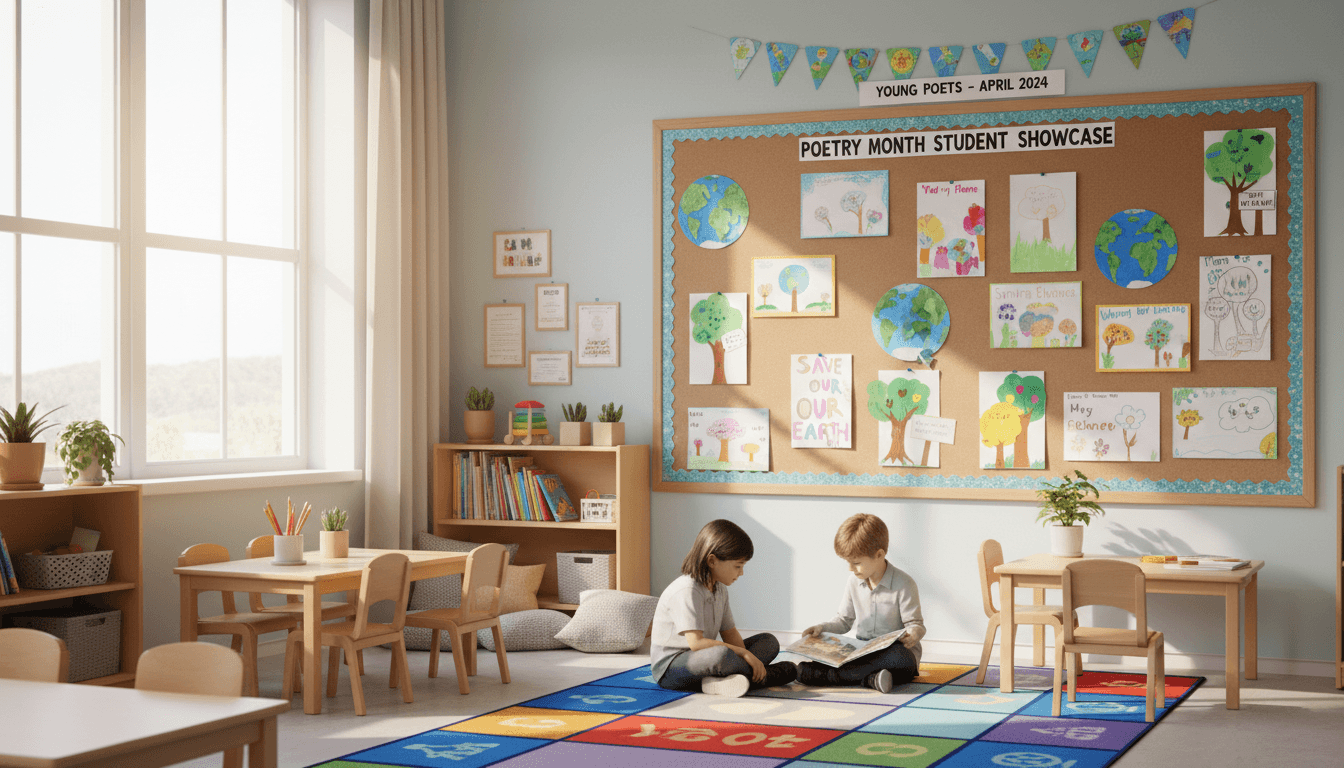
April is National Poetry Month and it is one of the most naturally joyful curriculum themes in kindergarten. Five-year-olds love rhyme, rhythm, and repetition. Share what the class is doing with poetry this month: reading poems aloud together, exploring the difference between rhyming and non-rhyming poems, writing their own short class or individual poems, learning about poets who write for children, or performing poems for another classroom.
Name a few poems or poetry books you are reading so families can find them at the library. Give families a simple way to participate at home: reading nursery rhymes together at bedtime, looking for a children's poetry collection at the library, or asking their child to share a poem they memorized or wrote at school. Poetry Month creates some of the most memorable kindergarten moments of the year.
Parent volunteer appreciation
April is often designated as National Volunteer Appreciation Month and it is a natural place to acknowledge the families who have supported the classroom this year. A genuine, specific thank-you in the April newsletter goes further than a generic one. Name the kinds of contributions families made: reading with small groups, helping with field trips, organizing classroom supplies, or supporting school events. If you have a specific way to recognize volunteers this month, whether that is a classroom celebration or a note home, share it here.
Even families who did not volunteer formally appreciate knowing that the classroom community was supported by parents who showed up. It reinforces the idea that the classroom is a shared effort.
What is still to come this year
Use the April newsletter to give families a clear look at the final two months of kindergarten. Name the milestones coming in May and June: end-of-year celebrations, field day, kindergarten graduation or moving-up ceremony if your school does one, and the final assessments or portfolios that will go home. Families who can see the shape of the rest of the year feel more connected and more prepared.
April reminders and schedule notes
If April has any special events, field trips, picture day, school fundraisers, or schedule changes, include a brief bulleted list here. Families who scan newsletters for upcoming dates find them most easily in a list format. Keep each entry to one line: the date and what it is.
Daystage makes it easy to send an April kindergarten newsletter that covers Earth Day, assessments, Poetry Month, and volunteer appreciation in one polished, readable monthly send that parents actually look forward to.
Get one newsletter idea every week.
Free. For teachers. No spam.
Frequently asked questions
What should an April kindergarten newsletter include?
April kindergarten newsletters typically cover four main areas: Earth Day projects and classroom environmental learning, spring assessment results or a timeline for when families will receive them, Poetry Month activities since April is National Poetry Month and kindergartners take to poetry naturally, and parent volunteer appreciation since April is often designated for that recognition. A brief look ahead at May and June gives the newsletter a forward momentum that families appreciate.
How should I write about Earth Day in a kindergarten newsletter?
Share what the class is actually doing: a school garden project, a recycling or sorting activity, a nature walk, a classroom clean-up, or Earth Day-themed books and art. Give families one specific way to extend the learning at home: starting a small recycling sort together, taking a walk to observe nature, or reading an Earth Day picture book from the library. Families with kindergartners who come home talking about taking care of the earth are more likely to reinforce those conversations when they know what sparked them.
How do I communicate spring assessment results in an April kindergarten newsletter?
Keep the newsletter communication brief and direct. Let families know whether results have been shared or are coming soon. If you are sharing results at individual conferences, note the dates. If results are being sent home, tell families what format to expect and what to look for. Remind families that spring assessments show growth since fall, not a final grade, and that you will explain anything they have questions about.
How do I incorporate Poetry Month in an April kindergarten newsletter?
Share what the class is doing with poetry this month: whether that is reading poems aloud together, learning about rhyme and rhythm, writing their own short poems, or performing for another class. Name a few poems or poets you are exploring. Give families a simple way to participate at home: reading nursery rhymes together, looking for books of children's poetry at the library, or asking their child to share a poem they learned at school. Poetry Month is genuinely fun in kindergarten and parents enjoy knowing what their child is experiencing.
What newsletter tool works best for kindergarten teachers writing monthly parent newsletters?
Daystage is built for teachers who want to send kindergarten parent newsletters that are readable, warm, and easy to put together. An April newsletter covering Earth Day, spring assessments, Poetry Month, and volunteer appreciation all fits cleanly in one Daystage send. It arrives in parents' inboxes as a polished email that feels personal rather than automated, and most teachers put the whole newsletter together in fifteen minutes or less.

Adi Ackerman
Author
Adi Ackerman is a former classroom teacher and curriculum writer with 8 years in K-8 schools. She writes about school communication, parent engagement, and what actually works in real classrooms.
More for Classroom Teachers
ELA Curriculum Update in Your Classroom Newsletter: What Parents Need to Know
Classroom Teachers · 6 min read
Communicating a Community Service Project in Your Classroom Newsletter
Classroom Teachers · 5 min read
Cultural Heritage Month in Your Classroom Newsletter: What to Communicate
Classroom Teachers · 6 min read
Ready to send your first newsletter?
3 newsletters free. No credit card. First one ready in under 5 minutes.
Get started free