
Montessori School Newsletter: How to Explain Child-Led Learning to Families
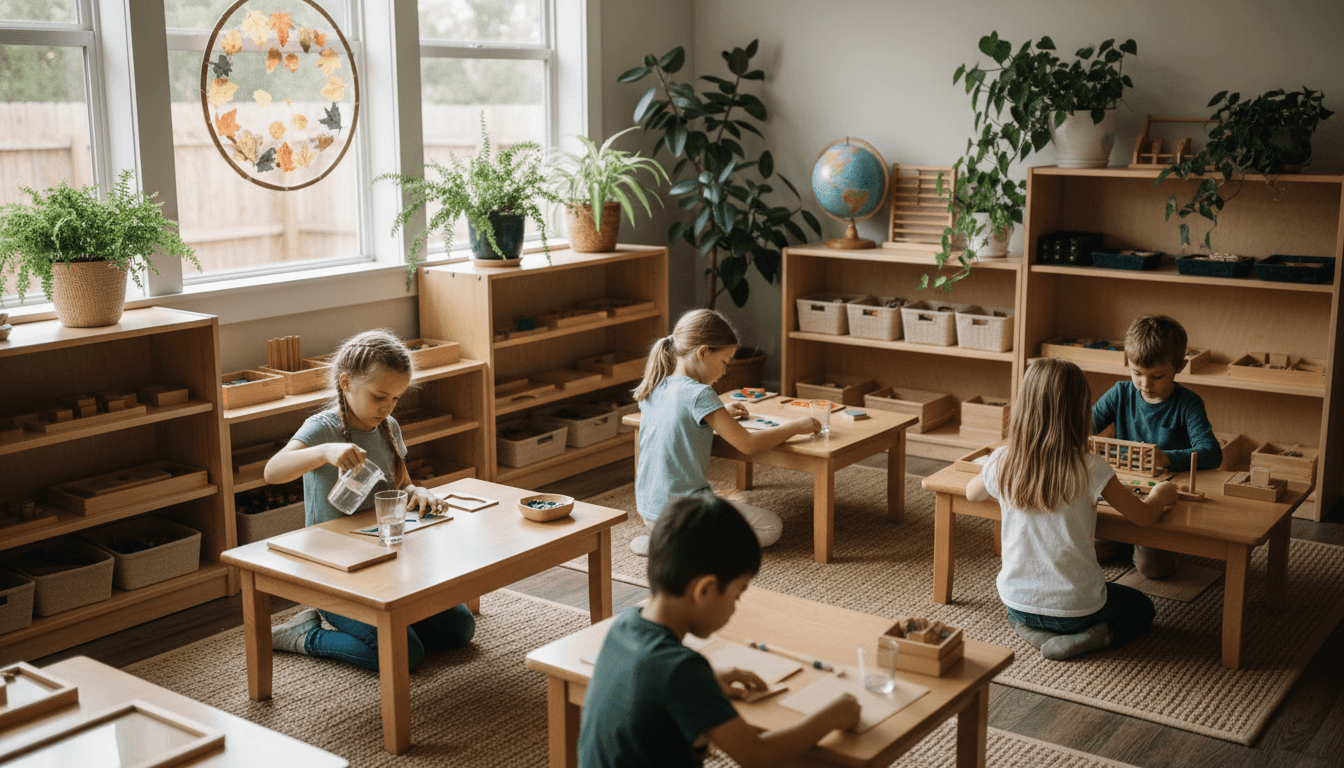
Every Montessori school faces the same communication challenge. Parents arrive with a mental model of school built from their own experience: desks in rows, textbooks, grades, homework, tests. What they find in a Montessori classroom, children moving freely, choosing their own work, operating for three-hour uninterrupted work cycles, does not match that model. The newsletter is where that gap either gets bridged or widens into doubt.
Montessori newsletters carry more explanatory responsibility than most school newsletters. They are not just logistics documents. They are ongoing education about how learning works in this environment.
The Core Communication Challenge
The absence of familiar school structures is disconcerting for many Montessori parents, especially in the first year. No report card with letter grades. No spelling tests sent home on Fridays. No textbook that you can flip through to see what your child is covering. The silence around traditional school signals creates anxiety, and anxiety drives parents to ask questions that the classroom teacher then has to field individually.
A good Montessori newsletter reduces that question volume by proactively explaining what children are working on and why the method works the way it does. This is not defensive communication. It is confidence-building communication.
What Montessori Parents Most Need to Know
Ask any Montessori parent what they worry about and you get a consistent list: Is my child learning enough? Are they on track compared to children in traditional schools? What are they actually doing all day? Why is my child choosing the same activity every day?
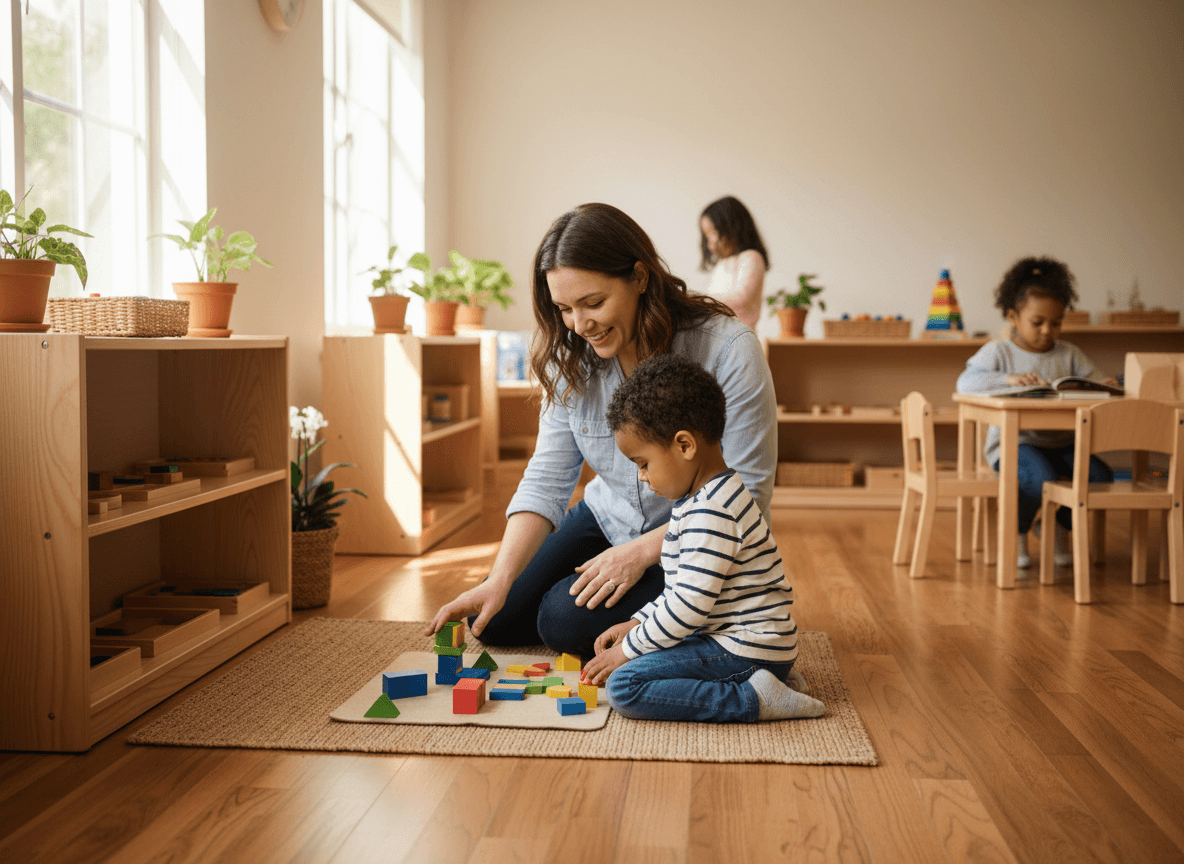
The newsletter should address these concerns directly, not by defending Montessori philosophy in abstract terms, but by showing specific evidence. A photo of a child working through a long multiplication bead chain with a caption explaining what mathematical concepts that material builds answers the "are they learning math" concern more effectively than three paragraphs about child-centered pedagogy.
Explaining Work Cycles
The three-hour work cycle is one of the most important things to communicate, and it is one of the least intuitive for families coming from traditional schools. Parents accustomed to 45-minute class periods and a bell schedule need help understanding why protecting long, uninterrupted work time matters.
A single paragraph in the newsletter, once or twice a year, explaining what the work cycle looks like and what research says about deep focus and concentration, does lasting work. Include what you actually observe: what children do when they are in deep work, what it looks like when they are in the cycle versus when they are not, and what teachers are doing during this time.
Communicating Independence Developmentally
Montessori's focus on independence is often visible to parents through what looks like freedom without structure. The newsletter should make the structure visible. Children choose their work within a carefully prepared environment. The materials they select are sequenced by the teacher to match where the child is developmentally.
Each newsletter issue is an opportunity to show one piece of that prepared environment. A photo of the math area with a short explanation of how the materials are arranged and what sequence children move through teaches parents to see the structure they cannot observe directly.
Primary vs. Elementary vs. Middle Montessori Newsletters
Primary programs, ages three through six, need newsletters that focus on the sensorial materials, practical life activities, and the social development of very young children. Parents of three and four year olds especially need reassurance that their child is building foundational skills through what looks like play and purposeful physical movement.
Elementary newsletters, covering ages six through twelve, can go deeper into curriculum content. Elementary Montessori uses interdisciplinary "Great Lessons" and long-term research projects. The newsletter can highlight what a current Great Lesson sparked, what research questions students are pursuing, and how the work connects across subjects.
Middle school Montessori programs, sometimes called Erdkinder, often include work-based learning, entrepreneurship, and community service. These programs are unusual enough that regular newsletter communication is essential for parents to understand what their adolescent is actually doing and why.
Handling the Grade and Testing Question
Sooner or later, every Montessori newsletter writer has to address the assessment question. Parents know that traditional schools give grades. They know that colleges look at transcripts. They wonder how a child who has never taken a multiple choice test will navigate standardized testing.
Address this directly, calmly, and with data when possible. If your elementary students perform above grade level on standardized assessments, say so. If your middle school alumni succeed in high school and college, share those outcomes. Concrete results matter more than philosophy when parents are wondering whether their child is being adequately prepared.
Using Daystage for Montessori Communication
Montessori newsletters work best when they include photos of real classroom work, not stock images. The challenge is sending photo-rich newsletters consistently without spending two hours on formatting each time. Daystage is built for exactly this workflow: write the content, add photos from the week, and send to your family list in the same amount of time a plain text email would take. For Montessori teachers who are doing everything else that matters in a classroom, the time savings is what makes consistent communication sustainable.
Frequency and Tone
Most Montessori programs do well with biweekly newsletters for primary, monthly or biweekly for elementary, and monthly for middle school. The tone should be curious and observational, reflecting the Montessori disposition toward children as capable and interesting people. Avoid the cheerful vagueness common in school newsletters. Parents chose Montessori because they want something different. The newsletter should reflect that.
Get one newsletter idea every week.
Free. For teachers. No spam.
Frequently asked questions
When should Montessori schools address the grade and assessment question in their newsletters?
Address it at least once a year, proactively, not in response to a parent complaint. The best time is early fall, when families are still forming their understanding of the environment. Include specific outcome data where possible, such as how elementary students perform on standardized assessments, because concrete results matter more than philosophical explanations when parents are weighing re-enrollment.
What should a Montessori school newsletter include to reduce parent anxiety about learning progress?
Photos of children working with specific materials, with captions explaining what concepts those materials build. Teacher notes on what individual children are choosing and why. Any evidence that connects Montessori activities to skills families recognize, like reading, math, and writing. Parents who can see concrete learning evidence do not need to ask the teacher individually.
How should Montessori newsletters explain the three-hour work cycle to families?
A single focused paragraph once or twice a year, describing what the work cycle looks like in practice, what teachers observe during deep focus, and what research says about sustained attention, does lasting work. Write it from what you actually observe in the classroom, not from the theoretical rationale. Observable detail is more reassuring than philosophy.
What are common communication challenges Montessori schools face with families?
The absence of traditional school signals, no report cards, no spelling tests, no homework, creates ongoing anxiety that surfaces as individual parent questions the teacher has to field one at a time. A newsletter that proactively explains what children are doing and why reduces that question volume significantly. New-parent anxiety in the first year is especially predictable and addressable through consistent communication.
What tool helps Montessori teachers send photo-rich newsletters consistently without spending hours on formatting?
Daystage is built for exactly this workflow: write the content, add photos from the week, and send to your family list in the same amount of time a plain text email would take. For Montessori teachers managing everything else that matters in a classroom, the time savings is what makes consistent communication actually sustainable.

Adi Ackerman
Author
Adi Ackerman is a former classroom teacher and curriculum writer with 8 years in K-8 schools. She writes about school communication, parent engagement, and what actually works in real classrooms.
More for Private & Charter
Faith-Based School Newsletter: Communicating School Life and Mission to Families
Private & Charter · 7 min read
Private School Capital Campaign Newsletter: Communicating Your Campaign to the School Community
Private & Charter · 5 min read
Private School Uniform Policy Newsletter: Communicating Dress Code Clearly and Consistently
Private & Charter · 7 min read
Ready to send your first newsletter?
3 newsletters free. No credit card. First one ready in under 5 minutes.
Get started free