

Kentucky Charter School Newsletter: Communication Guide for Kentucky Charter Leaders
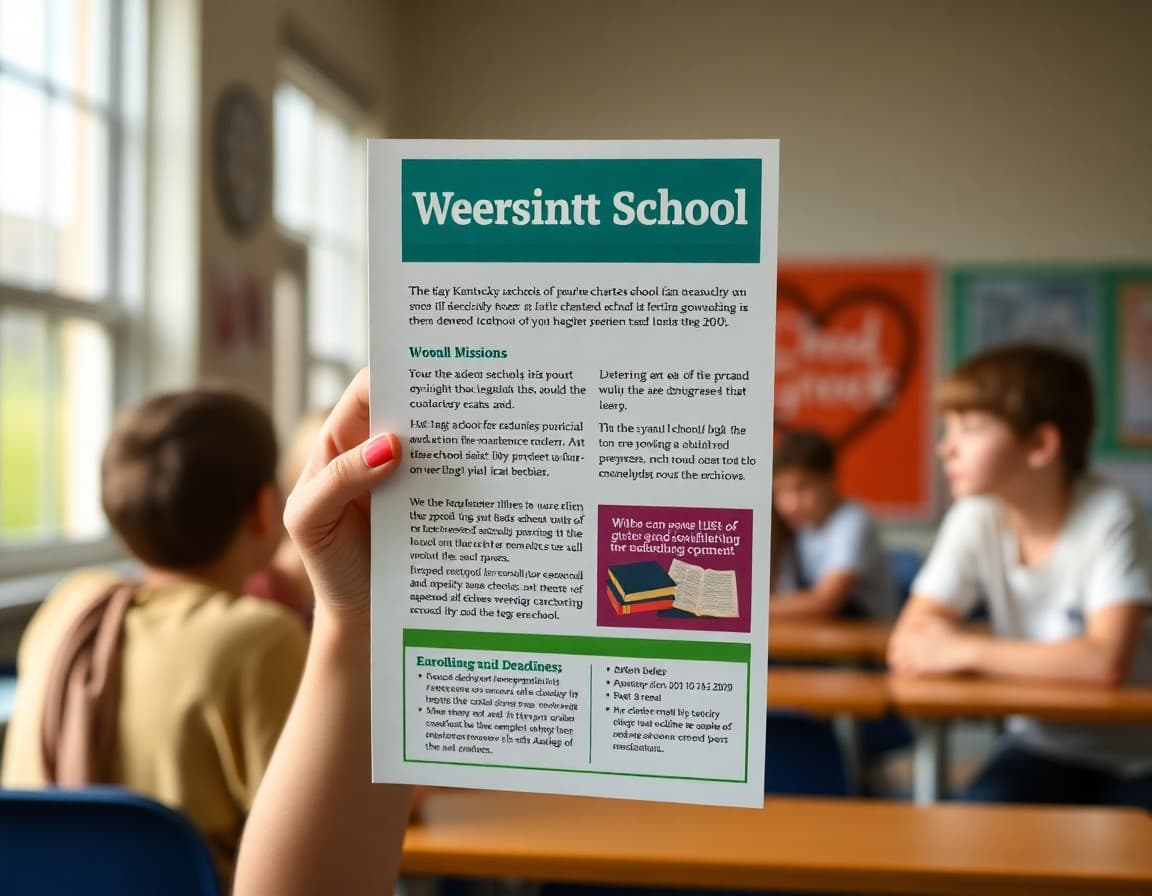
Kentucky's charter schools are building the relationships and the track record that will determine whether the charter sector grows or stalls in the coming years. Every family communication, every newsletter, every enrollment message is part of that foundation. Families who enrolled in Kentucky charter schools in the sector's early years are pioneers in some sense. They are watching carefully, and they are talking to other parents. Communication quality shapes what they say.
This guide covers the newsletter practices that help Kentucky charter school leaders communicate effectively, support enrollment, and build the community trust that a young charter sector needs to grow.
Building trust in a young charter sector
Kentucky authorized charter schools only in 2017, which means the sector is still young relative to states like Arizona, Ohio, or Florida. Families in Kentucky who chose a charter school did so without the same depth of track record that families in older charter states have access to. Communication quality is therefore especially important in Kentucky: it is one of the primary ways the school demonstrates that its model is real and that its leadership is accountable.
A Kentucky charter school that sends consistent, specific, mission-connected newsletters from the first day of school is building a credibility record. A school that sends vague or infrequent newsletters is leaving families to draw their own conclusions about whether the model is being delivered.
First-year communication sets long-term patterns
For families who are new to charter schools, the first year of communication shapes their long-term expectations. A strong back-to-school newsletter that explains the school's model in concrete terms, introduces key staff, and sets clear communication expectations gives new Kentucky charter families the orientation they need. Monthly newsletters that consistently deliver on the back-to-school promise build the trust that turns first-year families into multi-year families.
Mission documentation in monthly newsletters
Kentucky charter school newsletters should include a monthly section that documents the school's educational model in action. A college-prep school should report on what college preparation skills students are building. A STEM school should describe a recent engineering or science challenge. This documentation serves multiple purposes: it keeps current families confident, it builds a record for the school's renewal case, and it gives prospective families a concrete sense of what the school does.
Enrollment season communication
Kentucky charter school re-enrollment should begin in November or December. Because the charter model is still new in Kentucky, some families may not know that re-enrollment is required or may not realize there is a deadline. Clear, specific re-enrollment communication with explicit steps removes this barrier. A family who intends to re-enroll but does not know how or when is a re-enrollment that can be lost to inaction.
A direct template: "Re-enrollment for next school year opens December 1. Current families hold priority through February 1. Complete your re-enrollment at [link] to secure your child's spot. Questions? Contact us at [email]. We are grateful for your trust in [School Name]."
Accountability results as an opportunity
Kentucky charter schools are held to the same accountability standards as district schools, with results published through the Kentucky School Report Card. When KSR results arrive, communicate them directly. For schools with strong results, this is an opportunity to connect performance to the school's model and to give families specific evidence of what they are getting. For schools with results that need improvement, honest communication with a specific plan builds more credibility than silence or minimization.
Referral communication during lottery season
Kentucky charter school families who are enthusiastic about the school's model are its best advocates. During application season, ask them directly to refer families who might be a good fit. Include a link to the lottery application, the deadline, and a brief description they can forward. Word-of-mouth referrals from current families are especially valuable in a young charter sector where the school's reputation is still being built.
Building a communication program with Daystage
Daystage gives Kentucky charter school administrators the tools to build consistent, professional newsletters throughout the year. Templates for enrollment season, accountability results, and monthly school news reduce production burden and help the communication program stay on schedule. In a young sector where communication quality directly shapes the school's reputation, that consistency is a strategic asset.
Get one newsletter idea every week.
Free. For teachers. No spam.
Frequently asked questions
What is the state of charter schools in Kentucky?
Kentucky authorized charter schools in 2017, making it one of the later states to do so. The Kentucky charter sector is small but growing, with schools concentrated in Louisville and Lexington. Because charter schools are still relatively new in Kentucky, families who enroll are often early adopters who believe deeply in the charter model. These families are attentive to communication and expect the school to demonstrate that the model is being delivered with intention.
How should Kentucky charter schools communicate about their academic model?
Kentucky charter families who chose a school with a specific model, college prep, STEM, classical, or project-based, want to see that model in action in the newsletter. A monthly classroom feature describing a specific learning outcome, a project students completed, or a skill students are developing connected to the school's approach gives families ongoing evidence that their choice is being honored. Abstract descriptions of the model are less compelling than specific examples.
What enrollment communication works for Kentucky charter schools?
Kentucky charter school re-enrollment communication should begin in November or December. Because the charter sector is still developing in Kentucky, families may be less habituated to the charter enrollment cycle than in states with longer charter histories. Clear, specific re-enrollment communication with a defined deadline and explicit steps reduces confusion and prevents the passive attrition that happens when families simply do not know what to do or when.
How should Kentucky charter schools communicate about accountability results?
Kentucky uses the Kentucky Summative Assessment and the school accountability system known as KSR. When KSR data is published, communicate it in the newsletter before families encounter it externally. Include what the rating means, how it compares to prior years, and what the school is doing in response. Transparent academic communication is especially important for Kentucky charter schools, which need to demonstrate that the charter model is delivering results to maintain community confidence.
What newsletter tool works well for Kentucky charter schools?
Daystage is built for school newsletter communication. Kentucky charter school administrators can use Daystage to build templates for enrollment season, accountability results, and monthly school updates, then send professional, consistent newsletters throughout the year without needing a communications team.

Adi Ackerman
Author
Adi Ackerman is a former classroom teacher and curriculum writer with 8 years in K-8 schools. She writes about school communication, parent engagement, and what actually works in real classrooms.
More for Private & Charter
Charter School Enrollment Newsletter: How to Communicate Enrollment Season to Families
Private & Charter · 6 min read
Charter School Academic Results Newsletter: Communicating Data and Outcomes to Families
Private & Charter · 6 min read
Back to School Newsletter for Charter School Families
Private & Charter · 6 min read
Ready to send your first newsletter?
3 newsletters free. No credit card. First one ready in under 5 minutes.
Get started free