
Georgia Charter School Newsletter: Communication Guide for Georgia Charter Leaders
Georgia's charter sector has grown significantly over the past decade, with schools authorized both locally and by the state Commission serving students across metro Atlanta and throughout the state. Families who enroll in Georgia charter schools have made a deliberate choice, and they pay attention to how well that choice is being honored. The newsletter is where the school demonstrates, week after week and month after month, that the choice was right.
This guide covers the newsletter communication practices that help Georgia charter school leaders retain families, support enrollment, and communicate their school's academic mission throughout the year.
Georgia charter families as active partners
Georgia charter school families, particularly those who navigated a lottery to gain admission, tend to be highly engaged. They attended information sessions, applied, and waited. By the time their child started school, they were already invested. This active investment makes them attentive to communication. A newsletter that reflects the school's genuine work reinforces their commitment. A newsletter that is vague or infrequent introduces doubt.
Back-to-school newsletters that build confidence
The first newsletter of the Georgia charter school year should address every practical question a new or returning family might have: the daily schedule, drop-off and pick-up procedures, the school calendar, staff introductions, and communication protocols. Families who arrive on the first day knowing exactly what to expect, because the newsletter answered their questions in advance, experience less anxiety and build initial trust in the school's organization.
Include a brief note from the principal that describes what the school is excited about for the year ahead. One or two specific initiatives, a new program, a curricular focus, a school-wide goal, give families a sense that the year has a direction and that the leadership is attentive.
Monthly newsletters that document the school's work
Georgia charter school monthly newsletters should include a classroom or academic feature that connects to the school's mission. For a STEM-focused school, describe a recent engineering or science project. For a college-prep school, report on a milestone in the college preparation curriculum. For a project-based school, share what community problem students are currently addressing. This documentation serves the school's narrative and gives families the evidence they need to remain confident.
Enrollment season communication in Georgia
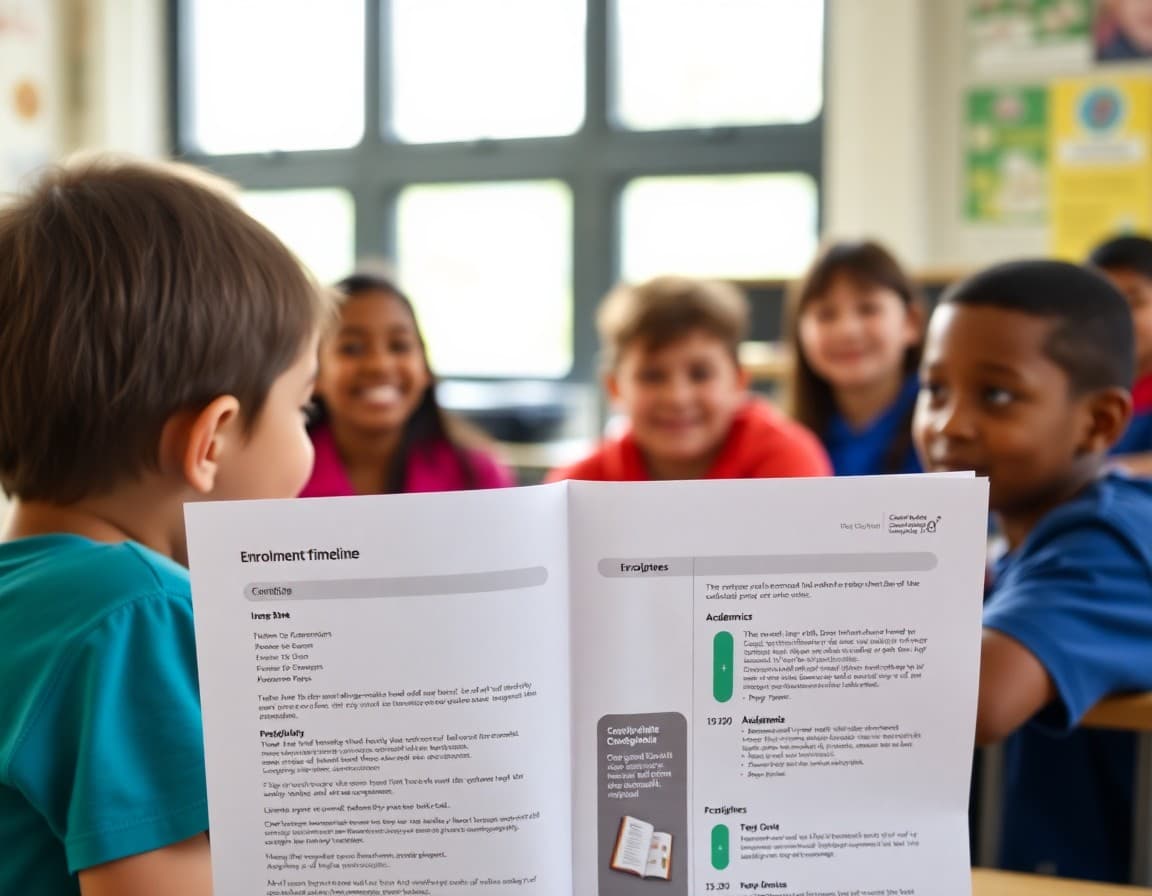
Georgia charter school enrollment typically runs from January through April, with re-enrollment for current families starting earlier. A November or December re-enrollment newsletter that includes a specific deadline, clear steps, and a genuine appreciation note prevents the passive drift that causes schools to lose families who would have stayed if asked directly.
A clear re-enrollment template excerpt: "Re-enrollment for next school year opens November 15. Current families hold priority through January 15. Complete your re-enrollment at [link]. We are grateful for your continued partnership and look forward to welcoming your family back."
CCRPI communication that builds trust
Georgia's College and Career Ready Performance Index results are published publicly each year. Charter schools that communicate their CCRPI scores proactively, in the newsletter before results appear in local media, demonstrate accountability and transparency. The communication should include the score, what it means in context, comparison to prior years, and the school's specific response plan. This is the kind of honest, direct communication that Georgia charter families respect.
Referral communication during lottery season
Georgia charter schools that rely on lottery enrollment depend on word-of-mouth referrals to build strong applicant pools. Include a referral prompt in January or February newsletters: a direct ask, a link to the lottery application, and the application deadline. Georgia families who are enthusiastic about the school will refer if prompted clearly. A vague mention that applications are open does not produce the same result as a specific, easy-to-act-on referral request.
Using Daystage to sustain communication quality
Georgia charter school administrators who use Daystage build a communication calendar at the start of the year and execute against it consistently. Templates for each key communication moment reduce the production time required for each newsletter. The result is a program that delivers professional, mission-connected newsletters throughout the year without requiring significant staff time for each issue. In Georgia's growing charter market, that consistency is a real competitive advantage.
Get one newsletter idea every week.
Free. For teachers. No spam.
Frequently asked questions
How is Georgia's charter school sector organized?
Georgia charter schools are authorized either by local school boards or by the State Charter Schools Commission. Commission-authorized schools, in particular, are designed to serve students who lack access to high-quality public school options. Georgia charter families who gained access through a lottery are often deeply invested in the school's success and respond well to communication that treats them as genuine partners in their child's education.
What should Georgia charter school newsletters communicate during enrollment season?
Re-enrollment deadlines and specific steps for current families, the lottery timeline and application process for prospective families, a referral prompt for current families to share with their networks, and a brief preview of what the coming school year will include. Georgia charter school families who receive re-enrollment information early, in November or December, commit sooner and with less exploration of alternatives.
How should Georgia charter schools communicate about CCRPI results?
Georgia uses the College and Career Ready Performance Index to evaluate schools. When CCRPI results arrive, communicate them directly in the newsletter: what the score means, how it compares to prior years, and what the school is doing to sustain or improve performance. Georgia charter families who chose the school for academic reasons are attentive to performance data and trust schools that communicate about it proactively.
How can Georgia charter schools use newsletters to engage Atlanta-area families differently from rural families?
Atlanta-area charter families have more school choice options and are more likely to be recruited by competing schools. They benefit from newsletters that emphasize academic outcomes, program quality, and specific student accomplishments. Rural Georgia charter school families may have fewer options and prioritize logistical communication, event announcements, and community connection. Understanding the specific audience and adjusting content emphasis accordingly improves newsletter effectiveness in both contexts.
What newsletter tool do Georgia charter schools use?
Daystage is used by Georgia charter school administrators who want to maintain consistent, professional family newsletters without a communications staff. The ability to build templates for enrollment season, CCRPI results, and monthly updates reduces the production burden of each newsletter and helps the communication program stay consistent throughout the year.

Adi Ackerman
Author
Adi Ackerman is a former classroom teacher and curriculum writer with 8 years in K-8 schools. She writes about school communication, parent engagement, and what actually works in real classrooms.
More for Private & Charter
Charter School Enrollment Newsletter: How to Communicate Enrollment Season to Families
Private & Charter · 6 min read
Charter School Academic Results Newsletter: Communicating Data and Outcomes to Families
Private & Charter · 6 min read
Back to School Newsletter for Charter School Families
Private & Charter · 6 min read
Ready to send your first newsletter?
3 newsletters free. No credit card. First one ready in under 5 minutes.
Get started free