
Faith-Based School Newsletter: Communicating School Life and Mission to Families
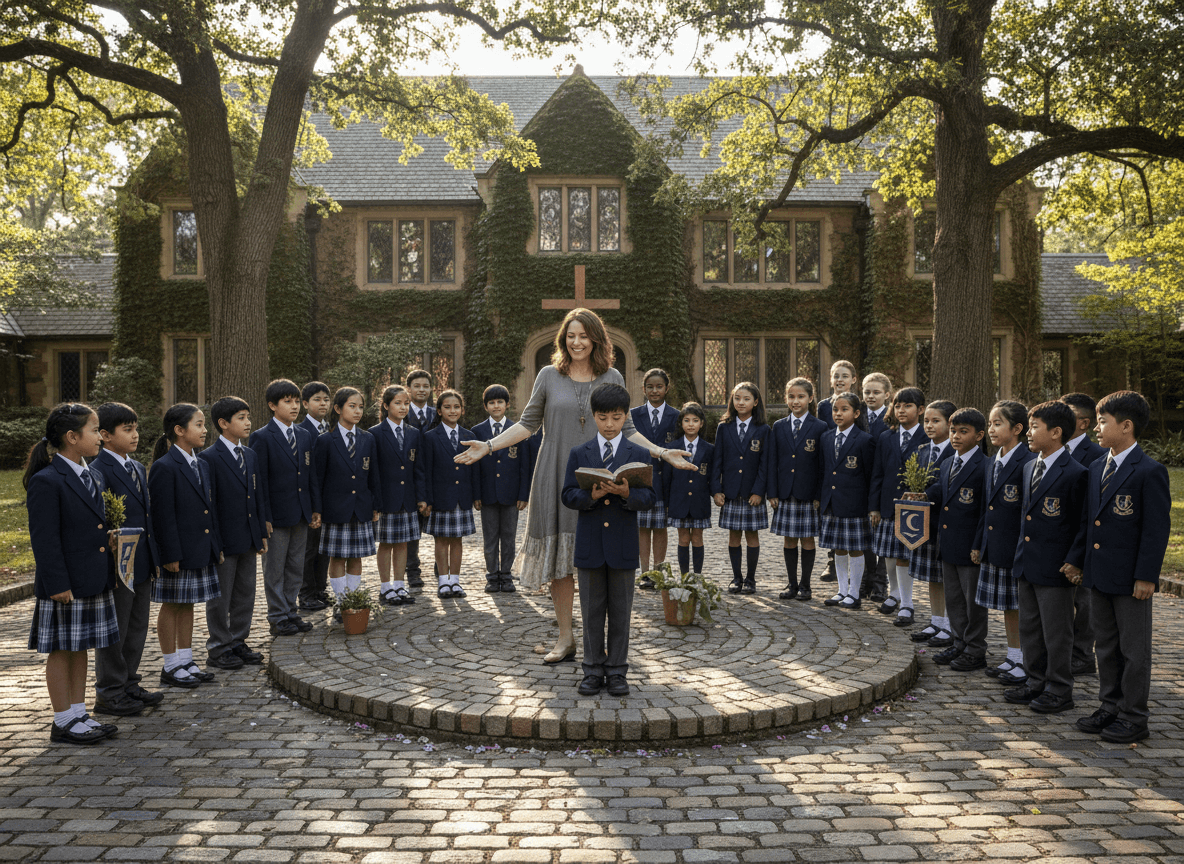
Faith-based schools serve a distinctive community: families who chose the school at least in part because of its religious identity. That shared commitment creates a strong foundation for communication, but it also creates complexity. Not every family in your school is at the same place in their faith. Not every family participates in the same way. The newsletter has to speak to all of them without reducing the school's religious identity to a formality.
The Liturgical Calendar as a Newsletter Framework
For Catholic and mainline Protestant schools, the liturgical calendar gives the newsletter a natural rhythm. Advent, Lent, Easter, and Pentecost are not just religious seasons. They organize the school's collective life, its prayer, its service focus, its assembly themes.
Aligning the newsletter with the liturgical season gives it coherence. A Lent issue might focus on the school's service projects, the themes of the school's Stations of the Cross, and student reflection on sacrifice. This is more meaningful than a generic "what's happening this month" format and signals that the school's spiritual life is real, not ceremonial.
For evangelical Christian schools and Jewish day schools, the framework differs but the principle is the same: let the school's religious calendar shape what the newsletter covers and when. High holidays, school-wide observances, and annual traditions all deserve newsletter coverage that connects them to the school's mission.
Chapel and Assembly Updates
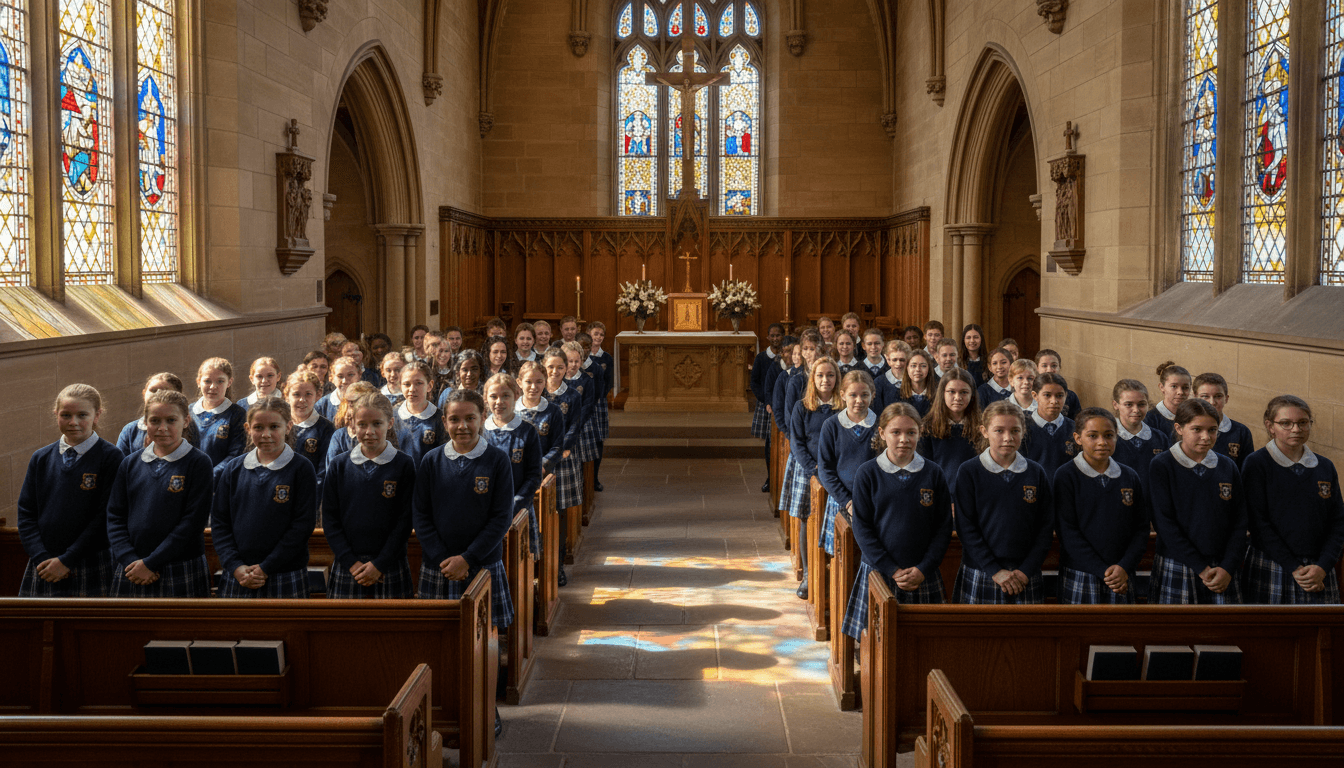
Regular chapel, davening, or school-wide prayer is often the center of a faith-based school's communal life. Parents who cannot attend deserve to know what happened there. A short chapel recap in each newsletter, one paragraph describing the theme, who led it, and what students heard or did, keeps non-attending families connected to a major part of their child's school experience.
When students participate in leading chapel, name them. Parents who see their child acknowledged for spiritual leadership respond differently than parents who see their child named for athletic achievement. Both matter, but faith-based schools should not underestimate the value of highlighting spiritual participation.
Service Requirements Communication
Most faith-based schools have community service requirements. These are often a source of family confusion: how many hours, what qualifies, how to log, what the consequences are for non-completion. The newsletter is the right channel to communicate service requirements clearly and consistently throughout the year.
Post reminders at the start of each semester, at the midpoint, and before year-end deadlines. Include a clear link to the service log or tracking system every time. Families who receive clear information early are far less likely to be scrambling for service hours in May.
Sacrament Preparation Communication
For Catholic schools in particular, sacrament preparation is a significant family commitment. First Reconciliation, First Communion, and Confirmation all involve not just the student but the whole family. The newsletter is where you set expectations long before the preparation cycle begins.
Start communicating about upcoming sacraments at the beginning of the school year, even if the preparation does not start until spring. Families need to understand the schedule, what is required of them, how to involve parish faith formation if the school is not doing that directly, and what the celebration will look like. Late or incomplete communication about sacraments is one of the most consistent sources of family frustration at Catholic schools.
Communicating Across Different Faith Levels
This is the tension every faith-based school administrator knows. Some families chose the school because of deep religious commitment and want more faith integration, not less. Others chose it for academic quality, community safety, or school culture, and are more ambivalent about the religious dimension. Both types of families exist in your building.
The newsletter does not need to resolve this tension, but it should not ignore it either. Write with the assumption that readers include devout families, lapsed families, and families of a different faith who are nonetheless committed to the school's values. Use inclusive religious language where appropriate. When referring to specific religious practices, briefly explain their significance rather than assuming shared knowledge.
Mission Connection in Every Issue
Faith-based schools usually have an explicit mission statement grounded in their religious tradition. The newsletter should reflect that mission visibly, not just quote it in a footer. This means connecting academic achievements, student behavior, service projects, and community events back to the school's core commitments.
Tools like Daystage make it easier to maintain a consistent newsletter format where mission-connected language and sections are built into the template rather than depending on whoever writes the issue that week. Consistency matters especially for faith-based schools where the community's sense of shared purpose is part of what families are paying to be part of.
Seasonal and Holiday Communication
Faith-based schools navigate complex calendars. Religious holidays vary by tradition, and the school calendar needs to be communicated clearly so families can plan. Include a full academic calendar in the fall newsletter and update it whenever changes occur.
When the school observes a religious holiday with a special program or all-school event, the newsletter should explain what will happen and how families can participate or observe if they choose. This is especially important for families who are less liturgically connected and may not have a frame of reference for what an All Saints Day mass or a school Seder looks like.
Get one newsletter idea every week.
Free. For teachers. No spam.
Frequently asked questions
When should faith-based schools communicate service requirements and sacrament preparation to families?
Service hour reminders belong at the start of each semester, at the midpoint, and before year-end deadlines. Sacrament preparation communication should begin at the start of the school year, even when the preparation cycle does not start until spring. Families who receive this information early plan around it. Families who receive it late scramble or push back.
What should a faith-based school newsletter include beyond academic and logistical updates?
Chapel recaps, liturgical calendar framing, service project updates, and explanations of upcoming observances should all appear regularly. A brief paragraph describing what happened in chapel this week keeps non-attending parents connected to a major part of their child's school experience that they cannot observe directly.
How should faith-based schools write newsletters for families at different levels of religious observance?
Write with the assumption that your reader base includes devout families, lapsed families, and families of a different faith who are nonetheless committed to the school's values. Use inclusive religious language where appropriate, and briefly explain the significance of specific practices rather than assuming shared knowledge.
What are common challenges faith-based schools face with newsletter communication?
The most consistent failure is treating the newsletter as a logistics document with a religious header. Schools that do not make their spiritual life visible in the newsletter communicate that it is incidental, which erodes trust with the families who chose the school specifically for that dimension. Late or incomplete communication about sacrament preparation is also a recurring source of family frustration.
Is there a newsletter tool that helps faith-based schools maintain consistent mission-connected communication?
Daystage makes it easier to maintain a consistent newsletter format where mission-connected language and sections are built into the template rather than depending on whoever writes the issue that week. For faith-based schools where the community's sense of shared purpose is part of what families are paying to be part of, that structural consistency matters.

Adi Ackerman
Author
Adi Ackerman is a former classroom teacher and curriculum writer with 8 years in K-8 schools. She writes about school communication, parent engagement, and what actually works in real classrooms.
More for Private & Charter
Charter School Newsletter Guide: Building Community Through Consistent Family Communication
Private & Charter · 7 min read
Magnet School Newsletter: Communicating a Specialized Program to Committed Families
Private & Charter · 7 min read
Private School International Admissions Newsletter: Guiding International Families Through Enrollment
Private & Charter · 6 min read
Ready to send your first newsletter?
3 newsletters free. No credit card. First one ready in under 5 minutes.
Get started free