
How to Send School Newsletters to Spanish-Speaking Families
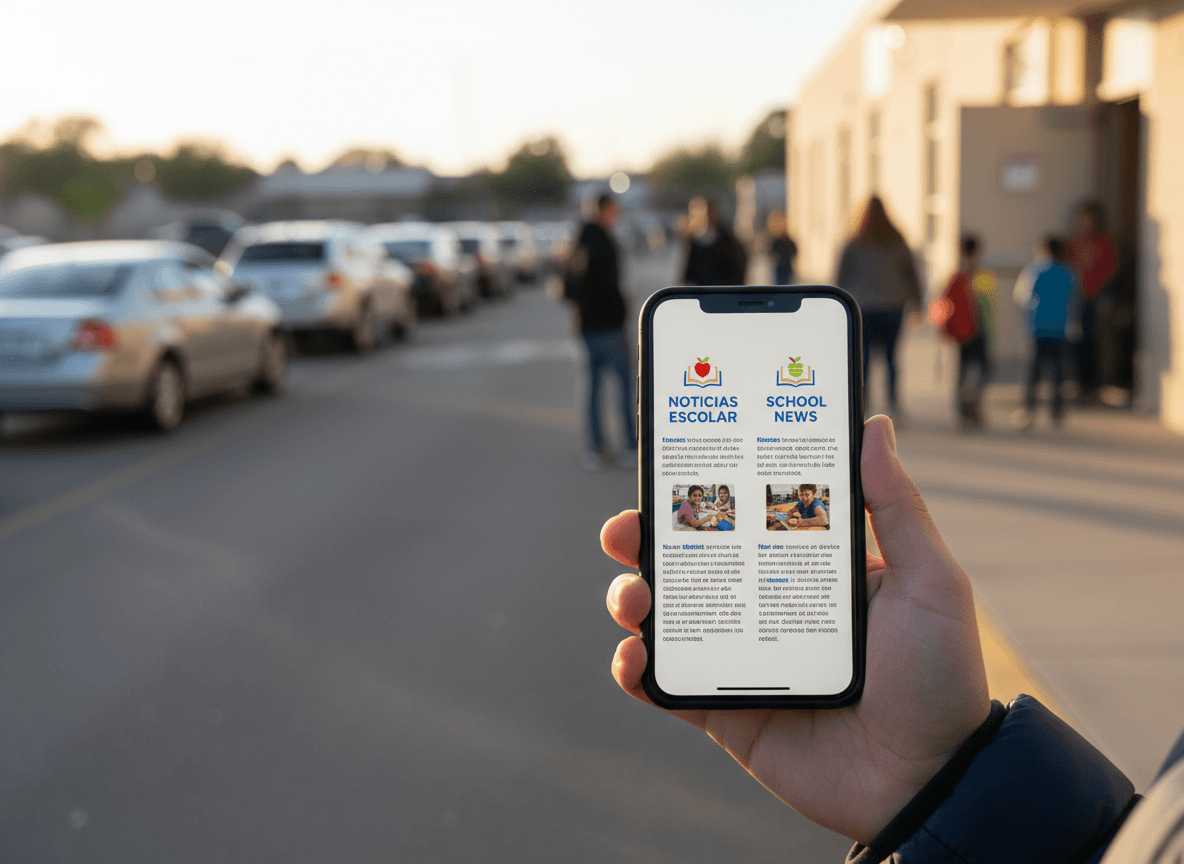
Spanish is the most common non-English language spoken in American homes. In schools where Spanish-speaking families make up a significant portion of the community, English-only newsletters are not a communication tool, they are a barrier.
The families not reading your newsletter are not disengaged. Many of them want to know what is happening at school. They cannot access the information in the form you are sending it.
Here is how to change that without adding more work than you can sustain.
Start with a Realistic Translation Approach
The perfect is the enemy of the good when it comes to bilingual communication. Schools that wait until they can afford professional translation for every piece of content end up sending nothing. Schools that use imperfect translation consistently end up building real family relationships.
Machine translation as a starting point
Modern machine translation (Google Translate, DeepL) is good enough for school newsletters. It is not good enough for legal documents or IEP notices, those require professional or community-reviewed translation. For a weekly classroom newsletter describing activities and upcoming events, machine translation is a workable starting point.
The key is review. A 60-second scan of a machine-translated newsletter by anyone with native or near-native Spanish catches the significant errors before the email goes out. If you have a Spanish-speaking colleague, parent volunteer, or community liaison, a brief review is worth building into your workflow.
Bilingual format vs. separate versions
Two formats work in practice. Which one fits your school depends on your audience:
- Side-by-side bilingual: Each section appears first in English, then in Spanish. Visually clear. Slightly longer. Works well when your families include both English-dominant and Spanish-dominant households.
- Separate Spanish version: A Spanish-language newsletter sent separately to families who have indicated Spanish as their preferred language. Cleaner to read. Requires a segmented contact list.
The segmented list approach is more professional and works better for Spanish- dominant families who do not need the English alongside. It requires more upfront setup (asking families for language preference at enrollment or the start of the year) and pays off for the rest of the year.
Tone and Register in Spanish Communication
Spanish school communication carries cultural context that matters. Several specific patterns are worth knowing:
Formal vs. informal address
Spanish distinguishes between formal (usted) and informal (tú) address. School newsletters should use the formal register, usted, unless your school community has established a different norm. Defaulting to tú in a school newsletter can feel presumptuous to families from more formal cultural contexts.
Warm, respectful opening and closing
Spanish-language communication in school contexts typically uses warmer salutations and closings than English equivalents. "Estimadas familias" (Esteemed families) is a standard newsletter opening. "Con respeto y gratitud" (With respect and gratitude) is an appropriate closing. These are not formal flourishes, they are culturally expected conventions that signal respect.
Avoid literal translation of English idioms
"Hit it out of the park," "circle back," "on the same page", idioms that English speakers do not notice as idioms translate literally into confusing or sometimes absurd Spanish. When revising machine translation, watch for these. Rewrite the source English in plain terms first, then translate.
Getting Families to Provide Language Preference
The simplest way to know which families prefer Spanish is to ask at the start of the year. Add one question to your back-to-school contact form: "What language would you prefer to receive school communications in?"
If your enrollment forms already capture home language, use that data. The federal Home Language Survey is required for Title III purposes and gives you exactly this information.
For families who do not fill out forms, default to bilingual format, it serves both populations.
Beyond Translation: Building Real Engagement
Translation is necessary but not sufficient. Spanish-speaking families who receive a translated newsletter are more informed. They are not yet engaged in the same way as families who feel culturally seen by the school's communication.
A few patterns that move from translation to genuine engagement:
- Include specific invitations to community events that are welcoming to Spanish-speaking families, and state explicitly in the newsletter whether translation or bilingual support will be available at those events.
- When possible, feature student work, stories, and examples that include students from the bilingual program or whose families are Spanish-speaking. Families notice when their community is represented in school communication.
- Name school staff who speak Spanish and how to reach them. A simple line like "Para comunicarse en español, por favor contacte a [staff name] en [contact]" removes a real barrier for families who have avoided reaching out because they were not sure anyone would understand them.
Legal Background
Title VI of the Civil Rights Act requires schools that receive federal funding to provide meaningful access to programs for families with limited English proficiency (LEP). The Department of Education has issued guidance making clear that this includes school communications. "Meaningful access" means the content is actually usable, not just technically translated. Schools with significant Spanish-speaking populations that send only English newsletters may be out of compliance.
The practical implication: bilingual newsletters are not just a best practice. For many schools, they are an obligation.
Ready to send your first newsletter?
40 newsletters per school year, free. No credit card. First one ready in under 5 minutes.
Get started free