
Farsi and Persian School Newsletter: Reaching Iranian and Persian-Speaking Families
The United States is home to one of the largest Persian-speaking diaspora communities in the world. Cities like Los Angeles, Washington DC, and Houston have significant Iranian-American populations, and schools in these areas serve families whose primary language at home is Farsi.
Understanding this community's characteristics and preferences will help you build a newsletter approach that connects genuinely, not just linguistically.
Understanding the Persian-speaking community
Iranian-Americans include several waves of immigration: families who left Iran before or during the 1979 revolution, families who came for graduate school in the 1980s and 1990s, and more recent arrivals. This community has among the highest levels of educational attainment of any immigrant group in the United States.
Persian is also spoken by Afghan families (Dari is closely related to Farsi and mutually intelligible in most contexts) and Tajik families. If your school serves Afghan families, a Farsi-language newsletter will be partially accessible to them as well, although Dari has some vocabulary differences that matter for formal communications.
The right-to-left rendering challenge
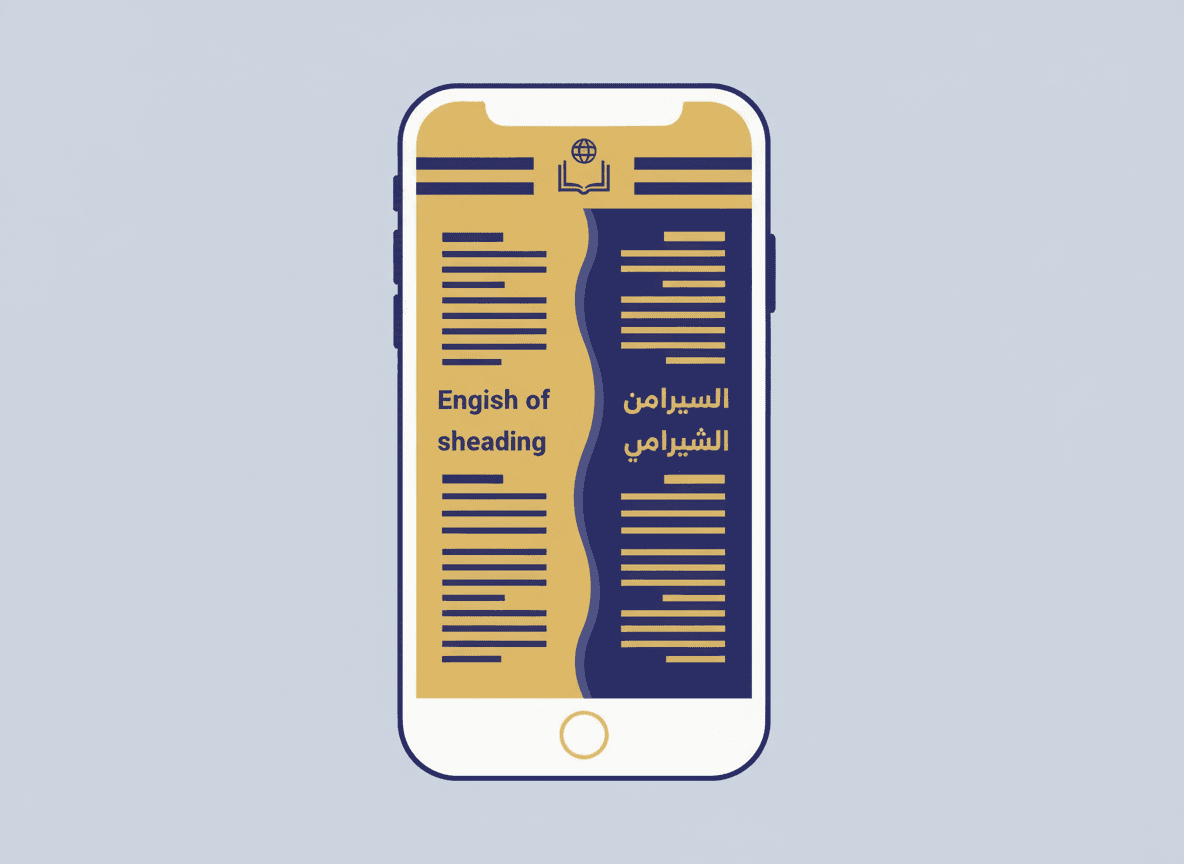
Farsi uses the Perso-Arabic script and is written right to left. This creates technical challenges for newsletter formatting that do not exist with left-to-right languages. When Farsi text is placed in an email template designed for English, the direction may be reversed or the text may appear garbled.
The safest approach is to include Farsi text as a separate section clearly labeled, or to send the Farsi content as a PDF attachment that is rendered correctly by the word processing software used to create it. Testing with a native Farsi reader before the first send is essential to catch any rendering issues.
Academic depth in your newsletter
Persian-speaking families with professional backgrounds will not be fully served by a newsletter that only communicates dates and events. They want to understand the curriculum, the academic standards being applied, and the pathway their child is on.
Including a brief curriculum summary, an explanation of how the current unit connects to grade-level standards, or a description of the advanced courses available in the next grade will make your newsletter more valuable to this community than one that is purely logistical.
Cultural acknowledgments that build community
Nowruz, the Persian New Year celebrated around the spring equinox (typically March 20th or 21st), is one of the most important holidays in Persian culture, observed across Iran, Afghanistan, and central Asian countries. Acknowledging Nowruz in your spring newsletter is a meaningful gesture.
"We wish our Persian-speaking families a happy and prosperous Nowruz as we approach the spring equinox. We are grateful for your partnership with our school community." Two sentences. The cultural acknowledgment signals that the school sees the community beyond their role as recipients of school information.
Finding translation support
Persian-speaking translators are available through district language services, community organizations, and professional translation firms. Many universities with Iranian-American student populations have student organizations that may offer translation support for community institutions.
For legally significant communications, use professional translation services. For monthly newsletters, a bilingual staff member or community volunteer reviewer who checks a machine translation draft is often sufficient and sustainable.
Building a relationship over time
The Persian-speaking community values relationships built over time. A school that consistently provides Persian-language communication, that acknowledges the community's cultural calendar, and that treats families as knowledgeable partners in their child's education will build the kind of trust that transforms newsletter readers into active school community members.
That transformation happens over years, not weeks. Consistency in your Persian-language communication is the investment that compounds over time.
Get one newsletter idea every week.
Free. For teachers. No spam.
Frequently asked questions
What is the difference between Farsi and Persian for school newsletter purposes?
Farsi and Persian refer to the same language. Persian is the formal English name for the language. Farsi is the Persian-language name for Persian. Both terms are used interchangeably in the United States. In school communications addressed to the community, either term is appropriate, though many Persian-speaking families prefer 'Persian' in formal English contexts.
What are the most important technical considerations for a Farsi school newsletter?
Farsi is written right to left using a Perso-Arabic script. Text rendering in email and web formats requires RTL (right-to-left) support. Many email platforms do not handle RTL text gracefully when it is pasted alongside left-to-right English. Test your newsletter in multiple email clients before sending to ensure Farsi text renders correctly and does not display in the wrong direction.
What is the Persian-speaking community's general relationship to school communication?
Iranian-Americans as a group have among the highest rates of college education of any immigrant community in the United States. Many Persian-speaking parents are highly educated professionals who are deeply invested in their children's academic outcomes. School newsletters that include substantive academic content, not just logistics, tend to have stronger engagement with this community.
Are there cultural sensitivities schools should be aware of when communicating with Persian-speaking families?
Iranian-American families include people from diverse religious and political backgrounds. Schools should avoid making assumptions about religious practice or family background. The Persian New Year, Nowruz, falls in late March and is an important cultural holiday. Acknowledging it in the spring newsletter builds goodwill with the Persian-speaking community.
How does Daystage support Farsi school newsletter delivery?
Daystage supports adding Farsi-language sections to newsletters. The block-based editor allows translators to paste Farsi text into a dedicated section, and the platform's email rendering handles the content in a format that is readable on mobile devices, which is how most families access their school newsletters.

Adi Ackerman
Author
Adi Ackerman is a former classroom teacher and curriculum writer with 8 years in K-8 schools. She writes about school communication, parent engagement, and what actually works in real classrooms.
More for Bilingual
Bilingual School Counselor Newsletter: Connecting Multilingual Families to Mental Health and Social-Emotional Support
Bilingual · 6 min read
Hmong School Newsletter: Communicating With Hmong American Families
Bilingual · 5 min read
Professional Interpreter Newsletter: What Families Should Know About School Interpretation Services
Bilingual · 5 min read
Ready to send your first newsletter?
3 newsletters free. No credit card. First one ready in under 5 minutes.
Get started free