
School Newsletter for Chinese-Speaking Families: Mandarin and Cantonese Communication Strategies
Chinese is among the most spoken non-English languages in American schools. But "Chinese-speaking families" is not one category. Families may speak Mandarin, Cantonese, Shanghainese, or another regional language. They may use Simplified Chinese characters (standard in mainland China) or Traditional Chinese characters (standard in Taiwan, Hong Kong, and much of the diaspora). What works for one group may not work for another.
Getting this right matters. Chinese-speaking families, particularly recent immigrants, often have lower school engagement not because they do not care, but because the communication barriers make it difficult to stay informed. A well-executed bilingual newsletter changes that.
Mandarin versus Cantonese: what you need to know
Mandarin (Putonghua) and Cantonese are both Chinese languages, but they are not mutually intelligible in spoken form. However, written Chinese uses the same character system, which means a written newsletter in Chinese can be read by speakers of both languages. Written communication does not require you to choose between Mandarin and Cantonese the way spoken communication does.
What you do need to choose is whether to use Simplified or Traditional characters. This depends on your community.
- Simplified Chinese is used in mainland China and Singapore. If your Chinese-speaking families are primarily from the mainland, use Simplified.
- Traditional Chinese is used in Taiwan, Hong Kong, Macau, and by much of the older Chinese diaspora in North America. If your families are predominantly from these regions or have been in the United States for more than one generation, Traditional is often more appropriate.
- When in doubt, offer both. Modern translation tools can produce both, and many digital newsletters can accommodate separate versions.
Ask your Chinese-speaking families or community liaisons which they prefer. They will tell you clearly, and they will appreciate that you asked.
Translation quality for Chinese
Machine translation for Chinese has improved significantly, particularly for Mandarin. Tools like DeepL and Google Translate can produce readable Chinese text from English for general newsletter content. However, for anything involving legal language, special education rights, discipline policies, or financial information, a human reviewer is essential.
Educational terminology often translates poorly. "504 plan," "IEP," "free and reduced lunch," and "parent conference" do not have direct equivalents in Chinese educational vocabulary. A machine translation will either transliterate the term (producing something phonetically similar but meaningless) or mistranslate it entirely. A bilingual educator or certified translator can provide the right Chinese terminology for these concepts.
Many districts with significant Chinese-speaking populations have community liaisons or family resource center staff who are bilingual. If yours does, involve them in reviewing all Chinese-language school communications before they go out.
Cultural context for Chinese-speaking families
Chinese families, particularly those from mainland China, often have expectations of school that differ from what American public schools provide. In China, the school communicates directives to parents, and parents follow them. The American model of parent involvement, where families are invited to participate in decisions, volunteer in classrooms, and raise concerns with teachers, may be unfamiliar.
Your newsletter can help bridge this gap. Explicitly explain what parent involvement looks like at your school and why it is valuable. "We invite you to attend our parent information night on [date]. Your questions and input help us serve your child better." This framing explains both the invitation and the purpose, which is not always obvious to families from educational systems where parent participation was not expected.
Academic achievement is a high priority in most Chinese-speaking families. Newsletters that include specific academic information, grade-level expectations, standardized test dates, and curriculum updates tend to get high engagement from this community. Put academic content near the top of your newsletter, not buried at the end after logistical announcements.
Structuring a bilingual newsletter for Chinese-speaking families
The most practical format for schools with significant Chinese-speaking populations:
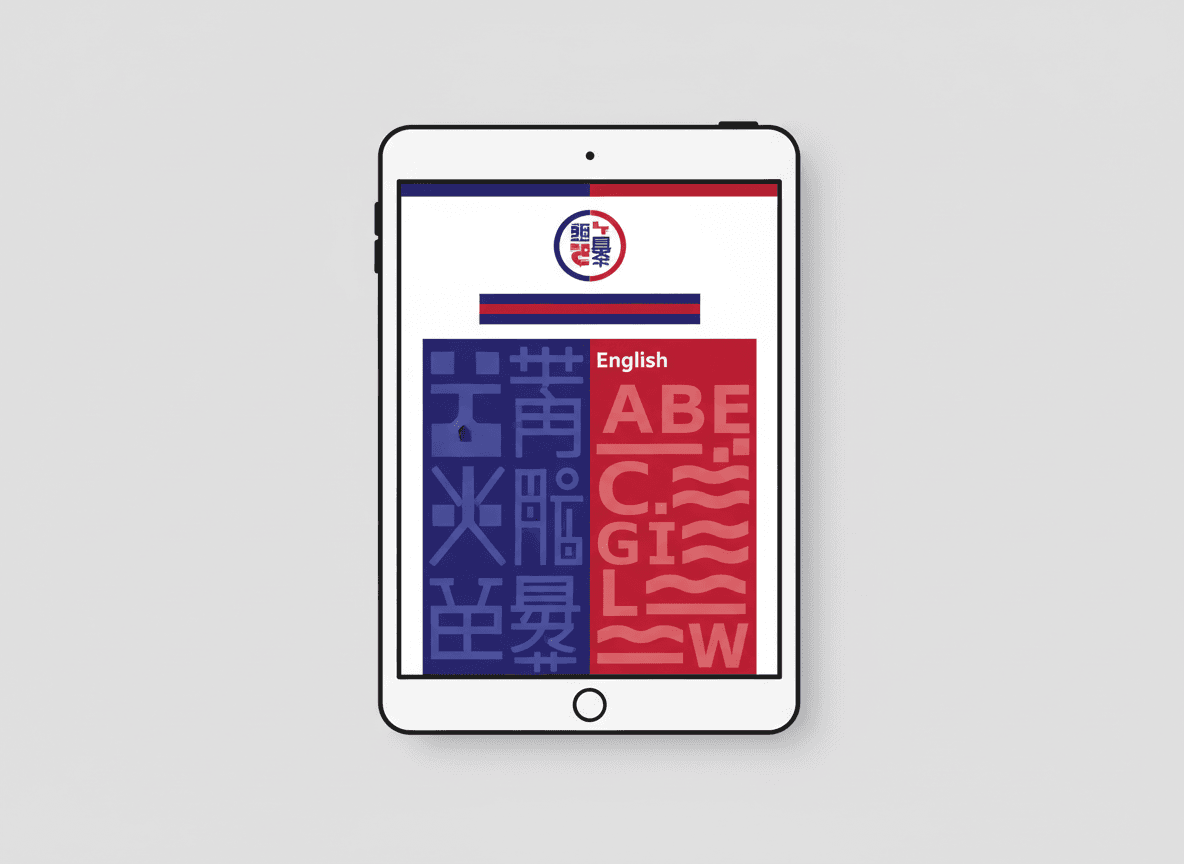
- Lead with an English header and a Chinese header that identifies the newsletter as bilingual. Something like "English below / 中文在下方" helps readers quickly find their language.
- Run the English content in full, then the Chinese translation in full. This is cleaner than interleaving sentence by sentence.
- Keep the English source clear and direct. Avoid idioms, humor, or complex sentence structures that translate awkwardly.
- Include a Chinese-language phone number or email contact for questions. If a family needs to call in, make it easy for them to reach someone who can help in Chinese.
Digital communication preferences
Many Chinese-speaking families, particularly those who have immigrated recently, are highly active on WeChat. School communication that arrives via email may not reach families who are more engaged on messaging apps.
Your newsletter is still valuable as a primary format, but consider whether your school or a community parent group has a WeChat channel where newsletter content can be shared. Many Chinese-speaking parent communities have informal WeChat groups where translated school information circulates. Making friends with the parents who manage those groups is one of the most effective outreach strategies available.
Using Daystage for bilingual newsletter delivery
Daystage supports bilingual newsletter structures where you can build separate language sections within the same email. The block editor lets you add a Chinese text block after your English content with clean visual separation. The subscriber management system allows you to tag families by language preference so you can filter or segment your sends as needed.
For schools that send a newsletter to all families but want Chinese-speaking families to receive a bilingual version, Daystage's subscriber groups make this manageable without maintaining two separate mailing lists.
The payoff of getting it right
Chinese-speaking families who receive consistent, accurate, culturally appropriate communication from school become significantly more engaged. They attend events, respond to requests, ask questions, and support their children's education with context they previously lacked.
The investment in a thoughtful Chinese-language newsletter pays dividends across the entire relationship between the school and that community. Start with the highest-priority communications, get the translation right, and build from there.
Get one newsletter idea every week.
Free. For teachers. No spam.
Frequently asked questions
When should schools begin sending Chinese-language newsletters to Mandarin- and Cantonese-speaking families?
Begin at enrollment and confirm language preference explicitly, since Chinese-speaking families are not a monolingual group. A family that speaks Cantonese at home receives little benefit from a Mandarin newsletter, and treating these as interchangeable is a common error that signals the school has not taken the time to understand its community.
What should a school newsletter for Chinese-speaking families include beyond a standard translation?
Use Simplified Chinese characters for Mandarin-speaking families from Mainland China and Traditional characters for Cantonese-speaking families from Hong Kong, Macau, or Taiwan. Include clear explanations of US school system terms that have no direct cultural equivalent, such as IEP, 504 plan, and Title I, since these concepts do not map directly to educational frameworks Chinese-speaking parents may have experienced.
How should schools handle translation quality for Chinese-language newsletters?
Chinese is a high-stakes translation language because automated tools frequently produce unnatural or incorrect academic vocabulary, and errors are often invisible to English-speaking staff who cannot verify the output. Use a qualified bilingual community member or professional translator for any communication involving legal rights, grade-level decisions, or disability services.
What are common challenges with reaching Chinese-speaking families through school newsletters?
Digital platform preferences differ significantly from English-speaking families. Many Chinese-speaking families in the US communicate primarily through WeChat rather than email, and a newsletter that only arrives by email may not reach them effectively. Cultural factors around directness and institutional deference also affect how families respond to communications about student performance.
How can schools manage bilingual newsletter delivery for Chinese-speaking families alongside other language communities?
Daystage supports separate subscriber groups tagged by language preference, so the right language version reaches the right families without the staff manually splitting email lists. Delivery data also shows which families are not opening, a useful prompt for trying a different outreach channel for families who may prefer WeChat or a phone call.

Adi Ackerman
Author
Adi Ackerman is a former classroom teacher and curriculum writer with 8 years in K-8 schools. She writes about school communication, parent engagement, and what actually works in real classrooms.
More for Bilingual
Ready to send your first newsletter?
3 newsletters free. No credit card. First one ready in under 5 minutes.
Get started free