
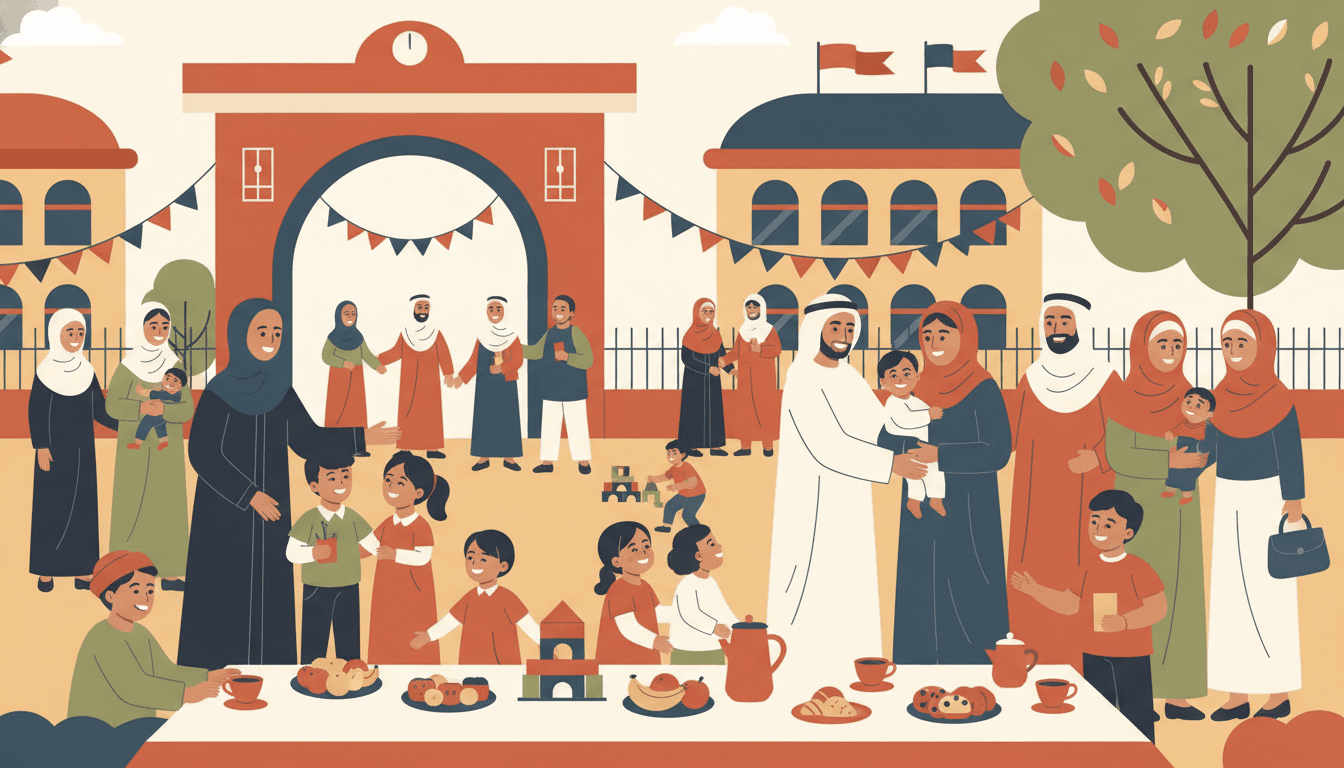
Bilingual Kindergarten Newsletter: Welcoming Multilingual Families in the First School Year
Kindergarten is the most important year to get communication right with multilingual families. Families who feel welcomed and informed in kindergarten become engaged school partners through elementary school and beyond. Families who feel confused and excluded in kindergarten develop habits of disengagement that persist.
A bilingual kindergarten newsletter is one of the most powerful tools a teacher has for setting that relationship on the right path from the beginning.
Start with a genuine welcome in the home language
The first newsletter of the school year should open with a greeting in every family's home language. "Bienvenidos a nuestra clase." "Bienvenue dans notre classe." "Xin chào tất cả các gia đình." These are small gestures that carry large meaning. They signal that the teacher sees and acknowledges the family's language identity.
Even a teacher who does not speak the home language can include a brief translated welcome note. Machine translation is adequate for a simple welcoming sentence, and having a bilingual family member review it before it is sent is a two-minute quality check.
Bridge home and school through vocabulary sharing
A bilingual kindergarten newsletter section that shares the vocabulary words students are learning in both English and the home language gives multilingual families a way to reinforce school learning at home in a language that feels natural.
"This week we are learning color words: red, blue, yellow, green. Ask your child these words in your home language and help them teach you the English words. Learning works in both directions." That prompt values the home language as an asset in the child's learning, not an obstacle to be overcome.
Explain kindergarten routines clearly
Many multilingual families, particularly those who attended school in different countries, are unfamiliar with how kindergarten in the US works. What is circle time? What does a kindergartner do all day? Why is there a snack? Why does the teacher send home a poem to read together?
A brief explanation of the kindergarten daily routine in the home language helps families understand the purpose of what their child is doing and equips them to support it at home. "Our morning circle is how we start every day. We greet each other, share the date and weather, and practice listening and speaking skills. You can practice similar routines at home: 'What day is it today? What is the weather like?'"
Give specific at-home support suggestions
Multilingual families often want to support their child's kindergarten learning but are not sure how to do so in ways that work across languages. A weekly at-home suggestion in the bilingual newsletter gives families concrete guidance.
"This week, read together in any language for 10 minutes before bed. Reading in the home language builds literacy skills that transfer directly to English reading. Ask your child to tell you about the pictures. Ask them what happens next. These conversations develop reading comprehension whether the book is in English or not." Specific, grounded, and validating of the home language.
Build the relationship with a personal teacher note
The bilingual kindergarten newsletter should include a brief personal note from the teacher every week. It does not need to be translated in full. Even a translated first line, "Your child had a great week and I am glad they are in our class," before the English note begins, creates a moment of genuine connection.
Teachers who build a personal relationship with multilingual families through the newsletter find that those families become more reachable when challenges arise. The relationship built through a hundred small newsletter moments is what makes the harder conversations possible.
Use photos to bridge language barriers
A photo of students engaged in classroom activities communicates across language barriers in a way that text cannot. A weekly classroom photo in the newsletter, showing children working, playing, learning, and belonging, makes the classroom real for families who cannot picture it from verbal descriptions alone.
For multilingual families who are still building their English reading skills, a newsletter with clear photos may be more informative than one that is text-heavy. Design your bilingual kindergarten newsletter with images as a genuine communication tool, not just decoration.
Get one newsletter idea every week.
Free. For teachers. No spam.
Frequently asked questions
Why is bilingual communication especially important in kindergarten?
Kindergarten is the entry point to the school system for most families. The communication patterns, trust levels, and expectations formed in kindergarten shape how families engage with schools throughout their child's education. Multilingual families who receive clear, accessible communication in kindergarten are more likely to remain engaged partners through high school.
What should a bilingual kindergarten newsletter include?
Weekly classroom activities, vocabulary words students are learning in both languages, attendance and reporting information, upcoming dates and events, how to support learning at home in the home language, and a warm personal note from the teacher. The home-language vocabulary section is particularly valuable for multilingual families who want to reinforce school learning at home.
Should kindergarten teachers learn phrases in families' home languages for their newsletters?
Yes. Even a basic greeting, a thank you, and a phonetic pronunciation guide for the teacher's name in the newsletter signals genuine effort to meet families where they are. The gesture matters even when the language knowledge is limited.
How do you handle a kindergarten class with families speaking five or six different languages?
Use a bilingual platform that can deliver a version with the relevant home language to each family group. A newsletter with an English base and a per-family language section is manageable with the right tools. For rare languages, a brief translated summary rather than a full translation is better than nothing.
How does Daystage help kindergarten teachers create bilingual newsletters?
Daystage lets kindergarten teachers build a newsletter template that can be sent in versions with different language sections to different subscriber groups. A teacher with limited time can update the English section weekly and have the bilingual components rendered for each language group without maintaining multiple separate newsletters.

Adi Ackerman
Author
Adi Ackerman is a former classroom teacher and curriculum writer with 8 years in K-8 schools. She writes about school communication, parent engagement, and what actually works in real classrooms.
More for Bilingual
Bilingual IEP Communication Newsletter: Supporting Multilingual Families Through the IEP Process
Bilingual · 6 min read
English Learner Reclassification Newsletter: Communicating the Process to Families
Bilingual · 6 min read
Multilingual School Orientation Newsletter: Preparing Diverse Families for a Successful School Year
Bilingual · 5 min read
Ready to send your first newsletter?
3 newsletters free. No credit card. First one ready in under 5 minutes.
Get started free