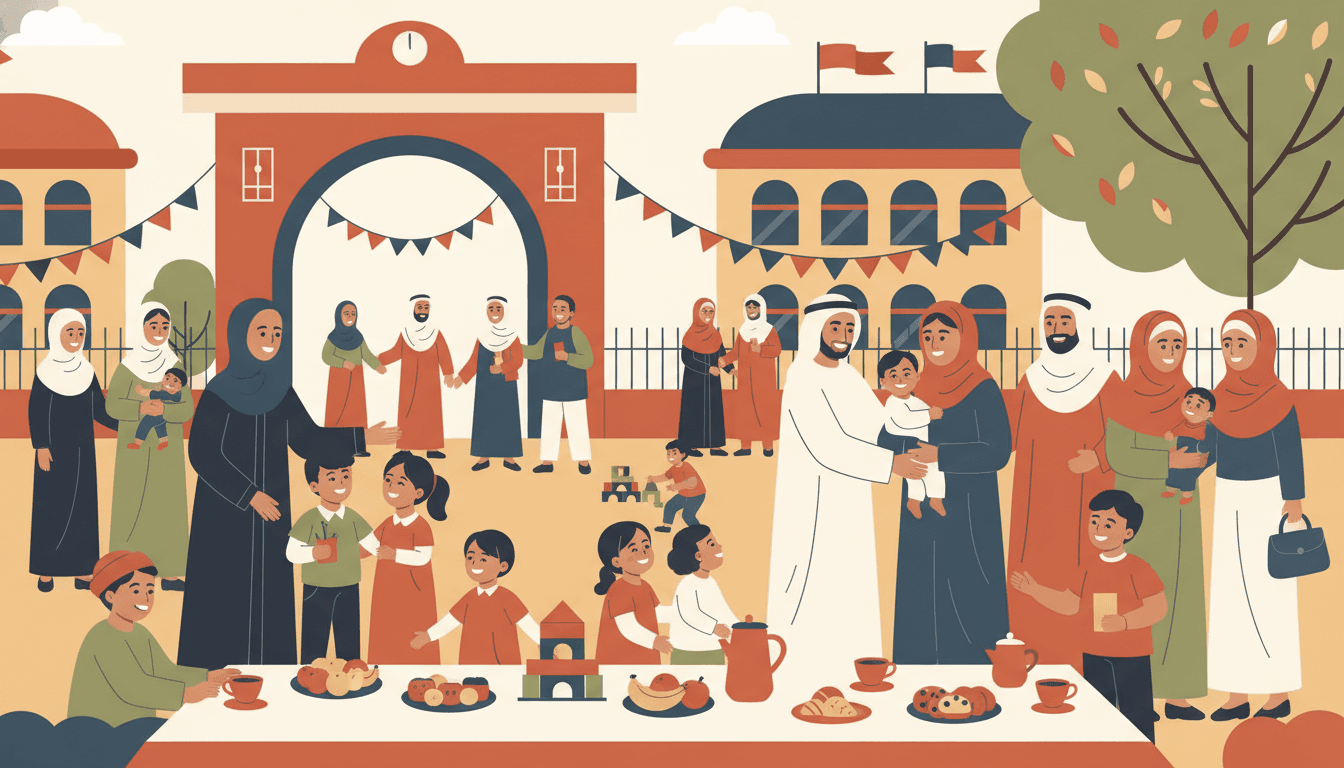
School Newsletter for Arabic-Speaking Families: How to Reach Your Arabic-Speaking Community
Arabic is the sixth most spoken language in the United States, and Arabic-speaking communities are among the fastest-growing immigrant populations in many districts. If your school serves families whose primary language is Arabic, your English-only newsletter is not reaching a significant part of your community.
But translating a newsletter for Arabic-speaking families is not as simple as pasting your text into a translation engine. There are linguistic, cultural, and logistical considerations that determine whether your communication actually lands. This guide covers all of them.
Understanding the Arabic-speaking community in your school
"Arabic-speaking" is not a monolithic category. Families in your school may come from Egypt, Lebanon, Syria, Iraq, Morocco, Yemen, Somalia, or a dozen other countries. While Modern Standard Arabic is understood across most of these communities through education, many families primarily speak regional dialects that can differ significantly from the formal written language.
For school newsletters, Modern Standard Arabic (MSA) is generally the right choice. It is the Arabic of formal communication, news, and government, and it is understood across dialects even if it is not the language families use at home. If you have a concentrated population from a specific region, a native speaker from that community can advise you on whether MSA is the best fit or whether specific terminology should be adjusted.
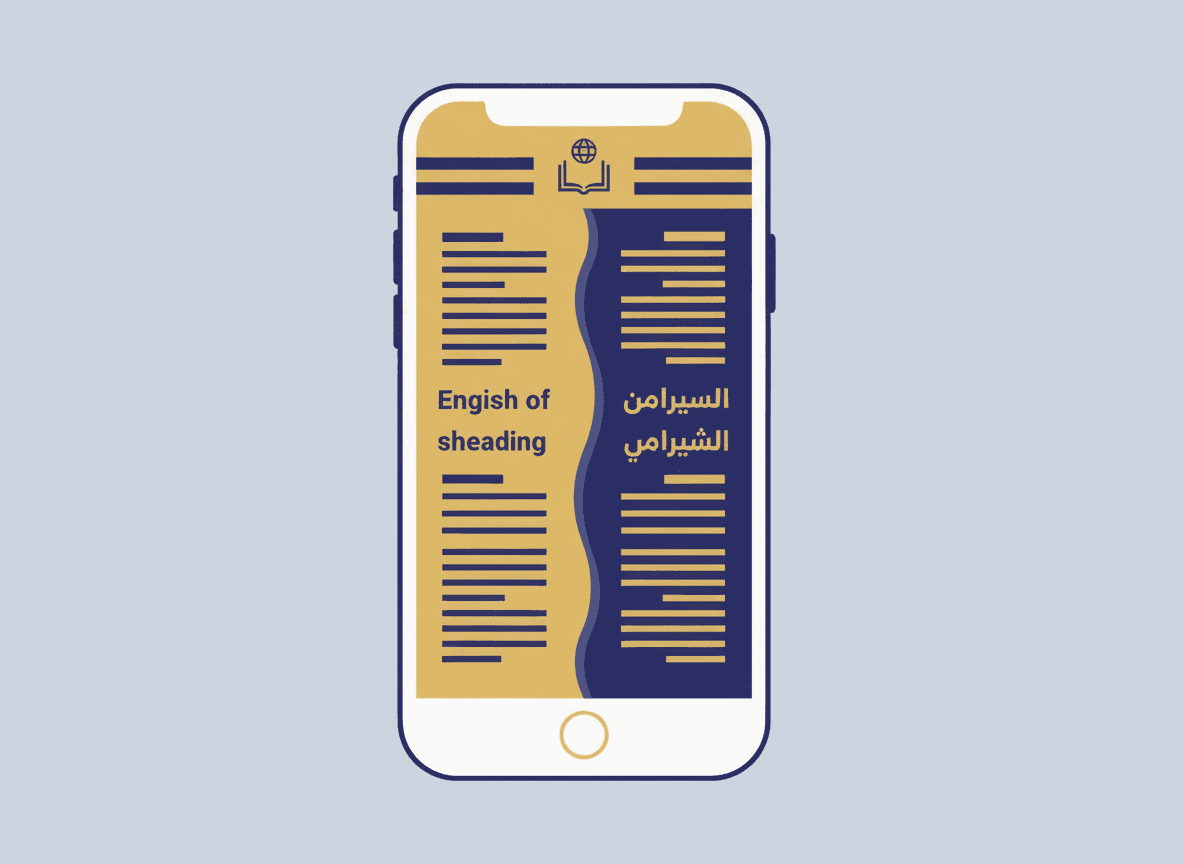
One critical fact for formatting: Arabic is written right to left. Your newsletter layout needs to accommodate this. A translation that is simply dropped into a left-to-right English template will be difficult or impossible for readers to navigate.
Getting an accurate translation
Machine translation tools have improved significantly, but they are not reliable for school communication. Legal language around attendance, special education rights, and discipline procedures requires accuracy that AI tools cannot consistently provide. A translation error in a notice about an IEP meeting or a suspension policy can create serious misunderstandings.
The best options for accurate Arabic translation:
- A qualified community interpreter or translator. Many districts have translation services or contracts with language access agencies. If your district does, use them for all formal communication. If not, this is worth requesting at the district level.
- A trusted community member who is bilingual and has strong literacy in both languages. This works well for informal newsletter content. For legal or compliance-related content, use a qualified translator.
- A bilingual staff member. If your school has an Arabic-speaking staff member with strong written Arabic skills, their review of a machine translation can catch errors that would otherwise go unnoticed.
Do not use machine translation as a final product for anything that has legal or enrollment implications. Use it as a starting draft that a bilingual reviewer improves.
Cultural considerations that matter
Beyond language, there are cultural norms that affect how your newsletter is received by Arabic-speaking families.
Many Arabic-speaking families, particularly those from more conservative backgrounds, place high value on formal respectful address. A newsletter that opens with a casual "Hey families!" may read as disrespectful. A warm but formal tone, "Dear families of [school name]," signals respect and seriousness.
Family structure and gender roles vary significantly across the Arabic-speaking community. In some families, the father is the primary point of contact for official school communication. In others, mothers manage all school-related matters. Your newsletter should address both parents without assuming which parent is the primary contact. "We encourage all family members to read this newsletter" acknowledges this without making assumptions.
Religious observance is part of life for many Arabic-speaking families. Scheduling events during Ramadan, Eid, or Friday prayer time without acknowledgment can create barriers. Including a note in your newsletter that you are aware of these observances and have considered them in your event planning goes a long way toward building trust.
Structuring your Arabic-language newsletter
A practical format for reaching Arabic-speaking families:
- Send your newsletter in both English and Arabic. Either as two parallel columns (if your tool supports right-to-left text) or as two separate sections of the same email, clearly labeled.
- Lead with the most important information in both languages. If families only read the first third of the newsletter, make sure the critical information is there.
- Use simple sentence structures in the English version that translate cleanly. Complex English idioms, puns, and colloquialisms create translation problems that confuse rather than clarify.
- Include contact information prominently in the Arabic section. If a family has questions, make it obvious who to call or email.
Building trust with the Arabic-speaking community
A newsletter in Arabic is not enough on its own. Families who have experienced language barriers in schools are often cautious about engaging with school institutions. Your newsletter is one signal. The other signals are whether there is an Arabic-speaking staff member who can take phone calls, whether meetings are conducted with interpretation available, and whether families feel genuinely welcome rather than merely tolerated.
Your newsletter can acknowledge this explicitly. "We know that connecting with school can feel challenging when English is not your primary language. We are committed to making our school a place where all families can participate. If you need interpretation at any event or meeting, please contact us at [phone/email]."
How Daystage supports multilingual newsletters
Daystage's block-based editor lets you structure bilingual newsletters with separate content sections for each language. You can draft the English version, have it translated, and add the Arabic text as a clearly labeled section in the same newsletter. The platform handles formatting in a clean, readable layout that works on mobile, where many Arabic-speaking families read their email.
Subscriber management in Daystage allows you to tag families by language preference, so you can send a newsletter to all families while ensuring Arabic-speaking families receive a version that includes both languages.
Start with one consistent communication
You do not need to translate every newsletter from day one. Start with the highest-stakes communications: back-to-school information, attendance policies, school calendar events, and any legal notices. Build a practice of translating these into Arabic, and expand from there as you develop relationships with the translators and community members who can help.
Consistency matters more than volume. A monthly newsletter that reliably arrives in Arabic builds more trust than a translated newsletter that appears occasionally and without pattern.
Ready to send your first newsletter?
40 newsletters per school year, free. No credit card. First one ready in under 5 minutes.
Get started free