
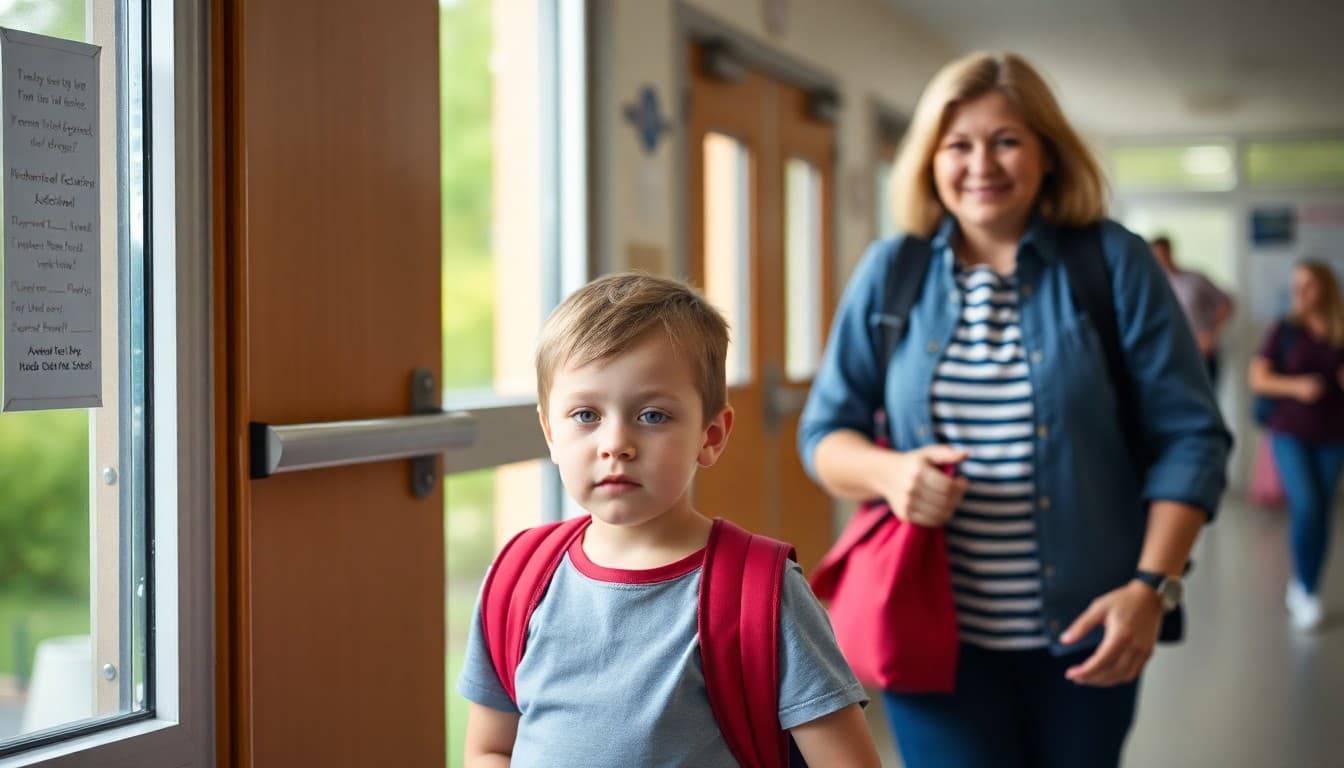
Back to School Kindergarten Newsletter: First Day Essentials
Kindergarten is the first real school experience for most families, and the newsletter you send before the first day sets the tone for everything that follows. A newsletter that's specific, warm, and practical reduces the anxiety families feel and tells them they've put their child in capable hands.
Introduce Yourself Before Families Walk Through the Door
The kindergarten teacher is a stranger to most families until the first day. Use the newsletter to change that. Share your name, how long you've been teaching kindergarten, and one or two personal details that make you a person rather than a title. "I've been teaching kindergarten for 11 years. Before that I worked as a reading specialist, which is why I'm particularly passionate about early literacy. I have two kids of my own and I understand exactly what you're feeling as you get ready for this week." Three sentences. That's enough to become a person rather than a role.
Describe the First Day Schedule in Plain Terms
Tell families exactly what will happen on day one. "Students arrive between 8:00 and 8:15 AM in the red zone drop-off lane. Families may walk students to the classroom door on the first day. At 8:30, the morning meeting begins, where students learn each other's names. Morning snack is at 10:00. We'll explore centers and the classroom library before lunch at 11:30. The afternoon includes music, outdoor time, and a rest period. Dismissal is at 3:15 from the same red zone." Knowing the schedule turns a frightening day into a predictable sequence.
Give a Practical Supply and Preparation Checklist
Use a template section:
"For the first day, please send your child with: a backpack that fits their classroom cubby (standard size, not rolling). A labeled water bottle. A nut-free snack for morning. A lunch from home (or lunch account set up at [link]). A spare change of clothes in their backpack, labeled with their name. Please label everything with your child's full name. Do not send toys, electronic devices, or items from home unless requested by the teacher."
Walk Families Through the Drop-Off Procedure
Kindergarten drop-off is often the most logistically challenging part of the first week. Be specific. "On the first day of school, families may park in the north lot and walk their child to Room K1. Drop-off begins at 8:00 AM. After the first week, drop-off transitions to the car line in the red zone. Students are welcomed at the car door by a staff member and walked to their classroom. Please say your goodbyes at the car rather than walking into the building after the first week." Clear expectations prevent the congestion that makes first-week mornings stressful for everyone.
Give Parents the Right Language for Talking About School
Most parents default to "did you have fun today?" which kindergartners often can't answer usefully. Give families better questions. Try: "Tell me something you saw in your classroom today." "What did you eat for snack?" "What's one thing you learned the name of?" "Did anything surprise you?" "Who did you sit next to?" Specific, sensory questions get more answers than open-ended evaluative ones, and they help children process and recall their day more effectively.
Address Separation Anxiety Directly
Some kindergartners will cry at drop-off. Some won't. Some will cry in week one and be fine by week two. Some will be fine at first and then have a harder time in week three when the novelty wears off. Tell families this is normal. Tell them that a warm, brief, confident goodbye is the most effective approach. "I promise you: once you're gone, most children settle within 10 minutes. Our staff is experienced with this transition. If your child is having a particularly hard time, we will contact you. No news is good news." That permission to leave, alongside a commitment to communicate, helps parents actually let go.
Explain What the First Week Focuses On
Tell families what the educational priorities of week one are. Learning the classroom routines. Learning classmates' names. Establishing the morning meeting structure. Practicing the basics of reading readiness: alphabet recognition, phonological awareness, print concepts. This preview helps families understand that academic learning starts from day one, even when the classroom environment looks play-based.
Close with Your Direct Contact and an Invitation to Communicate
End with your email address and an explicit invitation. "If you have questions before the first day, I'm reachable at [email]. After school starts, the best way to reach me is through the weekly family newsletter or by emailing the classroom inbox at [address]. I check messages daily and respond within one school day. I'm looking forward to meeting your child and your family this week." Brief, personal, and specific. That closing is what makes the newsletter feel like the beginning of a relationship rather than the delivery of information.
Get one newsletter idea every week.
Free. For teachers. No spam.
Frequently asked questions
What should a kindergarten back to school newsletter include?
Include the first day logistics: arrival time, drop-off procedure, dismissal time, and pickup procedures. Tell families what to pack and what not to pack. Explain the daily schedule in basic terms. Describe the first week's goals: getting to know the classroom, meeting the teacher and classmates, learning routines. Give parents specific language for talking to their child about starting school. And include a note from the teacher that makes families feel like they've already met the person responsible for their child.
How do you write a kindergarten newsletter that reduces first-day anxiety for both children and parents?
Be specific about what will happen. Anxiety comes from not knowing. Tell families: here is where to park, here is where to walk your child, here is when you say goodbye, here is what your child will do in the first hour. When the unknown becomes known, anxiety decreases. Also normalize the parent experience: 'It is completely normal to feel emotional dropping off your child on the first day. That feeling is a sign of how much you love them, not a sign that something is wrong.'
What should kindergartners be able to do independently before starting school?
Practical skills that help kindergartners: open their own lunch container and water bottle, zip and button their own jacket, use the bathroom independently, put on their own shoes, and recognize their name in print. The newsletter can gently mention these without making families feel their child is unprepared. Frame it as 'practicing these skills over the summer will help your child feel confident on day one' rather than a requirement checklist.
How do you handle drop-off anxiety for kindergartners in the newsletter?
Address it directly with specific guidance. Tell families: keep goodbyes brief and warm rather than long and drawn out. Give your child one specific, tangible thing to look forward to: 'After school, we'll hear all about the new friends you meet.' Avoid communicating your own anxiety to your child nonverbally. Say with confidence: 'I'll be right here at [time].' Brief, warm, confident goodbyes are significantly more effective than extended, tearful ones at reducing both child and parent anxiety.
How does Daystage help kindergarten teachers send welcoming newsletters before the first day?
Daystage lets teachers send a polished, photo-friendly newsletter before the first day of school that introduces themselves, shows a photo of the classroom, and makes families feel like they already know the space their child will enter. Teachers who send a pre-first-day newsletter through Daystage report that families arrive on the first day significantly less anxious and more prepared than those who only receive a generic school-wide welcome email.

Adi Ackerman
Author
Adi Ackerman is a former classroom teacher and curriculum writer with 8 years in K-8 schools. She writes about school communication, parent engagement, and what actually works in real classrooms.
More for Back to School
Ready to send your first newsletter?
3 newsletters free. No credit card. First one ready in under 5 minutes.
Get started free