
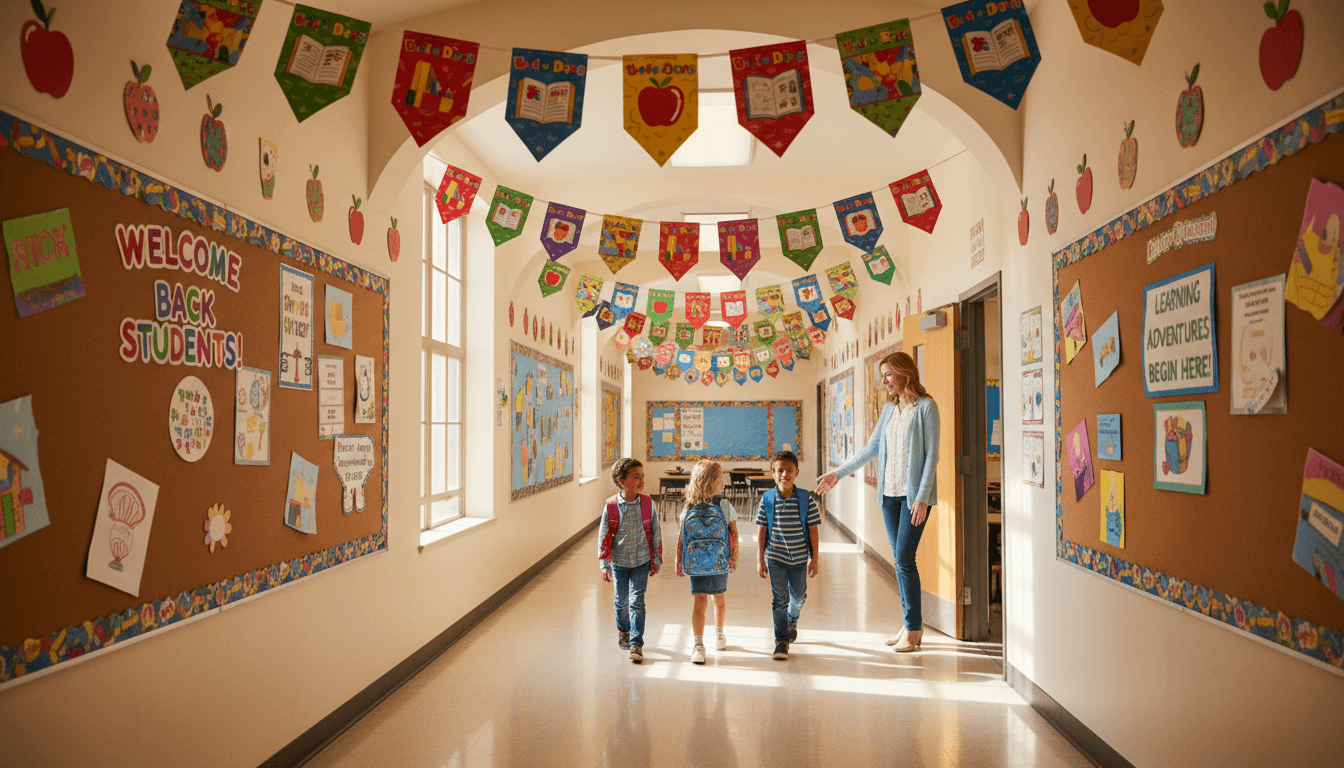
Back to School Family Resources Newsletter: Connecting Families to Support Before They Need It
The families who most need support resources are the least likely to know they exist or to ask about them. A newsletter that maps the full landscape of available support before any family is in crisis creates the awareness that makes access possible when a need arises. This is not charity communication. It is infrastructure communication.
Food and Basic Needs Resources
Food insecurity is more common among school families than most schools acknowledge publicly. Include the school's specific food support programs: the free and reduced meal program, the weekend backpack program if the school has one, and the location and schedule of the nearest community food pantry. Families who know these resources exist and how to access them can use them without shame or bureaucratic delay.
Also include information on local SNAP enrollment support, clothing exchanges or school supply drives, and utility assistance programs. The school is not responsible for solving poverty, but it is positioned better than almost any other institution to connect families to the resources that help them stay stable enough to support their child's education.
Mental Health and Counseling Support
List the mental health resources available to families and students: the school counselor's name and how to request an appointment, school-based therapy programs if available, and community mental health resources with sliding-scale fees or Medicaid acceptance. Include crisis line numbers (the 988 Suicide and Crisis Lifeline is national; local lines vary by community).
Many families who would benefit from mental health support do not know that school-based options exist or that community options are affordable. A newsletter that normalizes mental health support as part of school success reduces the stigma that prevents families from reaching out. "If your student or your family is going through a hard time, these are the resources we recommend" is a different message from a crisis flyer sent only when something has already gone wrong.
Housing and Economic Stability Resources
Include the school's McKinney-Vento liaison contact for families experiencing housing instability. Families in transitional housing are entitled to specific educational protections, and many do not know this. The liaison's name and a brief description of what that role provides is enough.
Also include local emergency rental assistance programs, community legal aid resources for housing issues, and any school emergency fund that can help with school fees, field trip costs, or supply needs. A family that is managing a housing crisis and a child's school needs simultaneously is not well-positioned to research support options. The newsletter does that research for them.
Language Access and Immigration Resources
For schools with multilingual communities, include the school's language services contact (who can provide translation or interpretation) and community organizations that serve immigrant families: legal aid with immigration experience, Know Your Rights resources, and community organizations that provide general navigation support for recently arrived families.
Families who are uncertain about their immigration status or English proficiency often disengage from schools because they fear institutional contact. A newsletter that includes community organizations with clear language like "no documentation required, all services confidential" gives these families a bridge between their situation and the school's resources.
The Family Liaison: Your Year-Round Contact
Introduce the school's family liaison or family support coordinator by name, with a photo if possible, and describe their role clearly: they are the person families contact when they are not sure who to call. They are not a crisis hotline and they are not a social worker, but they know who every social worker is and how to get a family connected quickly.
Daystage makes it easy to send a comprehensive family resources newsletter at the start of the year and targeted resource reminders at the moments in the school year when family stress typically spikes, so the support your community provides actually reaches the families who need it.
Get one newsletter idea every week.
Free. For teachers. No spam.
Frequently asked questions
What family resources should a back to school newsletter cover?
Food assistance programs (food pantry, SNAP enrollment, weekend backpack programs), clothing and school supply exchanges, mental health and counseling referrals, housing stability resources, domestic violence support, immigration and language services, and school-based support like the family liaison, social worker, and counselor. Include local and national resources, not just school-based ones.
How should schools present family resource information without stigmatizing families?
Present resources as community services that any family might use at some point, not as help for 'families in need.' Use universal framing: 'Our community has strong support networks for a wide range of needs.' List resources in a matter-of-fact way alongside other school information. The families most in need of resources are the most sensitive to stigma and the most likely to avoid them if the framing implies they are for struggling families.
How can schools make resource newsletters effective for families in crisis?
Use direct language, specific contact information (not just organization names), and note which resources require no documentation or income verification. Families in acute need cannot spend time researching. A newsletter that says 'call this number, they serve families with no documentation required, food distributions are every Tuesday at 4pm' removes barriers that prevent families from accessing support they qualify for.
How often should schools send family resource information?
At minimum once at the start of the year, and again at high-stress points: after the holidays, in early spring when food assistance gaps tend to widen, and when school is ending and summer resource networks are different from school-year networks. A family that did not need a resource in September may need it in February.
Can Daystage help schools communicate family resources to families?
Daystage lets schools send family resource newsletters at the start of the year and targeted follow-up communications at key points in the school year, ensuring families have current resource information when they are most likely to need it.

Adi Ackerman
Author
Adi Ackerman is a former classroom teacher and curriculum writer with 8 years in K-8 schools. She writes about school communication, parent engagement, and what actually works in real classrooms.
More for Back to School
Back to School Student Handbook Newsletter: Making the Rules Make Sense
Back to School · 5 min read
Back-to-School Assessment Overview Newsletter for Families
Back to School · 6 min read
Back to School Extracurricular Activities Newsletter: Helping Families Navigate All Options
Back to School · 5 min read
Ready to send your first newsletter?
3 newsletters free. No credit card. First one ready in under 5 minutes.
Get started free