
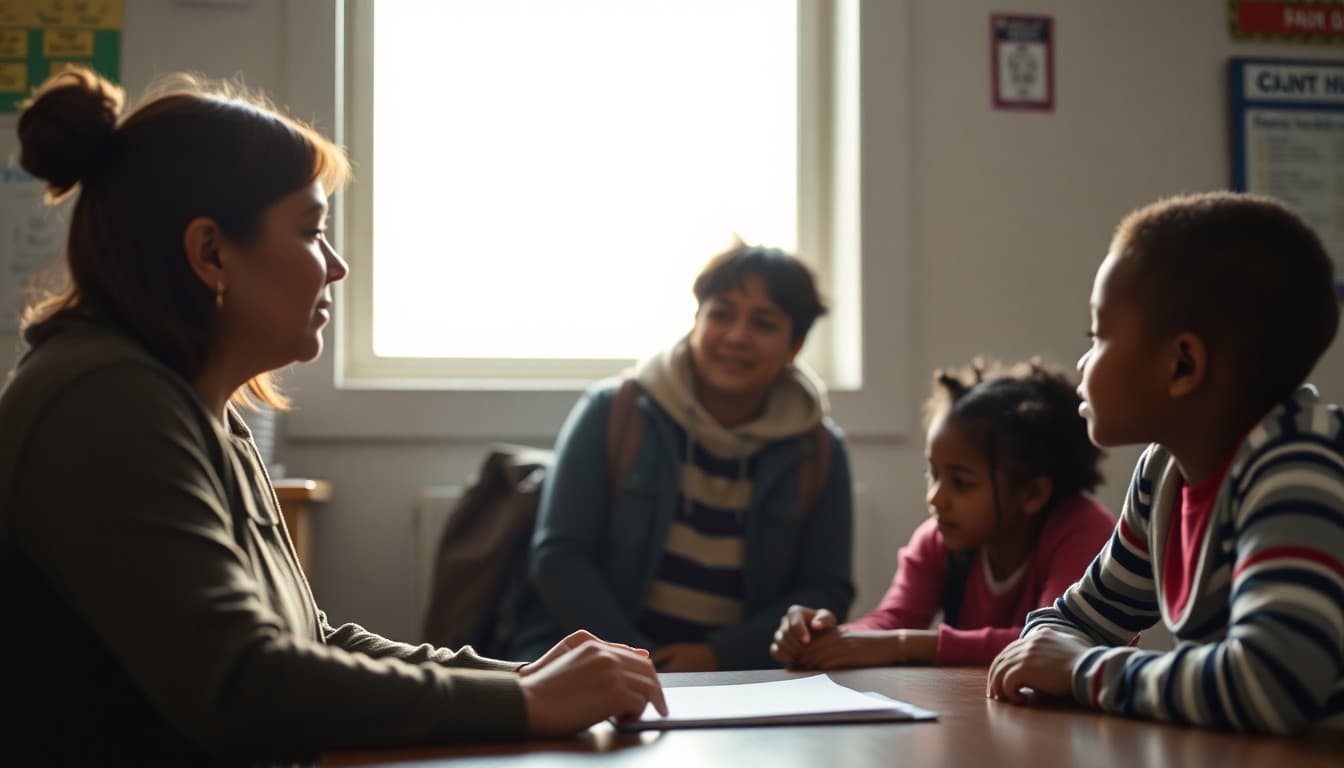
Housing Instability and School Attendance Newsletter

Housing instability is one of the most powerful predictors of chronic absenteeism, and it is also one of the most addressable barriers when schools and families know the rights and resources that exist. A newsletter that explains McKinney-Vento protections clearly, names the services available, and provides a direct contact for help is one of the most practically useful communications an attendance officer or McKinney-Vento liaison can send to families navigating a housing crisis while trying to maintain their child's education.
Who McKinney-Vento Covers
The McKinney-Vento Act defines homelessness more broadly than most families realize. It covers children and youth who lack a fixed, regular, and adequate nighttime residence. That includes families living in shelters, motels, and campgrounds. It includes families sharing housing with relatives or friends due to economic hardship, commonly called doubled-up situations. It includes children and youth living in cars, abandoned buildings, or bus stations. It includes unaccompanied youth who are not in the physical custody of a parent or guardian. Families who are doubled up with relatives often do not know they qualify because they do not consider their situation homelessness. The newsletter should name each of these qualifying situations explicitly.
The Right to Immediate Enrollment
The most important right to communicate is the right to immediate enrollment. A school cannot require a family experiencing homelessness to produce a permanent address, a utility bill, a birth certificate, an immunization record, or any other standard enrollment documentation before enrolling the child. The child must be enrolled and must begin attending immediately. If documentation is required for state purposes, the school works to gather it after the child is enrolled, not as a condition of enrollment. Families who have been turned away from schools due to missing documentation need to hear that this was not legal and that a different outcome is available to them.
The School of Origin Provision
When a family's housing situation changes and they move to a different location, they may have the right to keep their child enrolled in the same school they attended before or during the housing crisis. The school of origin provision exists because educational stability during a housing crisis is itself protective: familiar teachers, established friendships, and a consistent school environment reduce the psychological burden on the child during an already destabilizing period. The district is responsible for providing transportation to the school of origin if the family cannot arrange it independently. Families need to know this provision exists and how to request it from the McKinney-Vento liaison.
How Housing Instability Affects Attendance and What the School Can Do
The newsletter should name the specific ways housing instability affects attendance and what the school's response to each can be. Morning routines collapse when the family is sleeping in a shelter where wake-up is unreliable. The school can respond by connecting the family with the shelter's education coordinator. Transportation disappears when the family moves. The school of origin provision addresses this. Hygiene and clothing barriers make the student feel unable to come to school. The school counselor can connect families to community resources, and many districts maintain supplies for students in unstable situations. Hunger and poor nutrition make school feel impossible. The school can ensure the student is connected to the free lunch program immediately and connected to any available breakfast program.
Template Excerpt: McKinney-Vento Rights Newsletter
Here is a sample excerpt for a newsletter communicating McKinney-Vento protections:
"If your family is experiencing housing instability, including staying with relatives or friends, living in a shelter, or staying in a motel, your child has specific rights under federal law. These rights include: immediate enrollment without needing to provide a permanent address or documentation first; the right to remain at their current school even if your housing situation changes; transportation to school if your housing situation requires a move; and access to all school programs and services on the same basis as other students. To access these rights and connect with available resources, contact our McKinney-Vento liaison at [name] and [contact]."
Resources Beyond What the School Can Provide
The school can protect enrollment and provide some stability, but it cannot resolve the housing crisis itself. The newsletter should connect families to local and district resources that address the underlying situation: local shelter resources and hotlines, emergency housing assistance programs, community action agencies that manage rental assistance, state homelessness assistance programs, and the 211 service available in most states that connects families to a comprehensive directory of social services. A family that receives a McKinney-Vento rights newsletter and also receives a resource list for emergency housing assistance has something actionable in both directions: their child's school situation is stabilized and there is a path toward stabilizing the housing situation itself.
Get one newsletter idea every week.
Free. For teachers. No spam.
Frequently asked questions
What federal law protects the educational rights of students experiencing homelessness?
The McKinney-Vento Homeless Assistance Act guarantees educational rights to children and youth experiencing homelessness. Under McKinney-Vento, students who lack a fixed, regular, and adequate nighttime residence, including those staying in shelters, motels, cars, campgrounds, or doubled up with others due to economic hardship, have the right to immediate school enrollment, transportation to the school of origin, and access to comparable services. Each school district must have a McKinney-Vento liaison.
How does housing instability typically affect school attendance?
Housing instability affects attendance through multiple pathways: frequent moves that create enrollment gaps, transportation barriers when a family moves away from the school's boundary, difficulty maintaining a stable morning routine in a shelter or doubled-up living situation, limited access to laundry, food, or supplies that create barriers to feeling ready to attend school, and the psychological stress of housing uncertainty that affects motivation and emotional readiness. Each pathway requires a different form of support.
Can a school refuse to enroll a student who does not have a permanent address?
No. Under McKinney-Vento, a school must immediately enroll any student experiencing homelessness regardless of whether the family can provide a permanent address, immunization records, birth certificate, or proof of residency. The school must also ensure that the student has access to the same programs and services as other students while any missing documentation is being gathered.
What is the school of origin provision under McKinney-Vento?
The school of origin provision gives students experiencing homelessness the right to remain enrolled in their school of origin (the school they attended before becoming homeless, or the last school they attended while housed) even if the family has moved outside the school's attendance area. The district is responsible for providing transportation to the school of origin if it is in the student's best interest to remain there.
How does Daystage help schools communicate McKinney-Vento rights to families?
McKinney-Vento liaisons and attendance officers use Daystage to send rights-and-resources newsletters to families experiencing housing instability. The newsletter format supports clear, compassionate communication that names specific rights, available services, and the liaison's direct contact information without requiring a family to navigate a complex website or bureaucratic process to find help.

Adi Ackerman
Author
Adi Ackerman is a former classroom teacher and curriculum writer with 8 years in K-8 schools. She writes about school communication, parent engagement, and what actually works in real classrooms.
More for Attendance
Ready to send your first newsletter?
3 newsletters free. No credit card. First one ready in under 5 minutes.
Get started free