
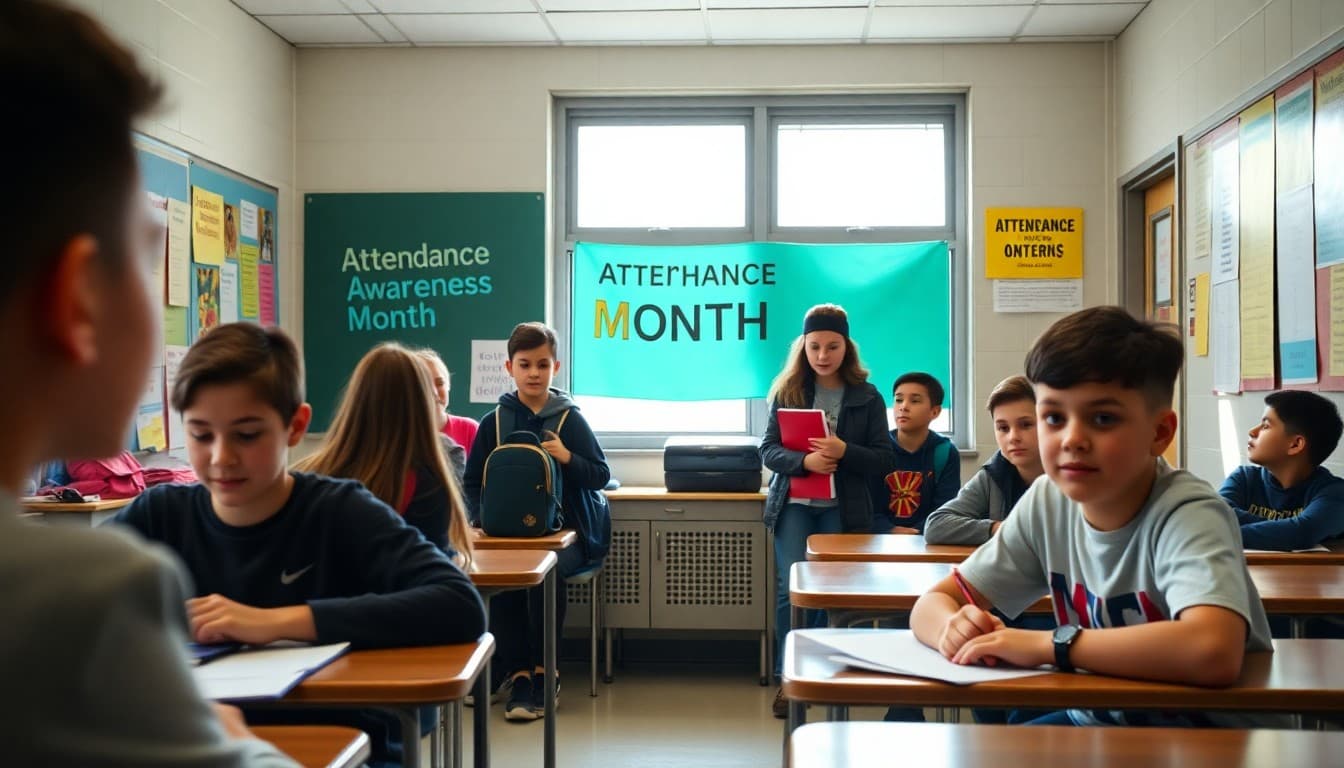
Attendance Awareness Month Newsletter: Every Day Matters

Attendance Awareness Month gives schools a national platform and a built-in community of resources to work with. A well-planned campaign newsletter series in September sets the tone for how families think about attendance for the rest of the year. The goal is not to scare families with statistics but to create genuine, positive momentum around the idea that every school day matters and that the school community is committed to keeping it that way.
Launching the Campaign in the First Newsletter
The first newsletter of Attendance Awareness Month should arrive in the first week of September and cover the basics: what Attendance Awareness Month is, why September matters for attendance patterns, what the school's current chronic absenteeism rate was last year and what the goal is for this year, and what activities or initiatives the school is running throughout the month. Keep the tone warm and direct. Families who read the first newsletter and see that the school is taking attendance seriously, and investing in specific activities to support it, are more likely to engage with subsequent communications during the month.
The Data Every School Should Share
Include three data points in the launch newsletter. Last year's chronic absenteeism rate. The state average for comparison. And a number that makes the stakes concrete: at your school's chronic absenteeism rate last year, approximately X students missed enough days to be considered chronically absent. If that number is 85 students in a school of 400, say so. If it is 175, say that too. Families who can see the scale of the challenge understand why the school is investing in a monthlong campaign rather than a single letter.
Classroom Competitions That Actually Work
Classroom-level attendance competitions are among the most effective Attendance Awareness Month activities. When students can see their class's running attendance percentage displayed in the hallway or posted in the classroom, and when there is a meaningful recognition for the class with the highest attendance each week, the social motivation to show up increases. This works particularly well in elementary school. The newsletter should describe how the competition works: is it the class with the highest attendance percentage? The most improved compared to last year? The class with the fewest absences overall? Clear criteria prevent disputes and ensure students understand what they are working toward.
Family Pledge Campaigns
A family attendance pledge is a simple, high-visibility engagement tool. Families sign a brief statement committing to make attendance a priority for the year: ensuring their child arrives on time, communicating in advance when an absence is unavoidable, and contacting the school when attendance becomes difficult. The newsletter should include the pledge text and a return mechanism, whether paper or digital. Some schools display pledge signatures in the school hallway as a visible community commitment. The act of signing is less important than the family's engagement with the question of how they plan to support attendance, which the pledge process naturally prompts.
Template Excerpt: Attendance Awareness Month Kickoff Newsletter
Here is a sample opening for the September launch newsletter:
"September is Attendance Awareness Month, a national campaign focused on helping every student arrive at school ready to learn. Last school year, [X]% of our students were chronically absent, meaning they missed 10% or more of the school year. Our goal this year is to bring that rate below [X]%. Throughout September, we are running weekly classroom attendance competitions, hosting a family attendance pledge campaign, and recognizing students and classes who show exceptional commitment to showing up. We need your partnership to make this work."
Addressing the Reality of Barriers
The Attendance Awareness Month newsletter must include a direct offer of help. A school that runs an enthusiasm-heavy campaign without acknowledging that some families face real structural barriers to attendance will lose the families it most needs to reach. A single paragraph naming the support available, the family liaison contact, the transportation assistance application process, and the district's connection to health services makes the campaign feel complete rather than aspirational. Families who face barriers read these newsletters looking for evidence that the school understands their situation. Give them that evidence explicitly.
Closing the Month with a Progress Report
Send a closing newsletter at the end of September that reports on the month's progress. What was the school's attendance rate during September compared to September of the previous year? Which classroom won the weekly competitions? How many families signed the pledge? What does the school plan to do in October to maintain momentum? Closing the loop on the campaign with real data demonstrates that the school takes its commitments seriously. Families who see a closing report are more likely to engage with attendance-related communications for the rest of the year because they have evidence that the school follows through.
Get one newsletter idea every week.
Free. For teachers. No spam.
Frequently asked questions
What is Attendance Awareness Month?
Attendance Awareness Month is an annual campaign observed each September in the United States, coordinated by Attendance Works. The campaign focuses national and community attention on the impact of chronic absenteeism, provides schools with resources for family engagement, and encourages schools to launch or revitalize their attendance initiatives at the start of the school year when intervention can have the greatest effect on the full year's outcome.
Why September for attendance awareness?
September is ideal for attendance campaigns because patterns established in the first weeks of school tend to persist. A student who misses multiple days in September due to a loose morning routine or low sense of urgency about attendance often continues that pattern throughout the year. Early intervention and community-building around attendance in September is more effective than the same efforts in February, when chronic absenteeism is already established for many students.
What schoolwide activities work for Attendance Awareness Month?
Effective schoolwide activities include classroom attendance competitions with recognition for the class with the best attendance each week, a daily attendance tracker displayed in the hallway, family pledge campaigns where families sign a commitment to regular attendance, spirit day events tied to attendance goals, and attendance-themed read-alouds or morning meeting topics for younger grades. The key is creating visible, positive attention around the value of showing up.
How should schools handle families who have legitimate barriers to attendance during this campaign?
Attendance Awareness Month messaging should always be paired with a clear statement that the school wants to help families who face real barriers. A campaign that celebrates attendance without acknowledging that some families are struggling with transportation, illness, or housing instability feels tone-deaf and can push those families further from the school. Every campaign newsletter should include the name and contact of the family liaison or attendance officer who can help.
Can Daystage support Attendance Awareness Month communication?
Attendance officers use Daystage to send a series of Attendance Awareness Month newsletters throughout September, including the campaign kickoff, weekly attendance updates, classroom recognition announcements, and closing summary. Sending a newsletter series through a single platform makes it easy to keep the campaign visually consistent and track family engagement throughout the month.

Adi Ackerman
Author
Adi Ackerman is a former classroom teacher and curriculum writer with 8 years in K-8 schools. She writes about school communication, parent engagement, and what actually works in real classrooms.
More for Attendance
Ready to send your first newsletter?
3 newsletters free. No credit card. First one ready in under 5 minutes.
Get started free