

Tennis Team Newsletter: Match Schedule and Team Updates
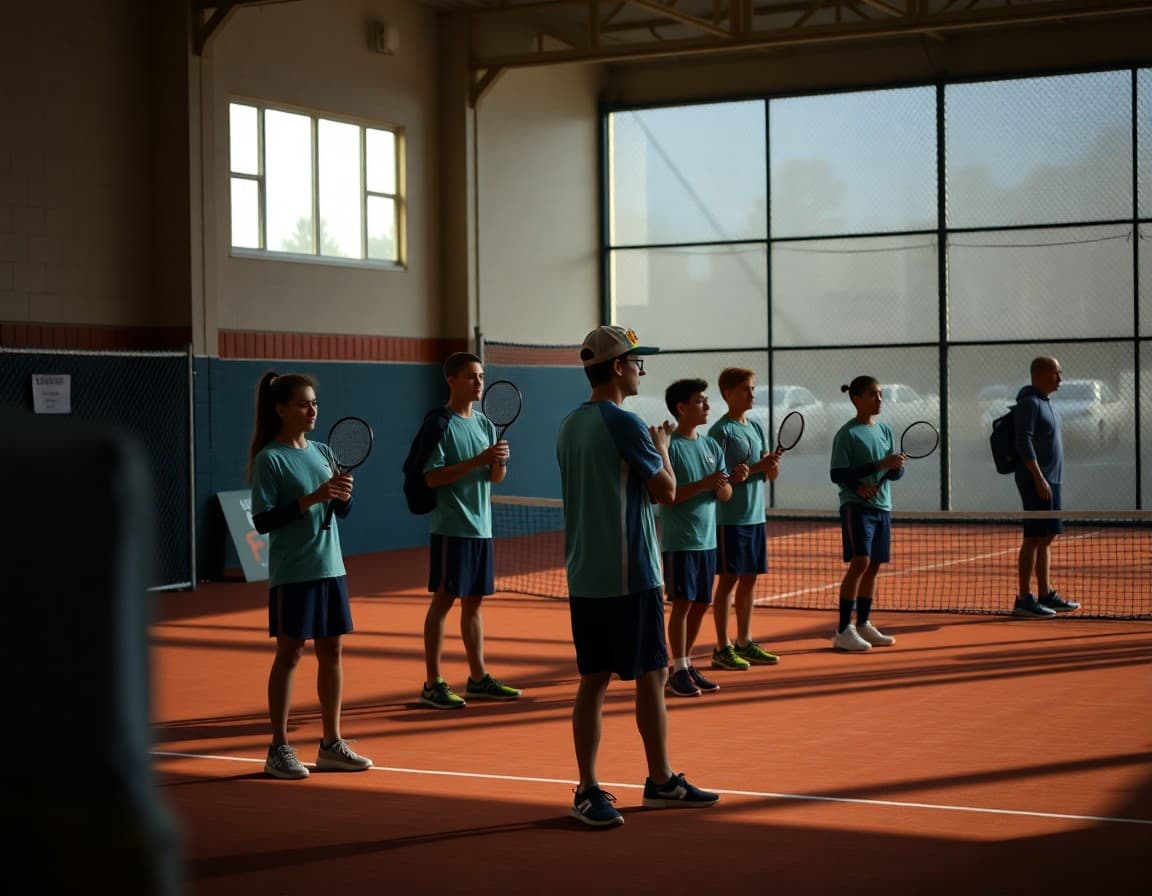
Tennis families are often the most sports-savvy parents in the building -- many played competitive tennis themselves. That background means they have strong opinions about lineup decisions, coaching choices, and how matches should be managed. A tennis team newsletter that addresses these topics proactively keeps the sideline experience constructive.
Explaining High School Team Tennis Format
High school team tennis is not the same as club or recreational tennis, and families new to the high school format need a brief orientation. A dual match pits two schools against each other with athletes competing in singles courts and doubles courts simultaneously. The school with more court victories wins the match. The exact number of courts depends on your state's rules -- most play six courts (typically three singles and three doubles), and a team needs four court wins to win the match.
Include this explanation in your opening newsletter: "Our team matches consist of [number] courts: [number] singles positions and [number] doubles positions. A match requires [number] court wins to win as a team. Courts run simultaneously, so the match may conclude after some courts finish and others are still playing. All athletes are expected to remain and support their teammates until all courts are completed."
Court Etiquette for Families
Tennis spectator etiquette is genuinely different from other sports. Noise, loud cheering, and conversation during points are not acceptable at competitive tennis. Families who come from basketball or football backgrounds may not know this and may inadvertently create problems for your program. Address it clearly and without condescension in your first newsletter.
"Tennis etiquette requires spectators to remain quiet during points. Please hold applause and encouragement until the point has concluded. Avoid moving behind the fence or changing positions during active play. Cell phones should be silenced. These standards apply to both home and away matches -- they protect your child's ability to concentrate and reflect well on our program."
A Template Match Week Tennis Newsletter
Here is a weekly tennis update format that works:
"[School] Tennis -- Week [X]. Last results: vs. [opponent] -- W/L [score by courts]. Season record: [W-L]. This week: [opponent] on [date] at [time] at [home/away, location for away]. Court assignments and times: singles courts begin at [time], doubles courts at [time]. Away match transportation departs [time] from [location]. Weather note: check [platform] by [time] for any cancellation or postponement announcements."
Weather Cancellation in Tennis
Tennis is more weather-sensitive than most team sports. Rain, lightning, and extreme heat or cold all affect match play. Your newsletter should establish the cancellation protocol in the first issue: "Weather cancellations for tennis matches will be announced via [platform] by [time] on match days. Matches may be moved to indoor courts when available, or rescheduled to the nearest available makeup date. We will always attempt to reschedule cancelled matches rather than recording them as forfeits."
For away matches, the host school's weather decision applies. Include the host school's athletic director contact in your newsletter for families who want to check the status of away matches when communication is delayed.
The Lineup Challenge System
Many tennis programs allow athletes to challenge the player ranked immediately above them for their lineup position. This system gives every athlete a path to advancement and prevents the lineup from becoming static. If your program uses challenge matches, explain how they work in your season-opening newsletter: challenge window timing, the format of challenge matches, and how results affect lineup positions.
Families who understand that lineup positions are earned through an active, transparent process are less likely to believe their child is being held back by favoritism. Transparency about the challenge system is one of the most effective tools for managing tennis parent expectations.
Singles vs. Doubles: Communicating the Position Assignments
Singles and doubles positions require different skills, and some athletes are stronger in one format than the other. A newsletter that explains why a player might be placed at doubles rather than singles -- without naming individuals -- keeps families from interpreting a doubles placement as lesser status. "Doubles positioning recognizes team chemistry, net play, and strategic coverage alongside individual ranking. We place athletes in the positions where they contribute most effectively to team success" is the kind of framing that reduces lineup frustration before it becomes confrontational.
Get one newsletter idea every week.
Free. For teachers. No spam.
Frequently asked questions
What information does a tennis team newsletter need to cover that is specific to tennis?
Tennis team newsletters need to explain: the singles and doubles lineup format, how team scoring works (number of courts that must win for team victory), weather cancellation and makeup match protocol, court etiquette for spectators (no noise during points, applause only between points), and how individual player rankings within the team are determined and may change throughout the season. Tennis families often come from club tennis backgrounds and may have strong opinions about lineup decisions -- the newsletter should address the coaching process for line determinations proactively.
How should a tennis newsletter address lineup decisions?
Lineup position in tennis is the most common source of family frustration in the sport. A clear policy statement in your first newsletter sets the right expectation: 'Lineup positions are determined by competitive ranking within the team, assessed through challenge matches and performance in practice and match play. Positions are reviewed weekly during the season. If you have questions about the process, please schedule a meeting with Coach after 24 hours have passed following any match. Lineup decisions will not be discussed via email or during match play.'
How does high school tennis scoring differ from what families see at professional tournaments?
High school tennis matches typically use a no-ad scoring system for dual matches to manage time: games go to deuce but instead of requiring two consecutive points, the next point wins the game (with the receiving team choosing the service side). Sets may be shortened or a match tiebreak may replace a third set depending on the state rules. Weather-shortened matches may use a specific abbreviated format. Explaining your state's specific format in the season newsletter prevents confusion on match days.
What is the right cadence for tennis team newsletter sends?
Weekly during the active match season is appropriate. A season-opening newsletter with the full schedule, a weekly brief update during the season, and a postseason wrap-up when competition ends covers the communication needs of most tennis programs. If your team plays two or three matches per week, a brief twice-weekly text update plus a longer weekly newsletter is a good combination. The newsletter provides context and narrative; the text provides time-sensitive logistics.
Can Daystage help tennis coaches communicate efficiently throughout the season?
Yes. Daystage lets tennis coaches send weekly match result updates, upcoming schedule, and lineup information to all team families at once. You can include photos from recent matches, court numbers and times for spectator navigation, and weather cancellation policy reminders in one professional newsletter. Tennis programs that use Daystage for team communication report that spectator etiquette improves when families have been briefed through the newsletter before they arrive at a match.

Adi Ackerman
Author
Adi Ackerman is a former classroom teacher and curriculum writer with 8 years in K-8 schools. She writes about school communication, parent engagement, and what actually works in real classrooms.
More for Athletics
Ready to send your first newsletter?
3 newsletters free. No credit card. First one ready in under 5 minutes.
Get started free