

School Sports Newsletter Guide: How Coaches and Athletic Directors Can Communicate With Families
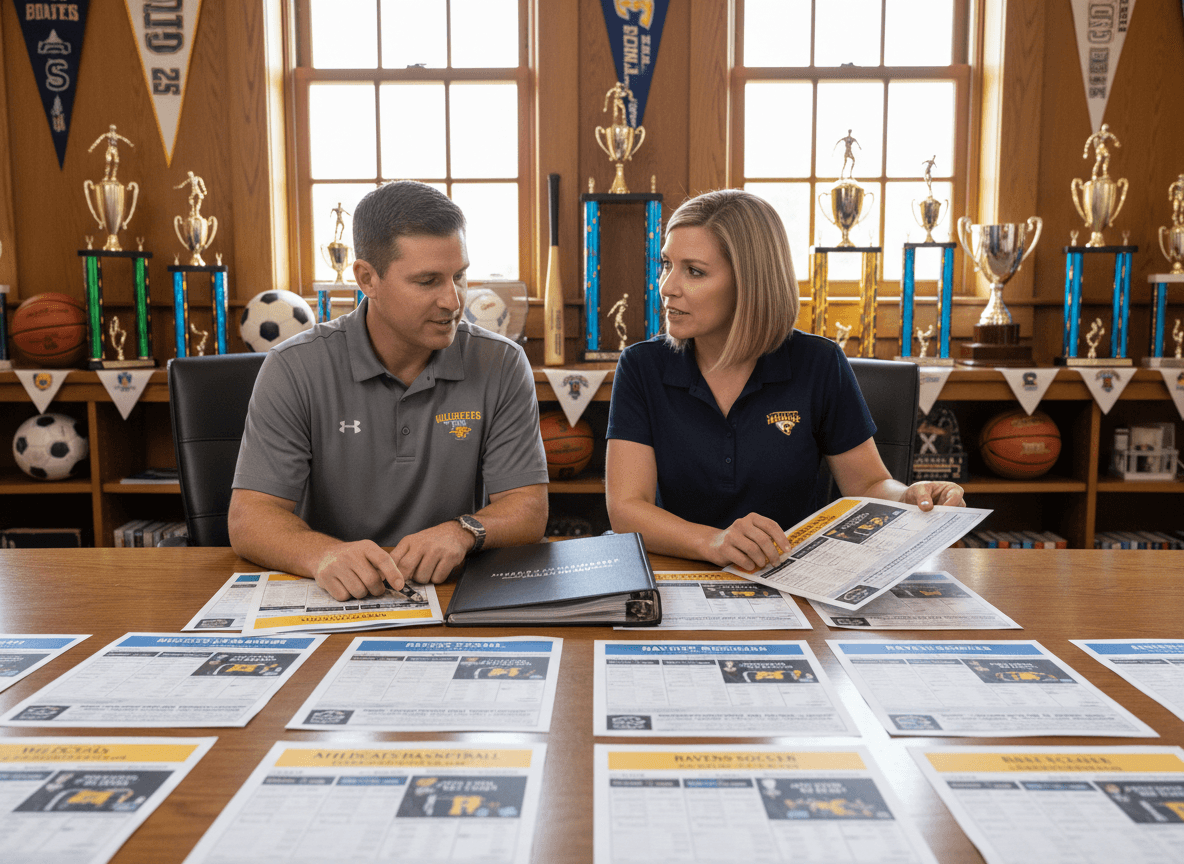
A school sports newsletter is not a luxury for athletic departments with extra time. It is the primary way coaches and athletic directors build the trust and transparency that keep families engaged through an entire season. Without a consistent communication channel, families fill the gap with rumors, assumptions, and frustration.
This guide covers what a sports newsletter needs to include, who should be responsible for producing it, and how to match frequency to the rhythm of each season.
What a school sports newsletter must cover
The most effective athletic newsletters are specific and operational. Families do not need inspiration. They need information they can act on. The core content categories are:
- Season schedule. Full game and practice schedule for the season, clearly formatted with dates, times, locations, and whether transportation is provided. Include a link to a digital version that families can add to their calendar.
- Equipment and uniform requirements. What students need to bring, what the school provides, and deadlines for purchasing required items. Families who receive this information late scramble. Put it in the first newsletter of the season.
- Academic eligibility requirements. Your state and district rules for grade point average and credit requirements, when they are checked, and what happens if a student falls below the threshold. Spell this out plainly. Most families do not know how eligibility works until their student is already at risk.
- Code of conduct expectations. Behavior standards for athletes on and off the field, consequences for violations, and what parents can expect in terms of communication if an issue arises. Being direct about conduct expectations before problems happen prevents difficult conversations later.
- Injury and health protocols. Who to contact if a student is injured during practice or competition, the process for medical clearance before returning to play, and baseline health information the program requires.
Who writes the athletic newsletter
The division of responsibility between coaches and athletic directors matters. Clear ownership prevents both duplication and gaps.
At the team level, the head coach is the right person to communicate team-specific content: practice expectations, game strategy context, athlete development focus for the season, and direct team news. Coaches know the team. Families want to hear from them directly.
At the department level, the athletic director communicates program-wide information: eligibility policies, department-wide calendar updates, booster club coordination, and safety protocols that apply across all sports. If your school has multiple sports running simultaneously, the athletic director newsletter prevents every team from competing for the same inbox space.
Booster clubs occupy a third communication lane. Fundraising, volunteer coordination, and community events belong in a booster-specific newsletter or a clearly labeled section that separates it from official athletic department communication.
Frequency by season
Match your send frequency to what is actually happening. A pre-season newsletter should go out two to three weeks before the first practice. During active competition, biweekly newsletters keep families current without overwhelming inboxes. At the end of each season, one final newsletter covering results, recognition, and next season information closes the communication loop cleanly.
Off-season communication is minimal but not absent. A summer newsletter covering open gyms, conditioning programs, and fall registration expectations gives families enough lead time to plan. Silence between seasons often means families are caught off guard by pre-season requirements.
The pre-season newsletter is the most important one
Everything parents need to know before the season starts belongs in one comprehensive pre-season send. This newsletter sets the tone, surfaces the policies, and gives families enough information to support their student athlete without needing to contact the coach for basics.
A pre-season sports newsletter should include: the full season schedule, physical and medical clearance requirements, eligibility rules, uniform and equipment list, code of conduct agreement, emergency contact collection, and a way for families to sign up to receive ongoing communications. If any of these pieces are missing from the pre-season newsletter, expect emails asking about them throughout the season.
In-season newsletters: what actually matters
Once the season is underway, families want four things: schedule updates, recent results, any logistical changes, and recognition of student effort and performance. Keep in-season newsletters focused. Families are busy. A newsletter that takes three minutes to read and contains genuinely useful information will be read. A newsletter that takes twelve minutes will not.
Use a consistent structure for every in-season newsletter so families know where to look for each type of information. If the game schedule is always the first section, parents learn to scan for it. Changing the format every issue forces them to re-orient every time.
Choosing the right platform for athletic communication
Athletic departments that rely on PDFs attached to general school emails lose visibility. Families forward them to the wrong folder, miss the attachment, or simply do not see it among the general school communication.
A dedicated newsletter tool gives you a consistent send address, mobile rendering that families can read on a phone, open rate tracking so you know which newsletters are landing, and subscriber management so you are only reaching families of current athletes. Tools like Daystage let you set up a reusable template so the production time for each newsletter is minimal even when the coach is not a communications professional.
What not to include
Avoid including playing time decisions, individual performance assessments of named athletes, or anything related to disciplinary actions for specific students. These belong in direct conversations, not in a newsletter that goes to the entire parent community. Athletic newsletters that include anything that could embarrass a specific student or family create trust problems that take the entire season to repair.
Keep recruiting information to a minimum in middle and early high school newsletters unless your program actively coordinates with families on this. Recruiting talk that surfaces too early creates unrealistic expectations and puts coaches in uncomfortable positions.
Making the newsletter worth reading every time
The programs with the strongest parent communities are not necessarily the programs with the best teams. They are the programs that communicate consistently and honestly. A sports newsletter that families look forward to reading is the result of treating parents as partners in their student's athletic experience, not just as an audience for logistics.
Start with the full pre-season packet. Build a consistent structure families can count on. Keep the content specific and operational. That combination does more for your program than any other single communication decision.
Get one newsletter idea every week.
Free. For teachers. No spam.
Frequently asked questions
When should coaches and athletic directors send school sports newsletters?
Send a pre-season newsletter two to three weeks before the first practice. During the season, biweekly is the right frequency for most programs. A final end-of-season newsletter closes the communication loop and sets up the following year. Off-season silence beyond one summer newsletter is a common cause of families being caught off guard by pre-season requirements.
What should a school sports newsletter include?
The pre-season newsletter must cover the full season schedule, physical and medical clearance requirements, academic eligibility rules, equipment and uniform details, injury protocol, and code of conduct expectations. In-season newsletters focus on schedule updates, recent results, logistical changes, and student recognition. Avoid individual performance assessments or anything related to specific disciplinary situations.
How should athletic directors divide communication responsibility between coaches and the department?
Coaches communicate team-specific content: practice expectations, development focus, and direct team news. Athletic directors communicate department-wide information: eligibility policies, shared calendar updates, and safety protocols. Booster clubs occupy a separate communication lane for fundraising and volunteer coordination. Clear ownership prevents duplication and gaps that frustrate families.
What are common mistakes in school sports communication?
Relying on PDFs attached to general school emails is the most common structural mistake. Attachments get missed, forwarded to the wrong folder, or ignored. Changing newsletter format each issue forces families to re-orient every time. Omitting the season schedule from the pre-season send generates questions all season.
What newsletter tools do athletic programs use for school sports communication?
A dedicated newsletter platform gives athletic departments a consistent send address, mobile rendering, open rate tracking, and subscriber management for current athletes only. Daystage is built for school-based programs and lets coaches maintain a reusable template so each issue takes minutes to produce rather than hours.

Adi Ackerman
Author
Adi Ackerman is a former classroom teacher and curriculum writer with 8 years in K-8 schools. She writes about school communication, parent engagement, and what actually works in real classrooms.
More for Athletics
School Field Hockey Newsletter: What Programs Need to Communicate With Families
Athletics · 5 min read
School Sports Fundraising Newsletter: Communicating Campaigns That Families Actually Support
Athletics · 5 min read
School Track and Field Newsletter: Communicating Events, Meets, and Individual Progress to Families
Athletics · 5 min read
Ready to send your first newsletter?
3 newsletters free. No credit card. First one ready in under 5 minutes.
Get started free