

School Fencing Club Newsletter: Sport and Discipline Updates
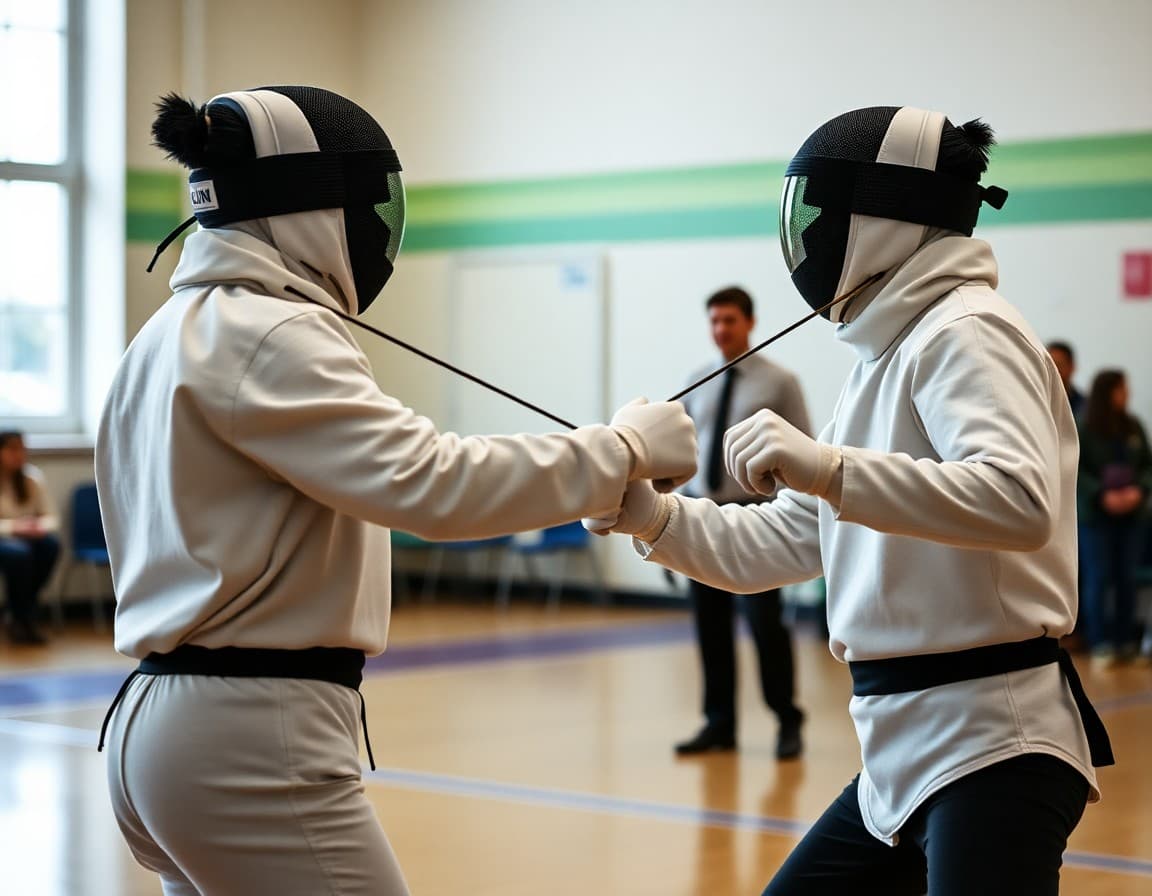
Fencing is a technically demanding sport that most families have never watched up close. A newsletter that explains the sport while communicating club news serves two purposes: keeping current families informed and building understanding of why fencing is worth doing.
Introducing the Sport to New Families
Every September newsletter should include a brief explanation of fencing for families who are new to the program. Three paragraphs maximum: what the three weapons are and how they differ, what a bout looks like and how points are scored, and what students can expect in their first few months of training. This context makes everything else in the newsletter more meaningful to families who have never watched a fencing bout.
Safety Communication That Builds Confidence
Fencing with weapons, even practice weapons, requires clear safety communication. Parents new to the sport may have concerns. Address them directly in the newsletter: "All students training with partners wear full protective gear rated to current USA Fencing standards. The school provides complete beginner sets for students who do not yet own equipment. No student participates in partner work until they have completed the club's 10-session footwork and bladework foundation curriculum. These protocols have been in place for 12 years without a serious injury." Specificity builds confidence that generic assurances don't.
Template Excerpt: Tournament Results Newsletter
Regional Championship Results - January 19
Eight fencers represented Jefferson High at the Regional High School Fencing Championship on Saturday. Results by weapon:
Foil: Alex Chen placed 3rd overall (8 bouts, 6 wins). Jamie Park placed 7th (8 bouts, 4 wins).
Epee: Sam Torres placed 5th overall. Maya Williams placed 9th.
Saber: Jordan Martinez placed 2nd overall - our best individual placement in five years. Elena Novak placed 11th in a field of 24.
Team performance: Jefferson finished 3rd in the overall team standings, up from 5th last year. The improvement in foil performance this season has been the primary driver of our team ranking gain.
Coach's note: Every fencer improved their bout win percentage from last year's regional. That is the metric I care about most. Individual placements fluctuate based on draw. Consistent improvement in the win percentage means we're developing.
Rating Milestones Worth Celebrating
USA Fencing assigns official ratings based on tournament results. Moving from unrated (U) to E is a meaningful achievement that deserves a mention in the newsletter. For competitive fencers, the pathway from E to D to C represents years of focused development. Celebrating rating milestones alongside tournament placements gives the newsletter a long-term development frame rather than only a win-loss reporting frame.
Skills Focus for the Current Practice Block
A brief "what we're working on" section keeps families connected to the technical development happening in practice. "This month: compound attacks. Students are learning to draw a parry from their opponent before delivering the final action. This is an intermediate-to-advanced tactical skill that requires a fencer to read their opponent's reactions in real time." Families who understand what their child is working on can ask better questions and provide more meaningful encouragement.
Pathways to Higher Competition
Students who develop strong skills in a school fencing program may be interested in competing at the local club level with USA Fencing. The newsletter can mention this pathway without pressuring families: "Several of our fencers also compete with [Local Club]. If your child is interested in competing beyond the school season, we're happy to connect families with local club options. School and club training are complementary." Providing a pathway signals that the school program is part of a larger fencing community.
Get one newsletter idea every week.
Free. For teachers. No spam.
Frequently asked questions
What should a school fencing club newsletter include?
Practice schedule, equipment requirements, tournament calendar and results, the three weapons offered if applicable (foil, epee, saber), rating progress for competitive fencers, safety protocols, and the skills being developed at current practice sessions. Fencing is unfamiliar to many families, so more context than usual is helpful in early season newsletters.
How do you explain fencing scoring to families who don't know the sport?
Keep it specific and brief. In foil, only touches to the torso count. Right of way determines who scores when both fencers touch simultaneously. A bout goes to 5 touches in direct elimination or runs for 3 periods in pool play with the accumulated score determining the winner. One paragraph at the start of the season prevents recurring confusion when results are reported.
What safety equipment is required for school fencing, and how should this be communicated?
Full fencing gear is mandatory for all bout practice: mask (rated to at least 350N), jacket, glove, underarm protector, chest protector for women, and knickers or equivalent leg protection. The newsletter should state clearly that no student participates in partner work without full gear, and that the school provides all equipment for beginners.
Do fencing clubs participate in rated tournaments?
Some school fencing clubs compete in USA Fencing sanctioned events that award official ratings (U, E, D, C, B, A). Others compete only in regional school league events. The newsletter should clarify which competitive structure applies and what pathway exists for students who want to advance to higher competition levels.
Can Daystage produce fencing club newsletters that work on mobile devices?
Yes. Daystage newsletters are responsive by design, meaning they look clean on any screen size. A fencing club newsletter with tournament brackets, bout results, and competition photos renders correctly on a phone or tablet without any extra formatting work from the coach.

Adi Ackerman
Author
Adi Ackerman is a former classroom teacher and curriculum writer with 8 years in K-8 schools. She writes about school communication, parent engagement, and what actually works in real classrooms.
More for Athletics
Ready to send your first newsletter?
3 newsletters free. No credit card. First one ready in under 5 minutes.
Get started free