

Booster Club Concession Stand Newsletter: Volunteers Needed
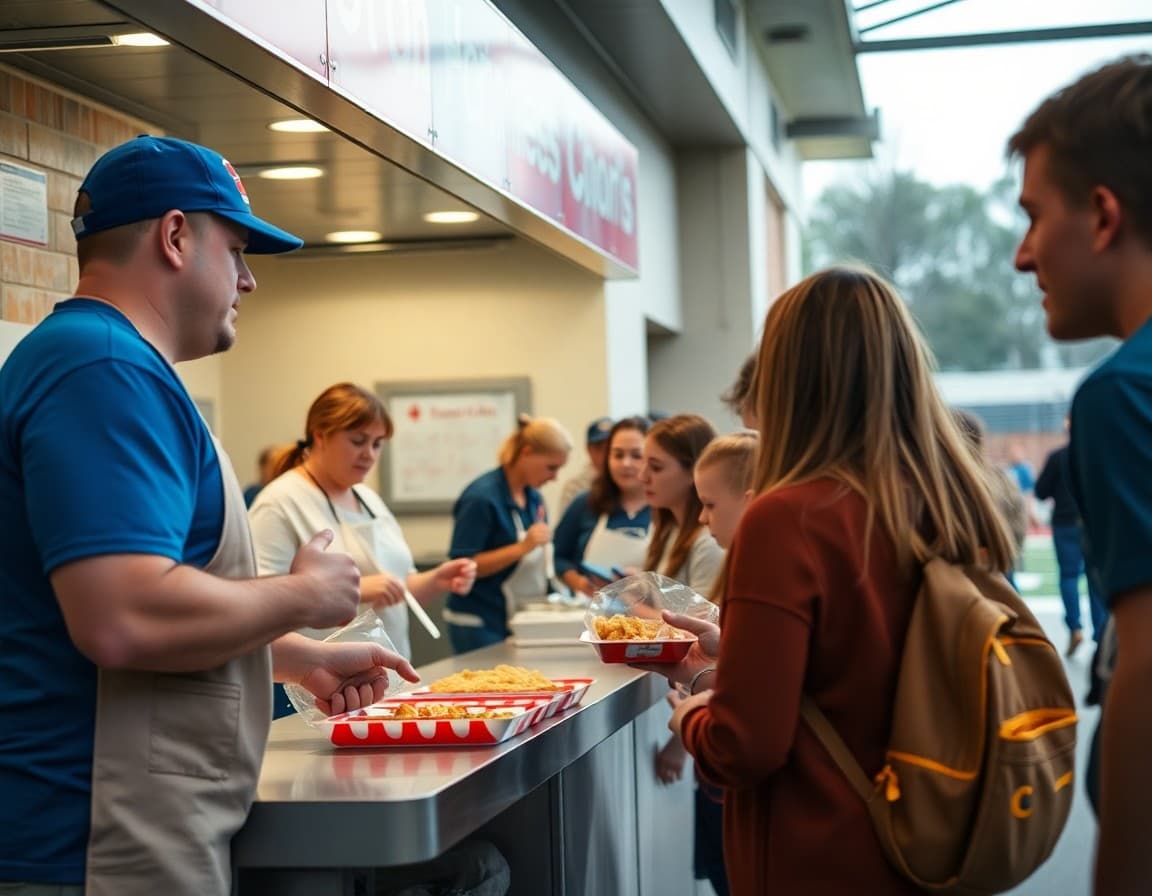
The concession stand is the booster club's most reliable revenue source and the one that requires the most consistent volunteer commitment throughout the year. A newsletter that makes the ask specific, explains why it matters, and removes every possible friction point between reading and signing up is how a booster club goes from scrambling for help two days before a game to having a full volunteer crew confirmed a week out.
State What the Concession Stand Funds
Open by connecting the concession stand to a specific outcome. "Our concession stand is how we fund new uniforms, tournament travel, and the post-season banquet for every athlete in every sport. Last season, concession sales raised $14,200, which fully covered three teams' tournament entry fees and a new set of football helmets. Every hot dog sold at a Friday night game is a direct contribution to our student athletes." Families who understand the impact of their two-hour volunteer shift show up more reliably than those who received a vague request for help.
Publish the Volunteer Schedule for the Full Season
List every event that will require concession staffing with the date, the event (home football game, basketball doubleheader, wrestling invitational), and the volunteer shift time. For each event, state the number of volunteers needed and the specific roles: one cashier, two food prep, one inventory runner, one closer. A full-season schedule lets families plan multiple shifts rather than responding to individual last-minute asks. Families who can see the whole calendar self-schedule more effectively and are more reliable than those who only sign up when they receive a crisis request.
Describe Each Volunteer Role
Give families enough information to self-select the role that matches their comfort level. Cashier: handles cash and card payments, makes change, manages the register. Food prep: fills orders, operates the hot dog roller or nacho warmer, bags popcorn and candy. Inventory runner: monitors stock levels, restocks from storage, flags items running low to the coordinator. Closer: stays 30 minutes after the event ends to clean, restock, and secure the stand. A parent who has never volunteered before usually starts with inventory runner or food prep; an experienced volunteer who is comfortable with cash takes cashier. Naming the roles lets people choose the fit.
Explain the Training and Orientation Process
State that new volunteers receive a 15-minute orientation at the start of their first shift: a walkthrough of the stand layout, the cash handling procedure, the food safety protocols, and who to go to with questions. Note whether food handler certification is required in your jurisdiction and whether the booster club provides training or reimburses the cost. A potential volunteer who hesitates because they have never worked in food service is removed from the pool not by lack of willingness but by uncertainty. The orientation note converts hesitant volunteers into confirmed ones.
Template Excerpt: Volunteer Recruitment Ask
Here is a direct ask section you can adapt:
"We need four volunteers for our October 10 home football game concession stand, shift 5:00-9:30 PM. Roles available: 1 cashier, 2 food prep, 1 closer. New volunteers welcome, orientation provided at 4:45 PM. Wear comfortable closed-toe shoes and bring water. Sign up at [link] by October 7. Questions? Contact concession coordinator Maria Santos at msantos@boosterclub.org. Our concession stands funded $14,200 in athlete support last year. Every shift makes a difference."
Share Last Season's Revenue Results
If the booster club has a transparent culture around finances, share the prior season's concession stand revenue and what it funded. A specific number like "$14,200 raised across 18 home events" combined with a specific use statement like "fully funded tournament travel for the baseball team and the end-of-year banquet" is the most powerful volunteer recruitment tool available. Families who see that their two hours of volunteer work contributed to that number are more likely to return next time and more likely to recruit other parents.
Address Frequently Asked Questions Before They Are Asked
Include a short FAQ section: Can I bring my younger child? (Depends on your specific event policy, state the answer directly.) What if I need to leave early? (Coordinate with the concession coordinator before the shift, not during.) Is there a minimum commitment? (One shift is appreciated; multiple shifts are celebrated.) Do volunteers get complimentary food or admission? (State the policy.) What if I sign up and something comes up? (Contact the coordinator as early as possible so they can find a replacement.) Answering these before families ask them reduces the pre-event back-and-forth significantly.
Close With the Sign-Up Link and Coordinator Contact
End with the sign-up link prominently placed, the concession stand coordinator's name and email, and a direct thank-you to families who have already volunteered this season. Name a specific number: "Thank you to the 47 volunteers who have already signed up for fall shifts. We need 12 more. Please sign up today." A specific gap statement is more motivating than a general call for help. Families who know exactly what the program needs to reach its goal respond at higher rates than those who receive a general ask without context.
Get one newsletter idea every week.
Free. For teachers. No spam.
Frequently asked questions
What should a booster club concession stand volunteer newsletter include?
Cover the schedule of events that need concession support, the specific volunteer roles and their responsibilities, the shift times, the revenue the concession stand generates and how it funds the athletic program, the training process for new volunteers, what volunteers should wear and bring, and the sign-up link. The more specific the ask, the more reliable the volunteer pool. A newsletter that says 'we need help at the concession stand' attracts fewer volunteers than one that says 'we need four people for the 4:30 to 8:00 PM shift on October 3.'
How much revenue can a school concession stand generate in a season?
Revenue varies significantly by school size, sport popularity, and product mix. A high school football program with six home games and a concession stand selling hot dogs, nachos, popcorn, candy, and beverages can generate $8,000 to $20,000 per season at a mid-sized school. A well-run concession stand with a consistent volunteer crew and a strategic product menu at popular events is often the booster club's single largest revenue source. Sharing this context in the newsletter motivates more families to volunteer.
How do booster clubs train new concession stand volunteers?
Most booster clubs use a brief orientation at the start of the season: a 20-minute walkthrough of the concession stand setup, the cash handling process, the food safety requirements, and the communication protocol with the concession stand coordinator. Pairing new volunteers with an experienced one for their first shift reduces errors and increases the likelihood the new volunteer returns. Including the training offer in the newsletter removes the barrier of 'I have never done this before' from potential recruits.
What food safety requirements apply to school concession stands?
Requirements vary by state and local health codes but typically include: food handler certification for at least one volunteer per shift in many jurisdictions; temperature monitoring for hot and cold items; proper hand hygiene; glove use when handling food; correct storage of perishables; and a post-event cleanup procedure. The booster club concession coordinator should know the specific local requirements and communicate them to volunteers. A newsletter that mentions food safety training is available signals that the operation is organized and compliant.
Can Daystage help booster clubs send concession stand volunteer recruitment newsletters before each game?
Yes. Daystage lets booster clubs send a formatted volunteer recruitment newsletter one to two weeks before each home event. You can embed the sign-up link, list the open shifts, and track who has responded. A Daystage newsletter takes about ten minutes to create and send, which is manageable even for a volunteer-run booster club with limited administrative time.

Adi Ackerman
Author
Adi Ackerman is a former classroom teacher and curriculum writer with 8 years in K-8 schools. She writes about school communication, parent engagement, and what actually works in real classrooms.
More for Alumni & Boosters
Ready to send your first newsletter?
3 newsletters free. No credit card. First one ready in under 5 minutes.
Get started free